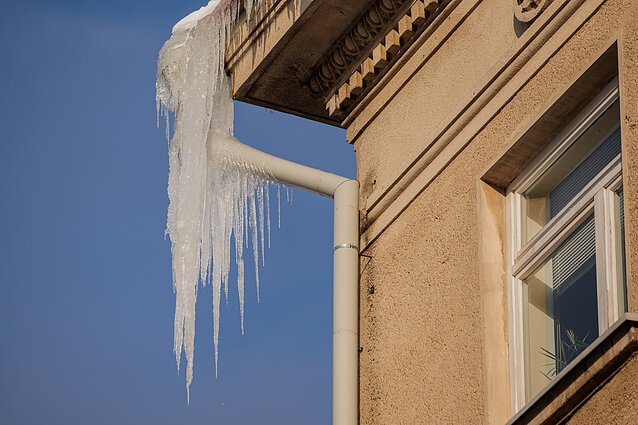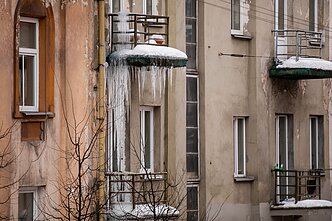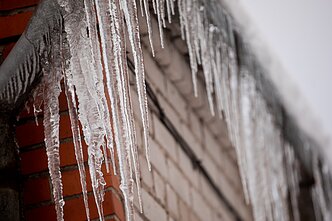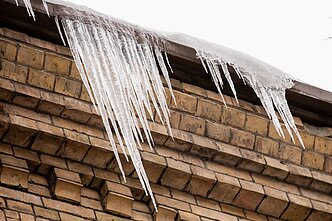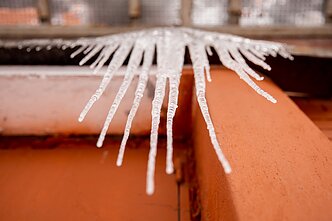















Apartment building administrators in Lithuania are warning residents that the most dangerous period for falling icicles is still ahead, as warming temperatures are expected to increase their formation on rooftops.
Although workers are already removing icicles from residential buildings, administrators say the workload will grow in the coming days as weather conditions become more favourable for their formation. Residents are being urged to exercise caution near buildings.
This year there is no shortage of work, administrators said, noting that heavy snowfall has left large accumulations of snow on roofs, creating ideal conditions for icicles.
Residents interviewed by LRT TV said they are already adjusting their routines to avoid danger.
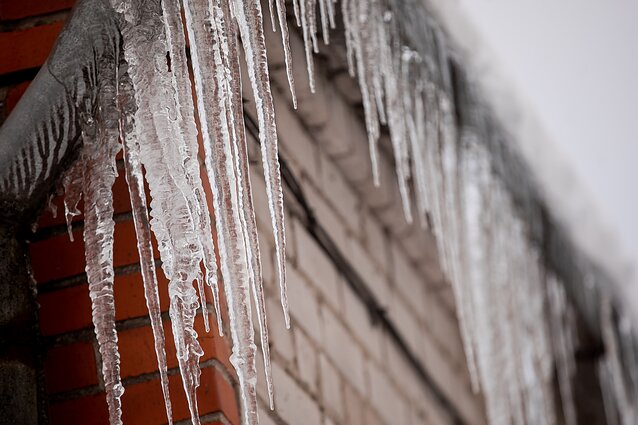
“Administrators are coming and cleaning our building,” one woman said.
“I try not to walk where icicles are hanging,” a man said.
“You walk a couple of meters, you look up anyway – just look how dangerous it is,” another resident said.
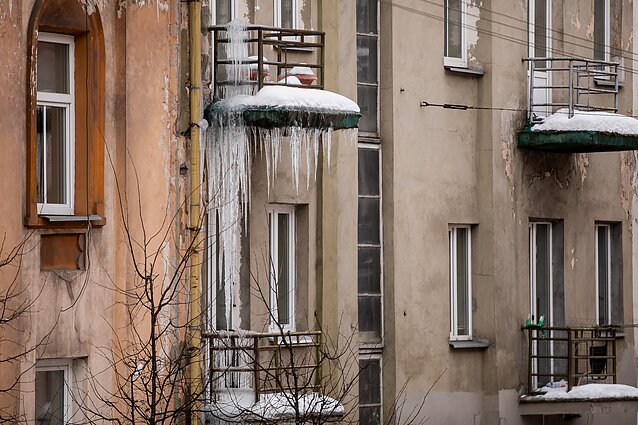
Administrators say forecasted warming will significantly increase the risk.
“We are expecting warmer weather and the workload will definitely increase,” said Deividas Karalius, head of Civinity’s Vilnius region. “There will be sunny days, nights will remain cold, and because of the temperature changes, icicles will form much more intensively.”
Paulius Ugianskis, a representative of building management company Mano Būstas, said crews have already been responding to initial cases but the most widespread formation has yet to occur.
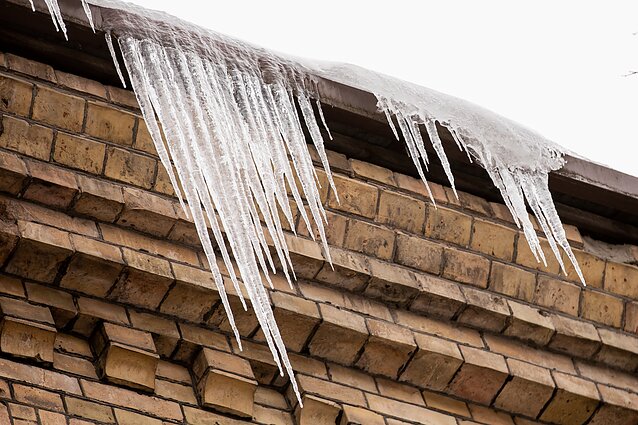
“There was an initial fight – we went out last week and the week before to remove them – but the mass scale that is likely this week has not happened yet,” Ugianskis said.
During a thaw, icicles can form within just a few hours, he said.
“If the forecasts are correct, the weather conditions are ideal for icicle formation,” Ugianskis said. “There is still a lot of snow on rooftops, there will be a thaw, moisture, and the icicles will start growing very quickly.”
Insurance company Lietuvos Draudimas has received 18 reports this year of damage caused by falling icicles or ice, with total losses exceeding 20,000 euros.
“In January and February alone, we have already recorded the maximum reserved compensation amount of 7,600 euros,” company representative Vaiva Mickevičė said. “For comparison, last year and in 2024 the largest single loss was 2,000 euros.”
Most of the damage has been to vehicles. One case involving injury to a person was recorded two years ago.
“If an icicle falls on someone’s head, the injury can be very serious,” Mickevičė said. “It can crack the skull, or a person can fall as a result.”
Administrators stressed that icicles pose a serious risk, particularly in older parts of towns.
“We want to emphasise to people that icicles are dangerous,” Karalius said. “When walking in the streets, especially in the old town, people should look up. In some places, areas are already cordoned off with warning tape because icicles have formed on roofs.”
Apartment managers are urging residents to report icicles spotted on residential buildings so they can be removed promptly.

Newsletter
Every Friday morning.