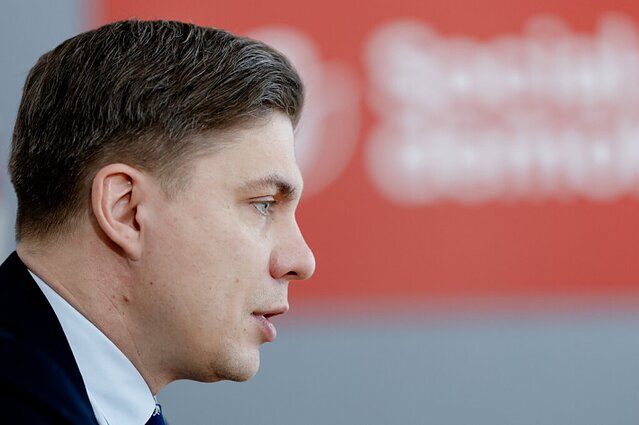






Lithuania will not compromise its dignity or “humiliate itself” in efforts to normalise relations with China, the leader of the ruling Lithuanian Social Democratic Party said Tuesday, despite renewed discussions about restoring ties with Beijing.
Mindaugas Sinkevičius, chairman of the LSDP, said Lithuania wants to improve relations with China but will not take submissive steps to do so. He declined to say whether the government would consider changing the name of the Taiwanese Representative Office in Vilnius, a key point of contention between the two countries.
“Lithuania, in seeking to restore those relations, will certainly not humiliate itself. It will not go on its knees to Beijing,” Sinkevičius said in an interview broadcast Tuesday on the radio Žinių Radijas. “We will maintain our dignity and keep our face.”
He said no major steps toward normalising relations have yet been taken, but stressed that any process would be based on equality between states and respect for Lithuania.

“We must feel respect from those who want to restore relations with us,” he said.
The debate over ties with China was reignited after Prime Minister Inga Ruginienė said in an interview with BNS that Lithuania “jumped in front of a train and lost” by allowing a Taiwanese-named representative office to open in Vilnius without coordinating its actions with the European Union and the United States. She said consultations are underway on normalising relations with China.
Further reading
China responded by urging Lithuania to correct what Beijing calls mistakes in developing ties with Taiwan, saying such steps were necessary to create conditions for restoring bilateral relations.
Sinkevičius said the government is acting in line with its own program, which includes a goal of normalising relations with China.
Vilnius and Beijing have been at odds for several years over how to restore diplomatic representation after a dispute sparked by the name of the Taiwanese Representative Office. Since mid-May last year, China has had no accredited diplomats or other personnel in Lithuania. Bilateral trade also dropped sharply after the office opened in 2021.
Sinkevičius again declined to say whether Lithuania would change the office’s name.

“I would not categorically state at this point what will or will not happen,” he said. “What matters is clarity and dignity – we will not rush to apologise, explain ourselves or go on our knees to China.”
He also rejected suggestions that the Social Democratic Party and the president’s office disagree on Lithuania’s foreign policy direction.
“The president and the government are working well together in shaping foreign policy, and there is no divide here,” Sinkevičius said.
Reacting to Prime Minister Ruginienė’s remarks, Taiwanese Foreign Ministry spokesman Hsiao Kuang-wei said both countries have benefited from deeper bilateral ties. He added that the name of the Taiwanese Representative Office in Lithuania was agreed upon as part of a compromise between Lithuania and Taiwan.
The government’s program commits to restoring diplomatic relations with China “to the level that exists in other European Union states”.
President Gitanas Nausėda has said restoring relations with China requires willingness from both sides, but warned that Lithuania sees risks in excessively close cooperation with Beijing.

Newsletter
Every Friday morning.