















A Eurobarometer survey published last week shows that people in Lithuania stand out among EU citizens for their optimistic outlook on the future and continue to rank among the most pro-EU Europeans.
The latest Eurobarometer survey, commissioned by the European Parliament, shows that most EU citizens are worried about the future: a majority (52%) say they are pessimistic about the future of the world, 39% see little to be optimistic about regarding the EU’s future, and 41% about the future of their own country.
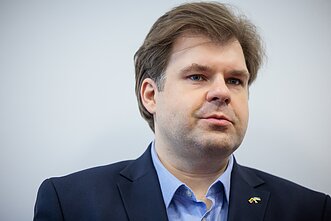
“Unquestionably, we are living in a world undergoing regional changes on both sides of the Atlantic – and not only in the Atlantic region, but globally. This creates a certain degree of instability which contributes to the sense of unease felt by each of us – whether we live in Vilnius, Madrid, Rome or Brussels,” Vytautas Matulevičius, head of the communications agency Bosanova, told LRT.
Despite the stereotypical view that Lithuanians see everything in bleak terms, 60% of respondents in the country are optimistic about the future of the world, and they are even more optimistic about the future of the EU and their own country (71% of respondents in each case).
Only the Irish and the Danes are more optimistic than Lithuanians about the EU’s future (77% and 79%, respectively). The least confident in the EU’s future are the French (41%) and the Greeks (45%).
“Lithuania may not be the most anxious country. This is very important, because it is probably a question of national resilience,” Delphine Colard, a European Parliament spokesperson who presented the survey, told LRT.

She added, however: “We do see that the main concerns of Lithuanians remain the same – like all Europeans, they are concerned about conflicts close to the EU.”
Nevertheless, more than three quarters of Europeans (76%) are optimistic about their personal future. Once again, Lithuanians stand out for their optimism: as many as 82% say they feel positive about their own future and that of their families.
“Yes, I think it is very interesting to note in this survey that people are less pessimistic when it comes to their own future and the future of their families,” Colard pointed out.
That said, it is not the case that Lithuanians are oblivious to threats. People in Lithuania are most concerned about conflicts near the EU’s borders (70%), uncontrolled migration flows (67%), drones (54%) and cyber-attacks (53%).
At the same time, Lithuanians remain traditionally pro-European: 58% in Lithuania view the EU positively (the EU average is 49%), while 77% support EU membership (EU average: 62%). A majority of Lithuanians (55%) want the EU to strengthen its role in defence and security.
“So we see concern, and we see citizens turning to the EU in search of answers. They are calling for greater unity. Nine out of ten are calling for a highly coordinated approach on the global stage – that is, 86%. And they want answers; they want the EU to act decisively on security and defence, economic growth, industry and energy independence,” Colard said, summing up the findings of the Eurobarometer survey.

Newsletter
Every Friday morning.