














Satellite images captured by a NASA satellite on January 29 show ice covering about 90,000 square kilometres of the Baltic Sea, roughly a quarter of the sea’s total area, Estonia’s public broadcaster reported.
The Baltic Sea has a total surface area of about 377,000 square kilometres. While current ice coverage is significant, it remains well below the long-term historical average of around 170,000 square kilometers.
According to a February 3 report by the Baltic Sea Ice Service, ice in the Curonian Lagoon has reached a thickness of about 25 centimetres.
Fresh image of wintry #Estonia and its surroundings (Jan 29, 2026). As of today, the Baltic Sea ice extent is ~90 000 km². It is getting colder. #Nasa #Modis #Terra pic.twitter.com/UC02QbcQJd
— Kairo Kiitsak (@kairokiitsak) January 29, 2026
Historical data show a steady decline in Baltic Sea ice over the past two decades. During the winter of 2010–2011, ice coverage peaked at about 309,000 square kilometres, one of the largest extents on record. By contrast, the winter of 2019–2020 saw a record low, with ice covering just 37,000 square kilometres.
In Lithuania, the coldest temperature ever recorded was –42.9 degrees Celsius, measured in the city of Utena during the night of January 31 to February 1, 1956. That winter, not only did lakes and rivers freeze, but the Baltic Sea also froze as far west as the Danish coast.
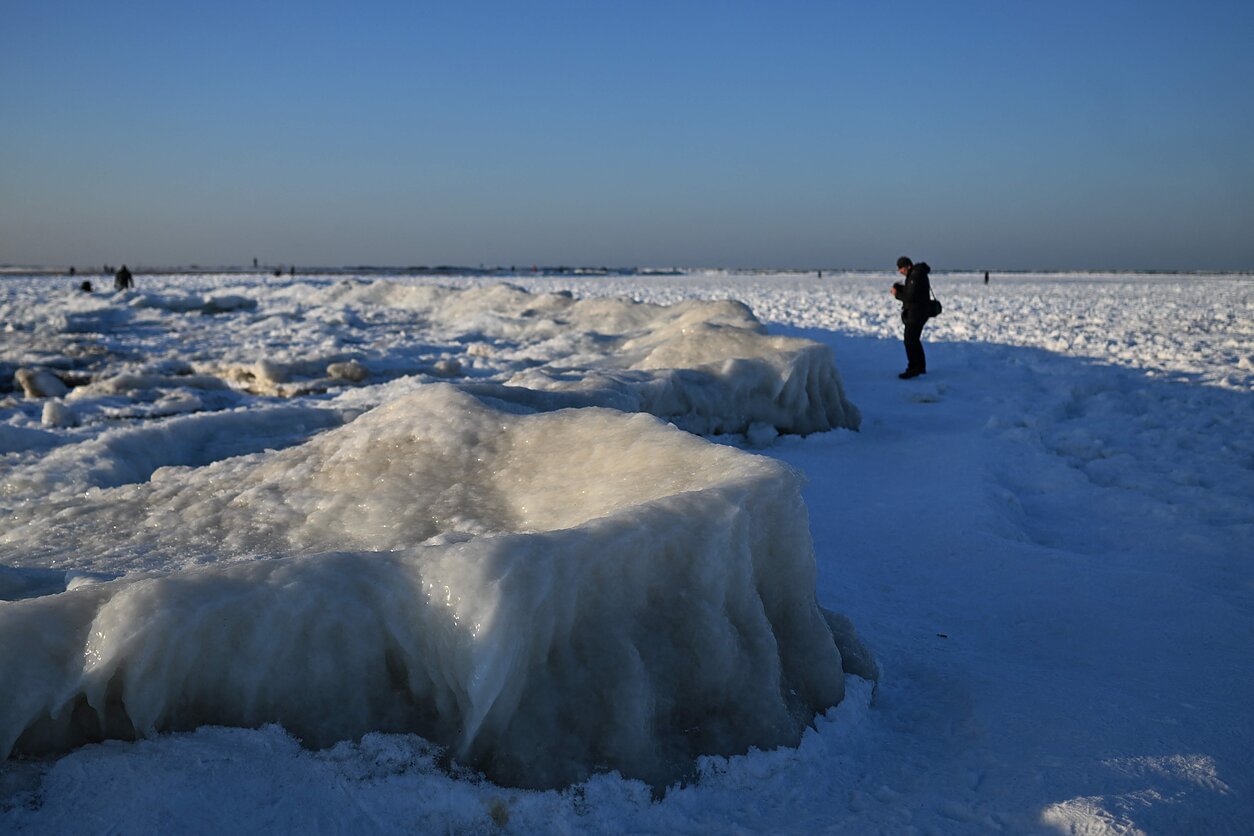
Over the past 300 years, a complete freezing of the Baltic Sea has been recorded about 20 times. While total ice coverage is rare, winters in which at least part of the sea – typically coastal areas – froze were once common. The last such winter in Lithuania was in 2010–2011, when satellite data showed several kilometres of ice along the coast, with open water no longer visible from shore.
Scientists say sea ice plays an important role in the Baltic ecosystem. Stable ice can provide short-term benefits for wildlife, particularly female ringed seals, which rely on solid ice in February and March to give birth to their pups.
Ice also affects the broader marine food chain. When the sea does not freeze, sunlight penetrates deeper into the water, causing algae to begin growing earlier than usual. This can disrupt the timing of the spring food cycle. Current ice coverage helps slow that process, bringing algae blooms closer to their natural seasonal timing.
The US National Snow and Ice Data Center says sea ice forms more slowly than freshwater ice for two main reasons. Saltwater freezes at a lower temperature – about –1.8 degrees Celsius – and becomes denser as it cools, causing colder water to sink before it can freeze.
Typically, the upper 100 to 150 metres of seawater must cool to the freezing point for ice to form. That process requires prolonged cold across a wide region, with temperatures of –20 to –25 degrees Celsius or lower lasting for weeks or even months.

Newsletter
Every Friday morning.