












Lithuania’s economy grew last year and state budget revenues rose sharply, but economists warn the strong performance may be masking deeper structural problems that could force the government to raise major taxes in the coming years.
Chief economist Žygimantas Mauricas of Luminor Bank said the country may eventually be forced to follow Estonia’s path and increase a broad range of taxes despite headline figures showing growth.
“The budget revenues are significantly higher than last year and higher than planned,” Mauricas said. “The party is still going on. But it’s a facade – inside, we are already seeing cracks in the foundations.”

Opposition lawmakers have warned that tax increases or public spending cuts could trigger new protests, while the government urges caution in drawing conclusions from a single year’s results.
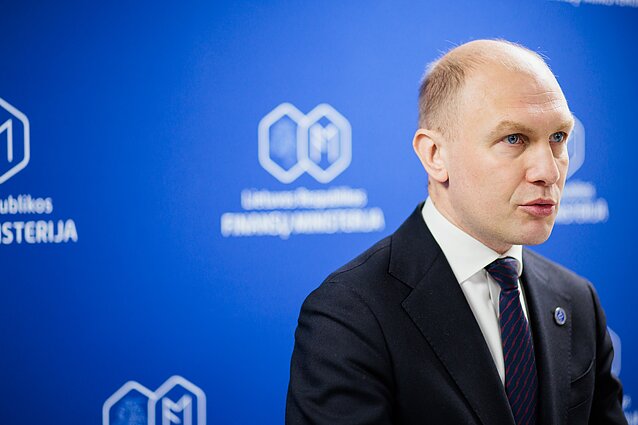
Finance Vice Minister Darius Sadeckas said risks are visible but insisted the government is not planning broad tax hikes, apart from possible adjustments to diesel excise duties.
Overall budget revenues rose nearly 10% year-on-year to about 20 billion euros, driven largely by stronger-than-expected value-added tax and personal income tax collections.
Sadeckas said consumer spending remained strong, supported by average wage growth of about 8.5%, while higher inflation also boosted VAT revenues.
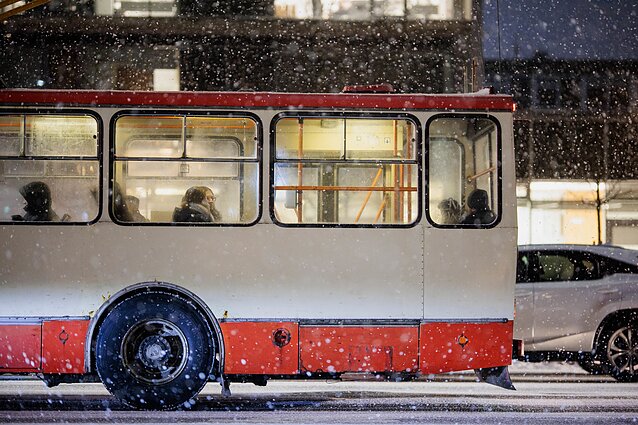
However, revenue from corporate income tax and fuel excise duties fell short of projections. Diesel fuel sales declined as transport companies increasingly purchased fuel in neighbouring Latvia, Poland and Estonia, where prices are lower.
“That’s a lesson that when you raise excise taxes, you have to look at the broader context,” Mauricas said.
Sadeckas acknowledged that the drop in diesel sales was sharper than expected but said excise revenue was still higher than in previous years. Fuel excise duties increased again this year, though by less than initially planned after parliamentary revisions.
“We will likely have to return to excise duties – both rates and the CO2 component – when preparing next year’s and the three-year budget plans,” Sadeckas said.
The Finance Ministry has downplayed the shortfall in corporate income tax, but Mauricas warned it could signal future problems, particularly as wages continue to grow faster than productivity.
“If salaries rise faster than productivity, corporate tax revenues will shrink,” he said. “This is another sign that things look good on the surface, but problems are building underneath.”
Sadeckas said the government focuses on longer-term trends rather than short-term fluctuations.
“The real test will be next year’s budget,” Mauricas said.
This year, Lithuania’s economy is set to receive record inflows of European Union funding, increased defence spending and money withdrawn from private pension funds.
Mauricas warned these temporary boosts could obscure the true fiscal picture and lead to miscalculations.
“These figures will act like a smoke screen,” he said. “If next year’s budget is planned based on this year’s numbers, we could see major tensions next year and, most likely, unavoidable tax increases.”
Sadeckas said the government is factoring in the temporary nature of some revenues when planning expenditures.

Former Finance Minister and Prime Minister Algirdas Butkevičius warned that rising public debt and the lack of structural reforms could fuel social unrest.
“In the 2027 budget plans, wage cuts are already foreseen for nearly all spending authorities,” said Butkevičius, now a lawmaker with the Democratic Party “For Lithuania”. “What kind of situation will we face outside the parliament then?”
Sadeckas said public-sector wage increases are negotiated annually once key indicators such as the minimum wage are known.
Despite mixed signals in the broader economy, some small businesses remain optimistic. In the town of Panevėžys, sushi restaurant owner Justina Kreivė recently relocated to a larger space after outgrowing her original location.
“Customers no longer fit, the kitchen was too small, and we couldn’t hire enough staff,” she said, adding that her husband’s experience working as a chef in Norway inspired the business.
While January and February are typically slow months, Kreivė said family-run businesses are thriving in the region.
“Panevėžys used to be called a little Chicago,” she said, referring to the town’s notoriety as a hub of 1990s organised crime. “Now maybe it’s becoming a little Italy.”
Not all businesses have fared as well. Nearly 100 food service establishments across the country went bankrupt last year, including several long-established operators.

Newsletter
Every Friday morning.