










Lithuanian officials have made public comments about easing sanctions or changing the country’s approach to the authorities in Minsk, only to retract them shortly afterwards. Observers say the remarks may indicate an attempt to test whether public opinion is shifting.
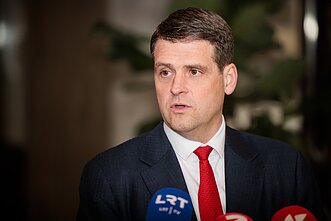
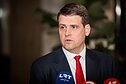
On Thursday, Remigijus Motuzas, chair of the Seimas Foreign Affairs Committee and a member of the Social Democratic Party, told Žinių Radijas that discussions were underway about the substance of possible talks with Minsk.
He later withdrew the comments.
“This was a hypothetical reflection; no political decision has been taken or planned,” Motuzas told LRT.lt by phone on Friday, saying he had been responding to a theoretical question from the journalist.
It was not the first time Lithuanian officials have raised – and then retracted the possibility of revisiting relations with Belarus, including on the sensitive issue of sanctions on the potash fertiliser producer Belaruskali.
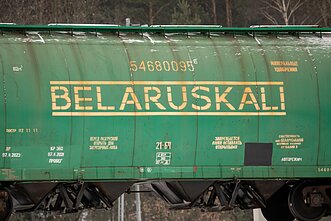
Belaruskali is regarded as one of the main sources of income for the regime of Alexander Lukashenko. Restrictions on fertiliser exports were intended to increase pressure on Minsk following the violent crackdown on the opposition after the mass protests of 2020. Critics say the policy has failed to deliver results.
Late last year, the United States lifted sanctions on Belaruskali in exchange for the release of political prisoners. This prompted concern in Lithuania that Vilnius and Brussels could face pressure from Washington to ease restrictions.
Belaruskali has extensive business interests in Lithuania, which critics say have in the past contributed to political corruption.
In December, the president’s chief adviser on national security, Deividas Matulionis, said in an interview with Žinių Radijas that easing sanctions could be linked to the presence of US troops in the region. Following criticism, he withdrew the remarks, describing them as a “spontaneous reaction to a journalist’s question”.

Later, Defence Minister Robertas Kaunas suggested that revenue from transit could be allocated as aid to Ukraine. In January, Member of the European Parliament Vytenis Povilas Andriukaitis told LRT.lt that Lithuania should resume fertiliser transit.
Vytis Jurkonis, who works with Belarusian and Russian political refugees and opposition figures, said developments in Lithuania “create grounds to suggest that the possibility of revisiting relations with the Belarusian regime may be being tested”.
He said this view was reinforced by the departure of opposition leader Sviatlana Tsikhanouskaya and by Lithuanian politicians’ engagement with other Belarusian opposition figures, including Maria Kolesnikova.
Kolesnikova, a leading opposition figure, was freed after more than five years in prison following US efforts that included lifting sanctions on Belarusian fertilisers.
In an interview with the Financial Times published on January 19, she urged Europe to resume talks with the Belarusian authorities in order to draw the country away from Russia and secure the release of more political prisoners.
MJurkonis said people linked to her circle had already met Lithuanian politicians from both the governing coalition and the opposition and were seeking to arrange further meetings. “It is no secret that lifting sanctions is the main item on the agenda,” he said.
Kolesnikova’s team declined to comment.
On Monday, Lithuanian Prime Minister Inga Ruginienė met with Kolesnikova, the government said in a press release.
To counter speculation about renewed engagement with Minsk, Jurkonis said Lithuania should take concrete steps, such as supporting additional EU sanctions.
“This cannot be dispelled by statements or press conferences, but by actions,” he said. “That would clearly show that this bubble is deflating.”
Sources in the Social Democratic Party said any response to Minsk’s previous proposal for a vice-ministerial-level meeting would amount to legitimising the regime. They added that even hypothetical discussions should take place only after additional EU sanctions are adopted at the end of February.
“Tsikhanouskaya’s office has said publicly that the Americans are not asking for sanctions to be lifted – and I hear the same from other diplomats,” Jurkonis said.
Last week, Prime Minister Inga Ruginienė, President Gitanas Nausėda and Foreign Minister Kęstutis Budrys also rejected claims that discussions were under way about resuming Belarusian fertiliser exports through Lithuania.
Representatives of the Belarusian political diaspora said they had received no indications from Lithuania about possible negotiations or the lifting of sanctions, although some believe it is only a matter of time before such discussions begin.
Proposals to ease sanctions have drawn criticism within the diaspora, including from former political prisoners.
Critics argue that while some detainees have been released, roughly twice as many people continue to be arrested and imprisoned, indicating that repression in Belarus continues.

Newsletter
Every Friday morning.