







A coordinated network of bots and provocateurs is mobilising across social media to inflame tensions over Lithuania’s plans to establish a new military training area, the LRT Investigation Team has found.
Cybersecurity experts consulted by LRT say there are signs of an organised communication campaign aimed at creating the impression that the local community in Kapčiamiestis, in southwestern Lithuania, is unanimously opposed to the project.
At least six Facebook groups dedicated to Kapčiamiestis, where the new training area will be set up, are being used to promote this narrative. In one of the groups, more than 80 percent of followers appear to be fake accounts based in Asia and Africa.
Disinformation has also been identified on local classified-ads pages. One of these is linked to a business connected to the assistant of Social Democratic Seimas Vice-Speaker Orinta Leiputė.
LRT observed a surge in activity by inauthentic accounts between January 5 and 12. This period coincided with a meeting between the Lithuanian Armed Forces and local residents in Kapčiamiestis, as well as visits by President Gitanas Nausėda and Remigijus Žemaitaitis, leader of the populist party, Nemunas Dawn.

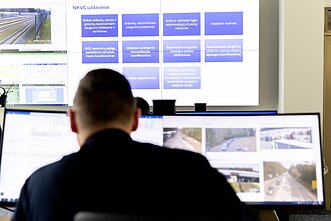
The National Crisis Management Centre (NKVC) has contacted Meta, which owns Facebook, requesting the removal of fake accounts. The move followed the identification of at least one bot network showing a “high degree of automation and coordinated behaviour”.
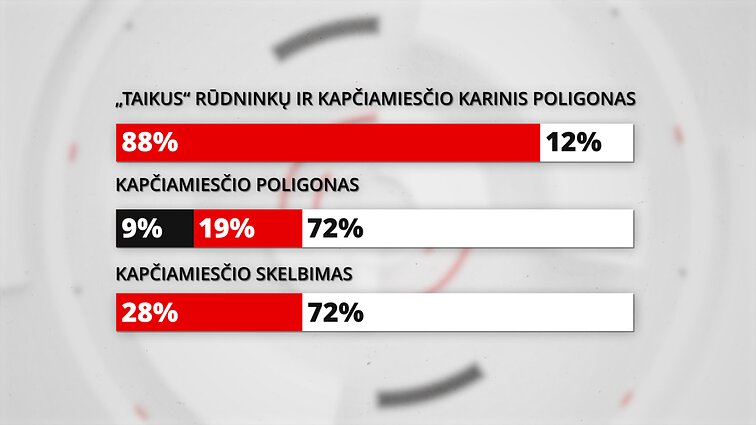
According to an NKVC assessment seen by LRT, around 1,000 fake accounts from Indonesia, the Philippines, Thailand, Zambia and other countries were active in a single Facebook group.
As recently as January 15, the group had fewer than 200 genuine users. After the suspected bot activity began, membership rose to 1,700. Within a week, it doubled again to 3,600.

Run by fake profiles
The Facebook group „Taikus“ Rūdninkų ir Kapčiamiesčio karinis poligonas“ was created on December 31, 2024. It was originally intended to discuss the Rūdininkai training area.
However, after the State Defence Council decided on December 15 last year to establish a new training area in Kapčiamiestis, and local residents said they were presented with a fait accompli, the group’s focus shifted.
An NKVC assessment states that discussion of the Kapčiamiestis training area increased “gradually and organically” from mid-December, alongside growing dissatisfaction among some residents. The report notes that tensions escalated after a meeting with locals on January 9, during which heated exchanges took place.
On December 23, the group’s name was changed, and Facebook profiles showing signs of inauthentic behaviour became administrators.
The group’s creator is listed as “Petras Mazarus”, an empty Facebook profile created four years ago. On January 6, another empty profile – reportedly based in Warsaw and with only 10 followers – was added as an administrator. On January 20, a page titled “Kariniai poligonai”, registered just a month earlier, was also listed as an administrator.
One of the first posts by “Petras Mazarus” claimed that military training areas were “Lithuania’s direct provocations towards neighbouring countries”.
Another public post published in December 2024 stated: “Such traitors to the Lithuanian state as [political leaders] Kasčiūnas, Landsbergis, Nausėda, Čmilytė and others should receive the harshest punishment – death.”
LRT contacted the “Petras Mazarus” account via Facebook Messenger. The user initially demanded a press card but ultimately declined to respond.

Disinformation and provocations
Since late December, the „Taikus“ Rūdninkų ir Kapčiamiesčio karinis poligonas“ group has seen a growing volume of inflammatory content and disinformation. Many comments appear to be posted by inauthentic profiles.
Examples include claims that Pabradė that houses NATO and US forces is “occupied by foreign troops”, suggestions that locals should “drown newcomers in swamps”, and other violent or derogatory language.
The group has increasingly shared content from figures such as repeat offender Antanas Kandrotas, known as Celofanas, pro-Russian activist Erika Švenčionienė, and online trolls. Posts that previously attracted little attention now receive thousands of reactions.
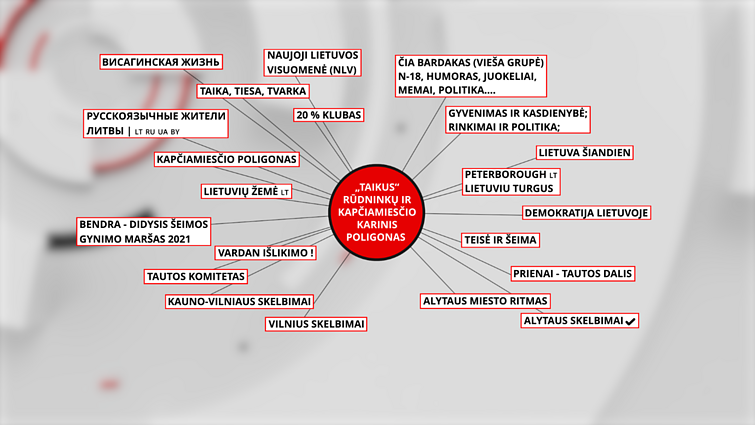
Content from the group is widely shared into other Facebook communities. Some of these have promoted propaganda and disinformation since their creation. Their administrators often include individuals known for incitement, including convicted persons, as well as current and former politicians.
These groups range from several hundred to tens of thousands of members. As a result, content originating in the Kapčiamiestis groups reaches an audience of several hundred thousand users.
Classified ads with a political message
Another channel for training area-related disinformation has been local classified-ads pages, which typically advertise jobs and services but have increasingly carried political messages.
Experts say trolls and bots often attempt to take over such community pages, turning them into propaganda tools. One example is “Kapčiamiesčio skelbimai“, created in July 2024.
The group is administered by a profile named “Egidijus Padangiukas”, along with three additional profiles whose authenticity is questionable. Their images appear to be AI-generated, and messaging functions are disabled. All use the same cover image advertising the Kaunas-based company Padangiukas.
For almost two years, the group published advertisements for local businesses. On December 15, the first post opposing the Kapčiamiestis training area appeared, warning that residents and animals would lose their homes and forests would be cut down.
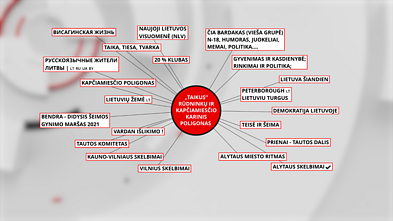
From the following day, posts opposing the training area appeared daily, sometimes several times a day. Fake profiles shared content from pro-Russian activists and from groups such as |Kapčiamiesčio poligonui ne!“, “Apginkime Lietuvos miškus”, “BENDRA – Didysis šeimos gynimo maršas 2021” and “Celofano mobingas”.
LRT contacted the group’s administrators. One of them, “Egidijus Padangiukas”, initially said there were no restrictions on postings and that information was not verified. Shortly afterwards, he said the content had been “cleaned up” and reiterated that the group was intended for buying and selling.
LRT found that the Padangiukas business is owned by Aureliją Lankelienė, a Social Democrat, a member of Kėdainiai District Council, and an adviser to Seimas Vice-Speaker Orinta Leiputė.

Lankelienė initially said she did not own any Facebook groups but later confirmed she owned the business. She said she was unaware that incendiary messages had appeared in the company-linked group and asked for them to be removed.
Leiputė confirmed she knew of her adviser’s business but said she had no information about the Facebook group or bot activity.
Growing opposition online
Cybersecurity experts also identified the Facebook group Kapčiamiestis Training Area as an example of targeted negative communication.
Created on December 21 last year, the group grew rapidly from about 2,000 followers in early January to 7,400 by the end of the month. Official figures show the Kapčiamiestis area has just over 800 residents.
The group was founded by local resident Darius Jarašius. His Facebook profile had been inactive for several years before a video he posted in January received more than 30,000 views, despite having fewer than 1,000 followers.

Jarašius told LRT that he had noticed increased inauthentic activity in the group but said it was not always possible to confirm coordinated behaviour. He said moderators removed misleading or inflammatory content and applied filters to reduce fake profiles.
The group has become increasingly politicised. Early posts focused on environmental protection, but more recent content frames the issue as a confrontation between “the authorities” and “the people”. Posts from convicted pro-Russian figures and online trolls are now frequently shared.
A civic-minded resident originally from Kapčiamiestis, who asked not to be named, said the group was flooded with disinformation, making it difficult – particularly for older users – to distinguish fact from speculation.
She said users who questioned anti-training area slogans were often removed from the group, creating the impression of unanimous opposition.
Community leaders and local impact
Among the administrators of the “Kapčiamiesčio poligonas” group is the name of the local community chairperson, Raminta Karauskienė. When contacted by LRT, she said she did not take part in the group’s activities.
She said she did not know who had created or administered the group and that she did not use it. She did not assess its content.
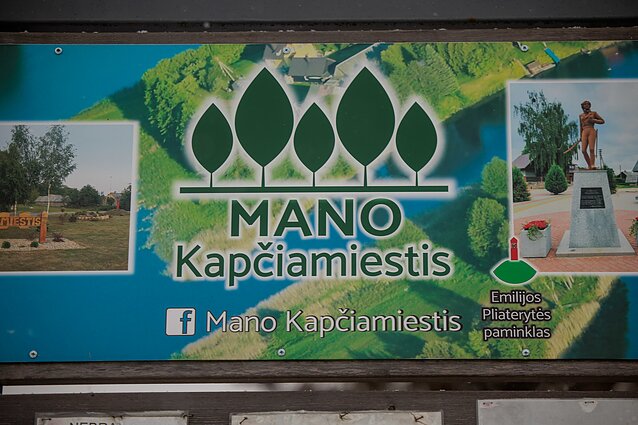
Karauskienė administers two other Facebook pages – “Mano Kapčiamiestis” and “Aš mylių Kapčiamiestį”. The tone of these pages remains neutral, although discussion of the training area has increased since late December.
Before the issue emerged, posts typically received one or two comments. Since then, engagement has increased by several hundred times.
Local residents say that delays and a lack of clear communication from authorities have allowed rumours to flourish.
“Social networks have the greatest influence,” said Audronė Mikelionienė, a vice-elder of Viktarina village. “Facebook shapes people’s opinions. There is a lot of hostility, and it affects people.”
No evidence of foreign direction
The NKVC says it has found no evidence that foreign states are directing the online activity related to Kapčiamiestis.
Instead, it points to radical domestic actors exploiting uncertainty and dissatisfaction.
“Society lacked answers, people felt tension due to the absence of responses, and this naturally drew in more participants,” said NKVC head Vilmantas Vitkauskas.
“These processes came from internal resources, not from external forces trying to divide society,” he added.

Newsletter
Every Friday morning.