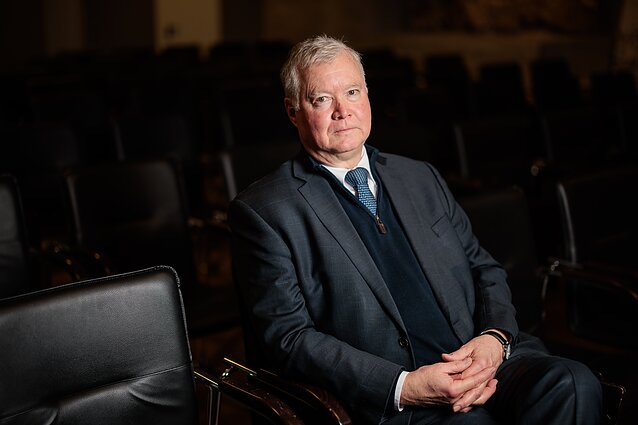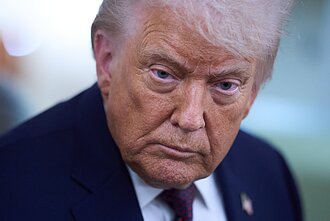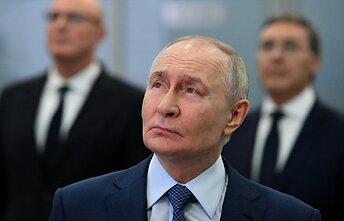
















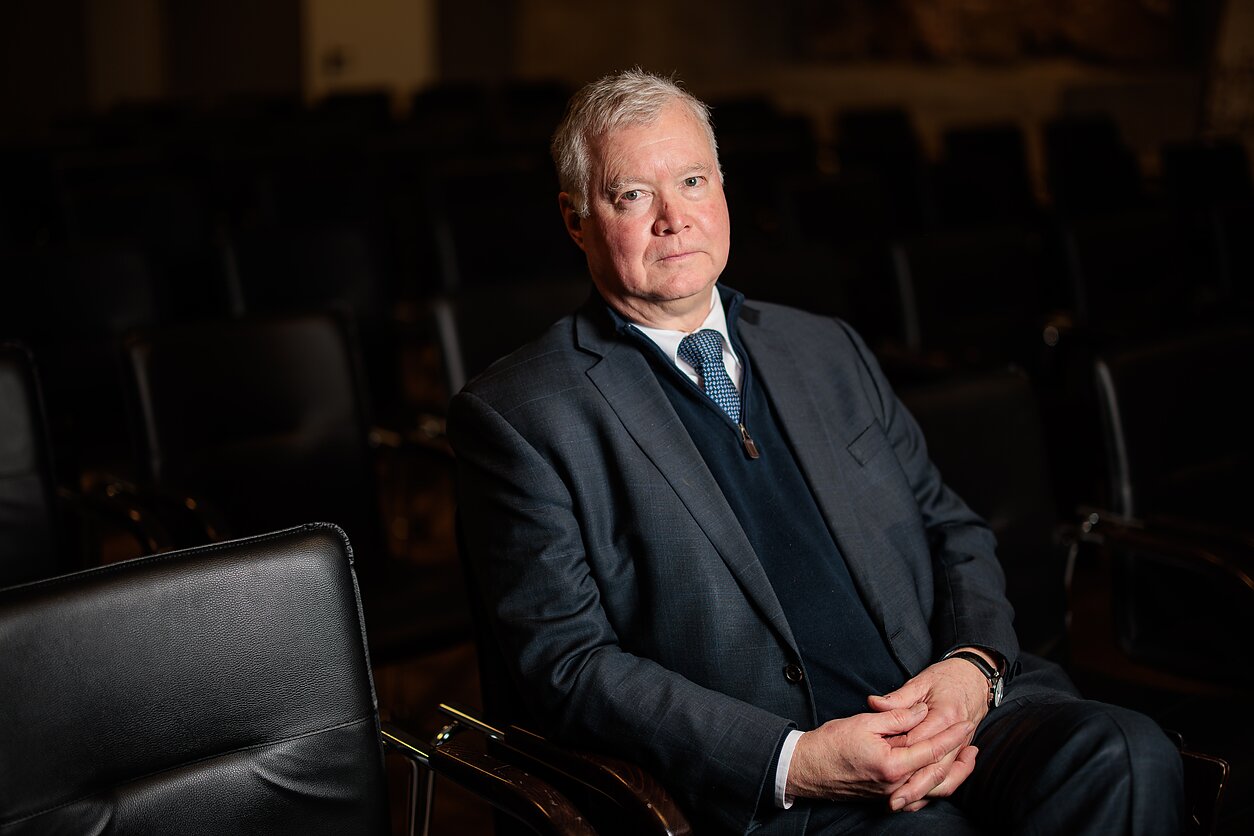
Former US Deputy Secretary of State Stephen Biegun believes that President Donald Trump is wrong about the Russian president. “Vladimir Putin doesn't want a negotiation. Vladimir Putin wants Ukraine,” the Republican politician tells LRT.lt in an interview.
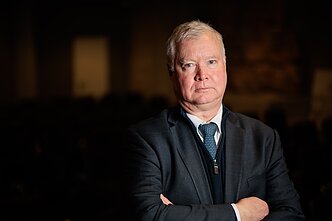
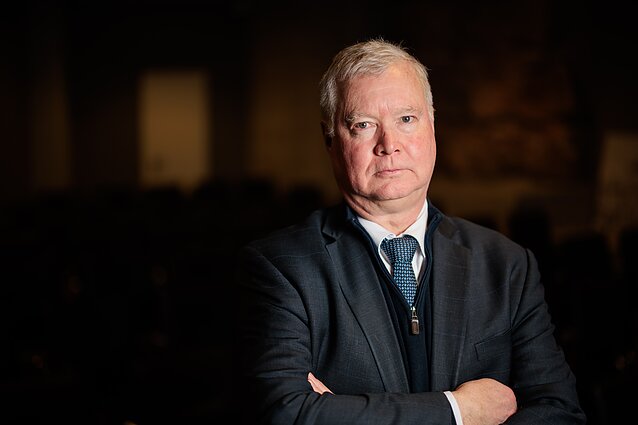
Stephen Biegun is a businessman and a seasoned veteran of American diplomacy whose biography includes work at the International Republican Institute in Russia, senior positions in both the White House and the US Senate, an appointment as special envoy for North Korea during Donald Trump’s first term, and ultimately serving as deputy to then–US Secretary of State Mike Pompeo.
Knowing the inner workings of American diplomacy, Biegun shared with LRT.lt not only his insights into the ongoing negotiations with the Kremlin but also his thoughts on the difficult transformation of US–European relations.
“It's not the end of the alliance,” the former US Deputy Secretary of State assured.
In this part of the world, it is very clear that it is Russia who refusing to start a meaningful negotiation discussion. Yet President Trump recently said that it is Ukraine and not Russia who is holding a potential peace deal. Drawing from your experience in this region and obviously with the policymaking in the US, why do you think there is this misalignment between allies?
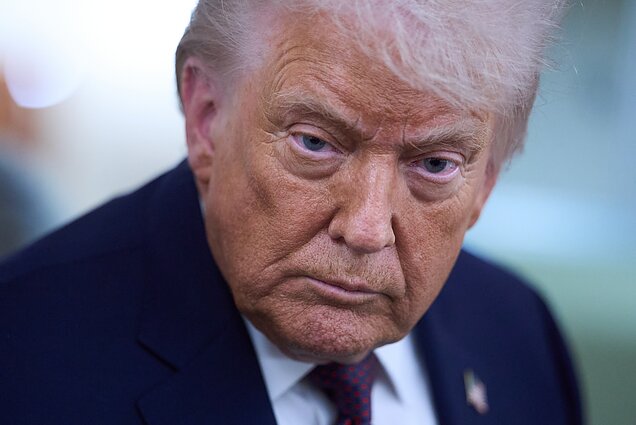
Well, in short, I think President Trump is wrong. Vladimir Putin doesn't want a negotiation. Vladimir Putin wants Ukraine and I he'll never agree to peace with Ukraine. I think it's just a fundamental mistake in judgement. Whatever the Russians are saying, I wouldn't believe, and the truth is that if the Russians were really interested in any of this, we could work tomorrow.
So how you evaluate President Trump's efforts to end this war?
I think the president is absolutely sincere in his desire for an end to this war. And in a very pragmatic way, he sees war as the ultimate failure: a failure of imagination, a failure of diplomacy, a failure of negotiation and the consequences of war he sees as unbearable costs. He really is pained by the loss of all the young lives of these soldiers, honestly, on both sides. Obviously, this is purely a case of Russian aggression against Ukraine, but it's also had tragic consequences for Russia – British estimates out today suggest a well over a million casualties, almost exclusively men. This is some significant percentage of the population of young men in Russia. What Putin has done to his own people here is tragic. So, I think President Trump is absolutely sincerely interested in peace.
I think he also understands that if he concludes that the obstacle to peace is Vladimir Putin, then it's come upon us to do more. And I think he is resisting to some extent crossing that Rubicon, because I think he understands – and he's right – that once he commits the United States in a different way to support Ukraine in this conflict, there's no going back. At that point, we either win the war or the consequences are unacceptable.
Now, I reached that point a long time ago, personally, and I've been closely following, even was a part of the discussions about American policy on this war going back years. I don't think President Trump has reached that conclusion yet, but many of us have.
In one of your interviews, you've said that Vladimir Putin should actually be grateful for NATO's enlargement. Could you explain your thought?
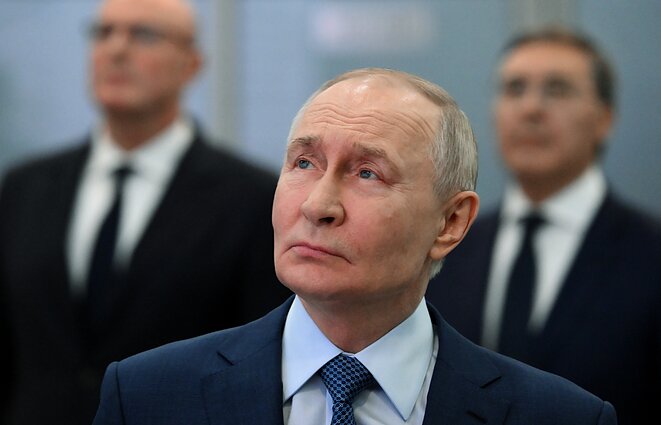
Sure, absolutely. I don't ever expect this argument to win accolades in Moscow. But if you look at the history of Russia over the centuries, one of the greatest challenges for Russia and one of the things that's drawn Russia by its choice or as a victim into conflicts, is the presence of weak states on the periphery of Russia that either are seen as an invitation by tyrannical leaders in Moscow to expand their influence and control, or become proxies for other countries who conquest those regions in a way that then ultimately threatens the Russians and leads to war.
Either way one of the longest periods of stability and peace that Russia has had with its neighbours is the period in which NATO has helped build stable, confident, mature and prosperous countries on the periphery of Russia that can be partners with Russia. They can cooperate with Russia, but they can't be controlled with Russia. That's incompatible with Vladimir Putin's worldview, because Vladimir Putin, for example, consistently described Ukraine as a threat to Russia. Still does to this day. I mean, the very notion is absurd and counterfactual. Ukraine was not building up its military to conquer Russia. On its face, it's an absurdity.
But I think you have to understand that for authoritarian leaders like Putin, what threatens them is not what those of us in more enlightened world, frankly, would see as a threat – it's not the possibility that another country would conquer your territory or undermine your political system or damage your economy. Those are things that we might classically consider a threat. For leaders like Putin what threatens him is what he doesn't control. He equates control with security and that's just an absolute disastrous formula for war, because then he's going to ever more be Pursuing further control, which is why I think it's very right that the outcome of the war in Ukraine will dictate what's next with Russia. If Putin is successful in Ukraine, this war is not over.
I want to move back again to NATO. NATO as you experienced yourself, has always had its critics. But today the loudest one appears to be a rather unexpected figure – it is the president of the US. Donald Trump has questioned whether NATO allies would come to help Washington if there is a need. Recently he was pursuing the idea of taking over Greenland, a semi-autonomous territory of its NATO ally. How do you see the future of NATO in this context?
Many of the improvements and many of the additional commitments that President Trump has demanded from NATO are absolutely right, absolutely right. Unfortunately, the rhetoric that you describe is incredibly damaging to achieving the outcome that we want now.
History will be the judge of this, but I suppose there is some case to be made that the whole of Europe – because many European countries like Lithuania, quite frankly, have for a long time met every expectation as a NATO ally – but speaking collectively for the whole of European commitment to defence, it has been insufficient. And Americans are right to resent it. <…>
Now, I will tell you that the difference between President Trump and other presidents and leaders with whom I've worked in United States, is he says openly, what most of them confined behind closed doors. But I would tell you that the rhetoric he uses is equalled by comments I've heard from other presidents, other secretaries of defence, about the very same topics, they just chose to reserve those comments for private conversations.
I don't think it's helpful, in particular the commentary on Greenland, which is unrelated, incidentally, to NATO burden sharing. I don't think that's helpful, but I do think it's long been incumbent upon Europe to do more, and I think that will answer some of the criticism. <…> I don't take anything away from the effort that the European allies again in its whole the European pillar have contributed. Now they're doing the right thing and I think we need to maybe spend a little more time recognising that.
I want to focus on Europe and US a bit more. US national security strategy for Europeans was a shock, a cold shower. And it was not only criticising Europe's defence capabilities, which is fair enough to criticise them, but it was also questioning the continent's political direction. You previously served as senior Europe advisor in the US Senate, so my question now is the opposite – what would you advise to Europe about the US?
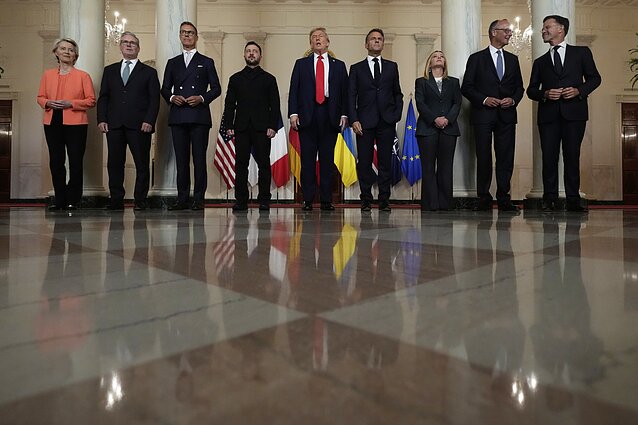
The national security strategy may have come as a shock to Europe, but it probably didn't come as a surprise to Europe if I'm being honest here. This is kind of rhetoric that, that you've heard dating back to the very first weeks of the administration when the vice president came to the Munich Security Conference. And I saw those remarks, and I saw the reactions – in that case, it was both shock and surprise. But now it should come as no surprise. That doesn't mean that it's pleasant to hear. <…> There was definitely some intentional slights delivered in that. And I suppose it pays truth to the old saying that familiarity breeds contempt. We know so much about Europe because for many of us it's our heritage, it's our closest partners, friends and allies. We have a common history that that dates back to the very founding of our country. We were a European colony. And unfortunately, at times, that leads to a contempt or a ease and criticism, which in its own again, is not surprising, it happens. And in it goes both ways. <…>
It's not the end of the alliance. It doesn't feel comfortable. But it's also, I think, a huge leap to call this some sort of permanent rift or breach in US-European relations. We'll get through it. The ties are deep and they're ultimately driven by shared interests, shared values and also our ability to contribute to each other's capabilities. And all those things make this transatlantic alliance durable and I'm highly confident that notwithstanding any turbulence in the relationship at this moment, it's going to endure.

Newsletter
Every Friday morning.