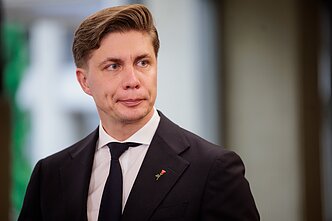







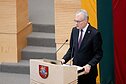





Mindaugas Sinkevičius, leader of Lithuania’s Social Democratic Party, said Thursday that any consideration of resuming the transit of Belarusian fertilisers through Lithuania should be assessed by the State Security Department, citing national security concerns.
Speaking on Lietuvos Rytas television, Sinkevičius was asked whether he supported comments by fellow party member and European Parliament lawmaker Vytenis Povilas Andriukaitis, who has argued in favour of allowing Belarusian fertiliser transit to resume.
“This is not simply a political decision. It is linked to national security and threats, and it was motivated by those considerations,” Sinkevičius said. “The question is whether those national security threats have disappeared, and only the State Security Department can assess that.”
He added that politicians should refrain from taking positions on the issue, noting that public statements could also affect ongoing arbitration proceedings.

Andriukaitis said Wednesday that Lithuania could “absolutely” resume transporting Belarusian fertilisers, in comments made from Strasbourg and published by LRT.lt. He suggested that Lithuania could allow transit in exchange for permitting Ukraine to ship its fertilisers through Belarus to the port of Klaipėda.
“If this involves trade with countries where agriculture plays a decisive role and where significant humanitarian consequences may arise, it is clearly a matter for discussion,” Andriukaitis said.
He described sanctions on fertilisers as an “ill-considered step” and argued that fertilisers should be treated as food-related goods that ought not be subject to sanctions.
The United States lifted sanctions on Belarusian fertilisers late last year in exchange for the release of prisoners held in Belarus. Political observers have speculated that Washington may now pressure Lithuania to allow fertiliser transit through Klaipėda, which was halted in 2022 over US sanctions and national security concerns.
Belarusian potash producer Belaruskali responded by launching investment arbitration proceedings against Lithuania in October 2023 and last December filed a claim seeking $12.09 billion in compensation.
The European Union has also imposed sanctions on Belarusian fertilisers and is due to decide in February whether to extend them.
President Gitanas Nausėda said earlier this month that Lithuania would maintain its firm stance if pressured to resume fertiliser transit and expressed hope that regional partners would support the position.

Newsletter
Every Friday morning.