












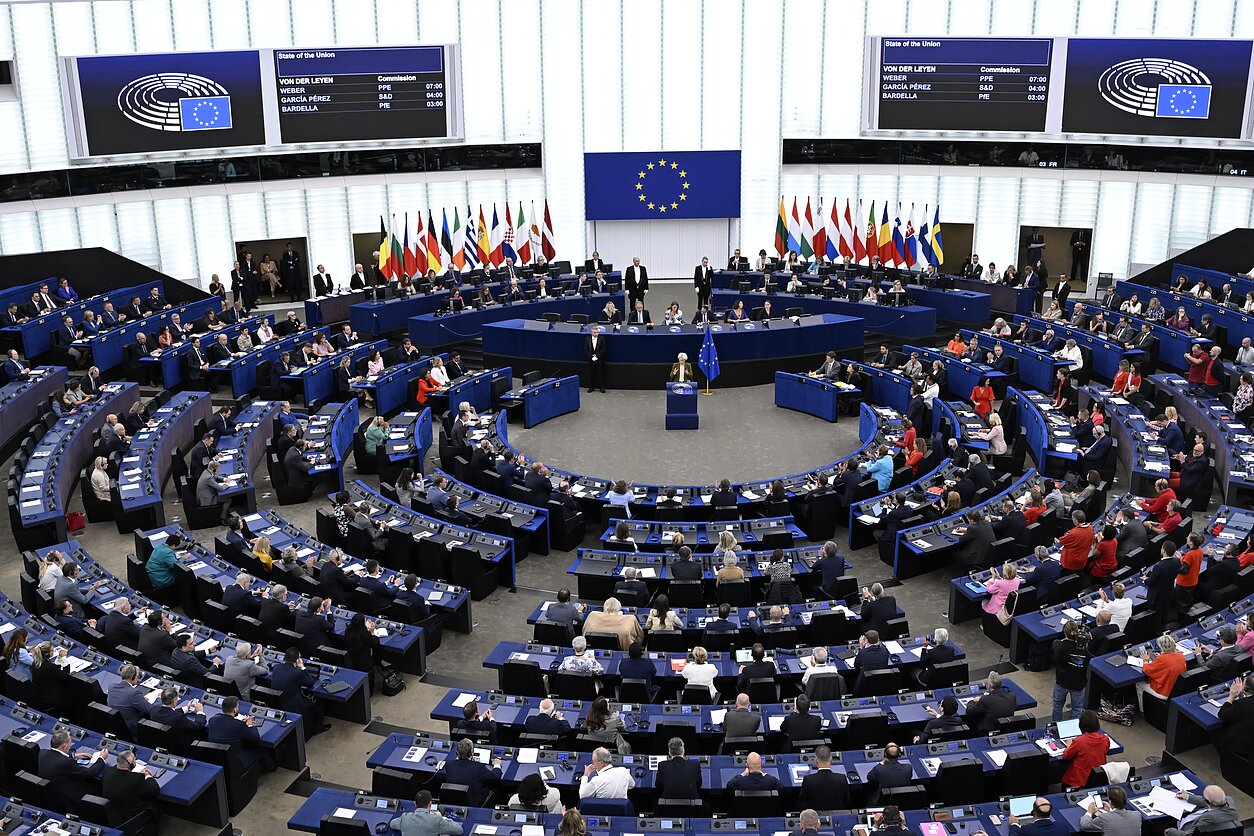
The European Parliament on Thursday adopted a resolution expressing concern over what it called an “attempted takeover” of Lithuania’s public broadcaster, LRT, and warning of threats to democracy in the country.
The resolution, approved by 385 MEPs with 165 against and 35 abstentions, voiced solidarity with Lithuanian journalists, condemned efforts to undermine LRT’s independence, and criticised the Lithuanian parliament’s decision to freeze the broadcaster’s budget.
The document was sponsored by members of five political groups: Rasa Juknevičienė of the European People’s Party (Christian Democrats), Ana Catarina Mendes of the Progressive Alliance of Socialists and Democrats, Dainius Žalimas and Petras Auštrevičius of the Renew Europe Group, Diana Riba i Giner of the Greens/European Free Alliance, and Konstantinos Arvanitis of The Left group (GUE/NGL).
Further reading
“MEPs are concerned that European national broadcasters have recently been facing political and ideological attacks, smear campaigns, and attempts to undermine their independence and stable funding,” the resolution says, adding that experience in other countries shows such efforts are often “the first step towards a regression in democracy.”
“The European Parliament represents both Lithuania and other EU member states. It is an institution elected by the people of Lithuania and must respond to the problems faced by the Lithuanian people,” MEP Juknevičienė, one of the sponsors of the resolution, said.
Lawmakers criticised the urgency of proposed amendments to the Law on LRT, saying they fail to ensure legislative transparency, accountability and public participation. The resolution urges the Seimas to reject changes that would make it easier to dismiss the broadcaster’s director general and to adopt any future amendments only after the Venice Commission issues an opinion.
The European Parliament also called on Lithuania to respect the European Media Freedom Act, as well as recommendations from the Venice Commission and the Organization for Security and Cooperation in Europe’s representative on freedom of the media.
MEPs urged the Seimas and the Lithuanian government to reduce political influence over the LRT Council by cutting the number of seats allocated to political appointees and setting clear professional requirements for council members.
The resolution asks the European Commission to monitor developments related to media freedom in Lithuania, assess whether adopted or proposed changes comply with EU law and the rule of law, and use available tools – including infringement procedures – in cases of noncompliance.
The resolution follows failed attempts by Lithuania’s ruling coalition last year to pass fast-track amendments that would have allowed the LRT director general to be dismissed by a secret vote of seven of the LRT Council’s 12 members, citing an unapproved annual report or improper performance of duties. Under current law, the director can only be dismissed by an open vote requiring eight council members and must be justified in the public interest.
A parliamentary working group is reviewing LRT’s governance and is expected to submit recommendations, though the form and timing of proposals remain unclear.
Public opposition to the proposed amendments has been significant. In December, rallies outside the Lithuanian parliament drew more than 10,000 people protesting the changes.
In addition to legislative concerns, the Seimas has frozen LRT’s budget for three years. Under the new arrangement, the public broadcaster is set to receive a smaller share of personal income tax and excise duties than it currently does.
Not all Lithuanian politicians supported the resolution. MEP Aurelijus Veryga, leader of the Lithuanian Farmers and Greens Union, said its authors were “spreading rubbish about Lithuania”. Foreign Minister Kęstutis Budrys said the document does not fully reflect the situation, while Prime Minister Inga Ruginienė argued that opposition parties are exploiting the issue politically.
Ruginienė said that if lawmakers restore the pre-2024 procedure for dismissing the LRT director – requiring a two-thirds majority in a secret ballot – international concerns would subside.

Newsletter
Every Friday morning.