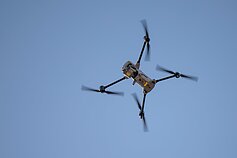
















After Lithuania declared its first-ever air-raid alert caused by a drone, defence experts are warning that such incidents are likely to become more frequent – and that the country's detection and response systems are not yet fit for purpose.
"We can call ourselves a near-frontline state," said retired Colonel Romas Žibas. "It is a slight stretch, but for the sake of vigilance we must regard ourselves as a country that is close to active combat operations."
Coordination and speed are the priorities
Colonel Žibas said he believes the Lithuanian military is already paying close attention to drone defence. His chief concern at present is the coordination between the State Border Guard Service (VSAT), the armed forces, and local authorities.
In his view, once border guards detect a drone using infrared sensors, the military must immediately establish its flight direction and move to intercept it, bringing it down in a safe location.
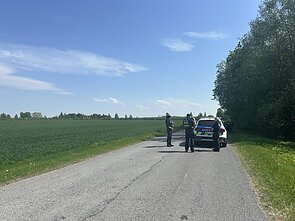
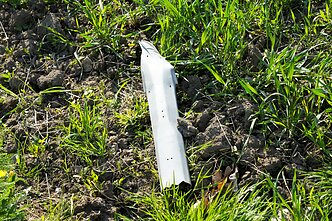
When a drone was spotted over Lithuania on Sunday, later falling near the town of Utena, the defence minister announced it had disappeared from border guard radar. A similar sequence of events repeated itself on Wednesday.
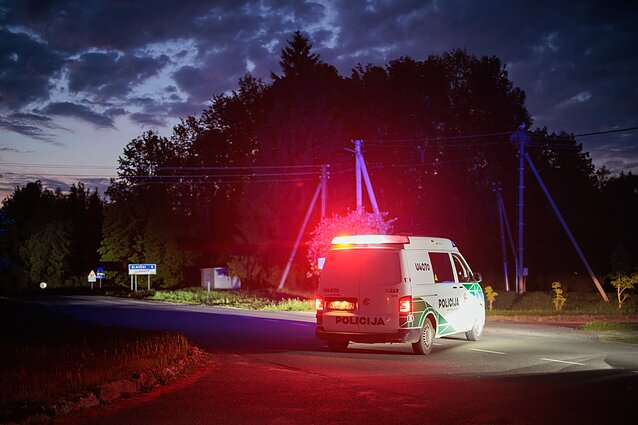
"It disappeared – but they were obliged to determine its flight direction," Colonel Žibas said. "A drone typically flies in a straight line for a certain period. Once you have established its heading, the military should be able to act. They should be communicating: drone detected, approximate altitude, direction, acoustic signature typical of this type of craft. All of that must be known and passed on."
Detection has its limits
Latvia, where drone sightings have so far been more frequent than in Lithuania, operates an acoustic detection system – one that Lithuania had pledged to introduce last year.
The system identifies drones by the sound they emit, picked up by a network of microphones. Latvia announced last year that it had become the first NATO member state to deploy such a system along its entire border.
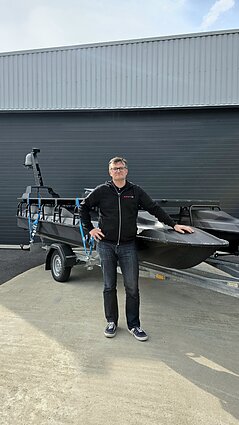
Jānis Garisons, a former State Secretary at the Latvian Defence Ministry and now head of a company developing naval drones, cautioned against expecting the military to intercept every drone, as it might with a conventional air attack.
"Radars have their limitations," he said. "They need to be elevated above the treeline or used in open terrain. You cannot detect everything, and drones fly low – which is precisely why radar misses them. You need multiple methods: acoustic, radar and visual monitoring. In Ukraine they use a system where ordinary civilians can report sightings through a dedicated app. In our case it is more complicated, because the distances involved are much smaller."
As a result, he said, countries are increasingly focusing their efforts on protecting strategic installations and urban centres rather than attempting blanket coverage.
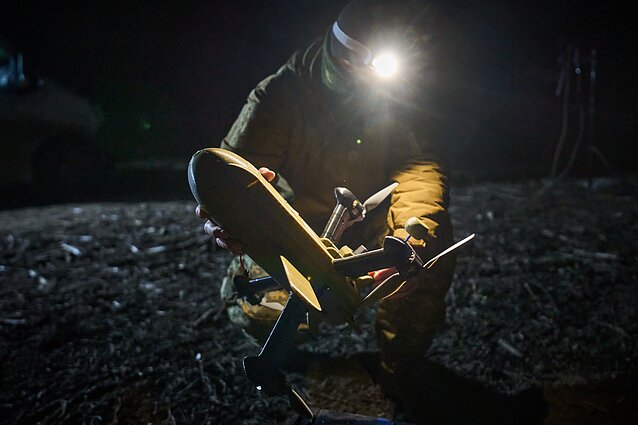
"As a manufacturer, I do everything I can to make a drone undetectable. Drone production is currently outpacing counter-drone capabilities. A hundred-per-cent-effective system is simply not achievable. Ukraine probably has the most advanced system in the world, and even there not every drone is detected."
Lithuania accelerating procurement
Lithuania is pressing ahead with accelerated procurement of short-range air defence equipment. Defence Minister Robertas Kaunas has said some of the newly ordered systems will be operational within two months. Lithuania plans to acquire Giraffe short-range radars and Piorun mobile air defence systems.
Colonel Žibas also suggested making use of existing assets – armoured vehicles fitted with detectors and cannons – for drone hunting. He referred to the improvised methods Ukrainian forces employed before developing dedicated capabilities.

"The things the Ukrainians tried before they developed proper capabilities – for instance, they would lash assault rifles together into a single device: six rifles arranged around a central barrel, all firing at once," he said.
He also noted that jamming a drone electronically is insufficient on its own.
"That will not solve the problem, because drones drifting in from Ukraine have already been subjected to electromagnetic weapons. The drone simply continues on the same heading it was following, maintaining altitude, speed and direction. When its fuel or power runs out – it falls."
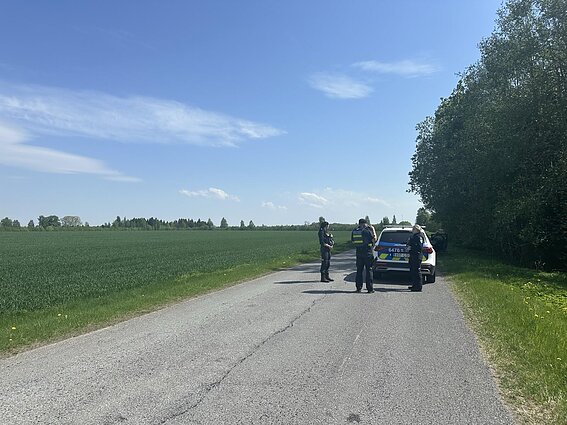
On Tuesday, a drone flying over Estonia was shot down by a missile fired by NATO air policing forces. Colonel Žibas said this indicated a fighter jet had been directed onto the target, using its own radar to locate and destroy it – a method that is effective, but costly.
"It could run to hundreds of thousands of euros," he said of the likely cost of such an operation.
The broader shift in warfare
Garisons argued that the wars in Ukraine and the Middle East represent a fundamental turning point in military technology.
"Previously, the armed forces would place an order, it would be developed over ten years and then fielded. Now technology is evolving on its own – but without cooperation with the military, industry cannot test it properly," he said.
He was also critical of what he described as a prevailing assumption within NATO: that in the event of a conflict, technological superiority would allow member states to fight differently from Ukraine.
"That assumption is wrong. Drones have already appeared over Poland, and the best example is the current war in the Gulf. Iran managed, using drones and long-range missiles, to bring down some of the most advanced military technology in existence.
We have what we have – and military technology has failed to keep pace, because what we are seeing, in Latvia at least, is a deep scepticism towards these newer systems. People are testing them and, if I am being candid, secretly hoping they will not perform well. But you simply have to get on and use them," he said.
Gaps exposed, public must be warned
Colonel Žibas said the recent incidents have exposed significant gaps in Lithuania's preparedness – not least the fact that some mayors only learned about drones in their own municipalities from media reports the following morning.

Both experts agreed that residents in affected areas must receive timely warnings when drones are detected. Garisons recounted being woken in the middle of the night by an air-threat alert while staying in eastern Latvia.
"I thought to myself: there is a forest behind the house from that direction, so there is no real threat to me – a drone could not fly through the trees. The most important thing is to explain the situation to people. A farmhouse in the middle of a forest will not be a target. There is a small risk, of course, but for critical infrastructure the risk is considerably higher." Knowing how to respond, he said, also helps psychologically.
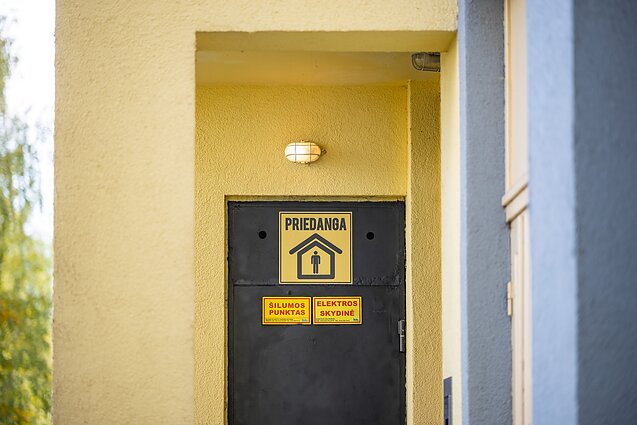
Colonel Žibas warned that if Lithuania were ever to face dozens or hundreds of drones simultaneously, as Ukraine regularly does, the warning and response system would need to function almost automatically. For now, he said, the country can manage isolated incidents.
"Thank God, there has been no threat to human life so far – but that threat could materialise at any moment. The system must operate as if it were wartime."

Newsletter
Every Friday morning.