











A Lithuanian man, convicted of collecting cigarettes smuggled across the border from Belarus by balloon told the court he had been driven by the desire for extra income and a better life. He kept his plans from his wife, telling her that night that he was going fishing.
Zbignevas is one of a few smugglers, who heard a verdict read against them in a Lithuanian court in recent months. In late April, a district court in the Vilnius region fined the man €6,700.
Met at a kebab shop
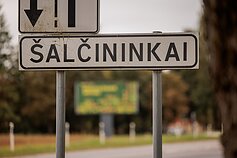
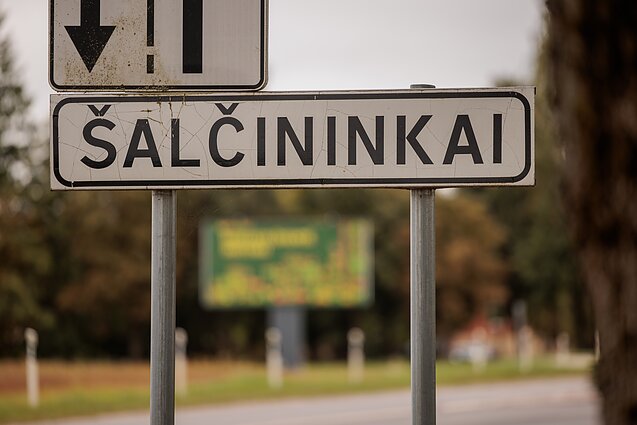
According to the verdict, dated April 24, 2026, Zbignevas met his accomplice at a kebab restaurant in Jašiūnai, in the Šalčininkai district of southern Lithuania, near the Belarusian border.
"While waiting for his order, he got talking in the car park with an unknown man of around 40 who said he was from Belarus and offered him the opportunity to earn money by transporting cigarettes," the document states.
Zbignevas did not take the offer seriously at first, but the prospect of extra income stayed with him. A week later he returned to the agreed spot near the kebab shop, where he met the same man again.
"During that conversation, Zbignevas was introduced to a plan under which cigarettes would be transported using aerial devices. He agreed to take part on account of his difficult financial situation and his desire to earn money.
He was told to hand over some of his own money and buy a phone with a new SIM card. He duly handed over €1,500 and provided a handset onto which a messaging application was installed," the court established.
He was promised around €3,000 in return for collecting the delivered cigarettes.
Fled into the bushes
On the night of the operation, Zbignevas met the Belarusian he barely knew and drove to a wooded area on the outskirts of Didžialaukis village in the Vilnius district. The two men avoided CCTV cameras and waited for further instructions, passed to them by phone.
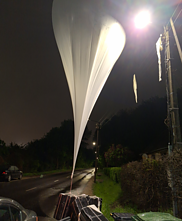
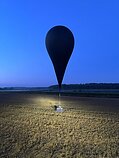
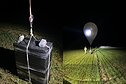
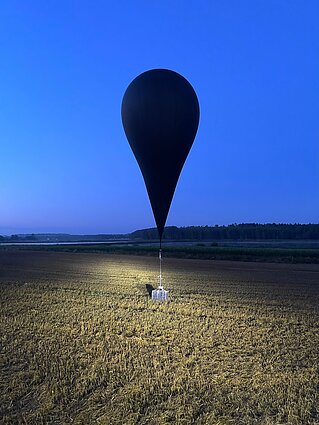
"Having received information about the location of the cargo, they drove to a spot near a river where they found boxes of cigarettes that had been delivered by balloon. This frightened the defendant, but he continued nonetheless, as he had already handed over the money.
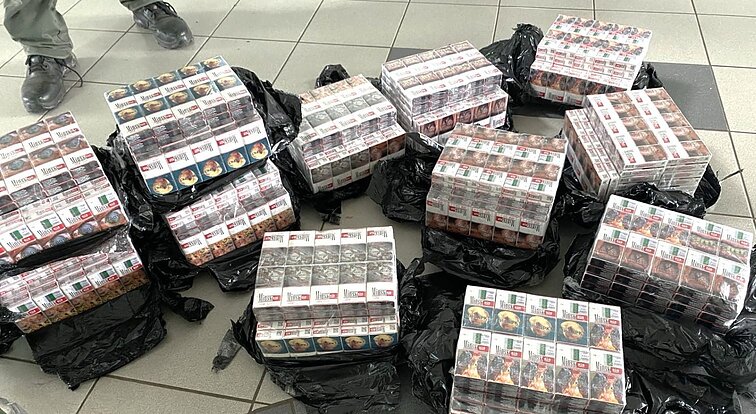
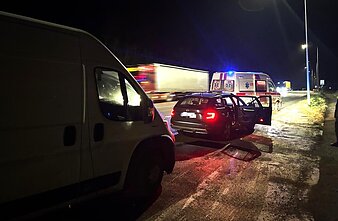
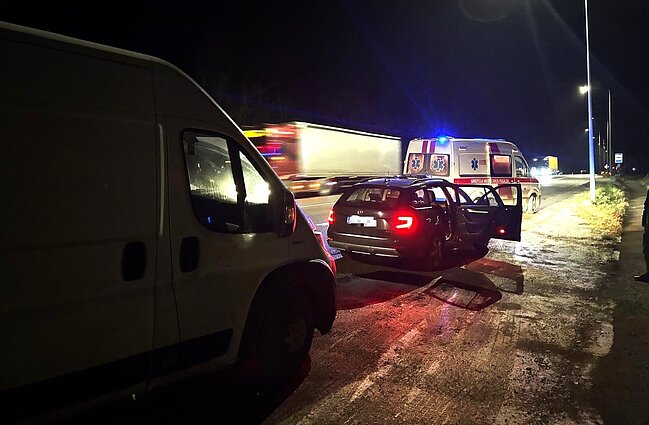
He stated that together with the Belarusian he carried the cigarette boxes towards a Jeep Grand Cherokee and hid them in the forest under spruce branches. He explained that at that moment, on noticing an approaching vehicle, the Belarusian made off, while he himself hid in the bushes. Shortly afterwards, officers from the State Border Guard Service (VSAT) arrived at the scene and found the boxes, the verdict says.
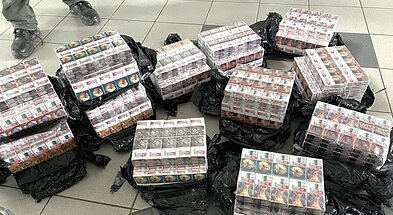
The boxes contained 4,500 packets of NZ Gold cigarettes bearing Belarusian excise stamps.
With no way out, Zbignevas emerged from his hiding place and admitted he had been at the scene. He did not reveal the Belarusian's identity, only indicating the direction in which he had fled.
"He explained that his primary motive was money and the prospect of improving his living conditions, as his family lives modestly. He stated that he now understands the unlawfulness of his actions, that he regrets them, and that had he known the possible consequences he would not have taken part.
He also noted that had he known in advance that the cigarettes would be transported by balloon, he would not have agreed. He explained that €1,500 was a large sum for him, which he handed over reluctantly, though he agreed to take the risk in the hope of a greater reward," the document records.
Of his accomplice, Zbignevas could say only that the man was around 40 years old, approximately 180 centimetres tall, of slim build, with short dark hair.
His mother stood surety
At the trial, Zbignevas, now in his mid-thirties, had his mother speak on his behalf.
"She explained that her son deeply regretted his actions, had wept, was distressed about his young children, and did not know what the consequences would be. She said her son had asked her for advice, and she had told him that what he had done was wrong and must never happen again.
She explained that she and her son discuss the incident almost daily, and that she intends to keep a close eye on him – that in future he will live closer to her, with plans to acquire a residential caravan and park it in her yard so that he is always within sight," the verdict relates.
Zbignevas had already been living in a caravan – at his wife's mother's property. The court also established that he has no history of contact with mental health or addiction services, that he is employed and earns around €1,200 a month, that he is married with two young children, and that his wife is not in work.
He had not told his wife his true intentions that evening. Instead, he told her he was going fishing.
A reduced fine
The court found Zbignevas guilty of smuggling and unlawful handling of excise goods, and handed down a combined fine of €10,500. This was reduced by a third because the case was heard under a summary procedure, with a further €300 deducted for one day spent in custody.
The court also ordered the contraband cigarettes to be destroyed. The Jeep Grand Cherokee used in the offence was returned to Zbignevas.
He had the right to appeal but chose not to. He has two years in which to pay the fine.
One case among many
Zbignevas' case is far from unique. In recent years, prosecutors and courts have regularly announced the detention and subsequent conviction of Lithuanian residents involved in balloon-smuggling schemes.

In October last year, two residents of the Šalčininkai district were fined €6,400 and €8,000, respectively. In November, two further residents of the same district were remanded in custody. In December, a pre-trial investigation was announced in which 21 people were detained, among them the leaders of a criminal association.
In February, five more individuals, suspected ringleaders, were arrested, with Lithuania's elite anti-terrorist unit Aras taking part in the operation.
On May 14, law enforcement announced the dismantling of yet another organised group that had been coordinating the smuggling and distribution of contraband cigarettes. Two men, born in 1978 and 1981, were detained on suspicion of running a network of illegal sales points in the town of Ignalina and the surrounding district.
Around 10,000 packets of various contraband tobacco products, with an estimated value exceeding €42,000, were seized, along with an illegally held firearm, ammunition of various calibres, and other items relevant to the investigation.
On May 22, law enforcement announced they had detained 27 people, including three border guards and 10 police officers.
Further reading
The scale is shrinking – but the problem persists
Joint raids by police, border guards, customs investigators and military police have been under way in border districts since 24 November 2025. By May 13, some 59,000 vehicles and 76,000 individuals had been checked; 662 administrative reports had been drawn up; 134 balloons intercepted; 376,000 packets of contraband cigarettes seized; 72 people detained; and 19 pre-trial investigations opened.
The systematic violations of Lithuanian airspace by the Belarusian regime are regarded by Vilnius as a form of hybrid warfare.
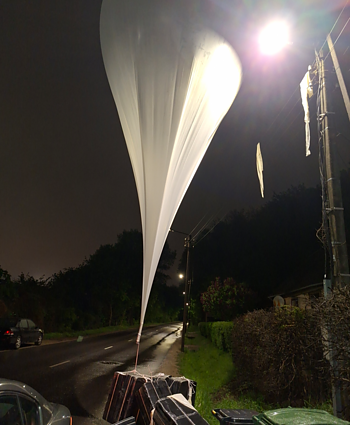
Despite these efforts, the activity has not stopped. Last week, favourable wind conditions again forced the temporary suspension of operations at Vilnius airport. Meanwhile in Kaunas, a balloon carrying six boxes of contraband cigarettes was observed landing in the Šančiai district.
Nevertheless, the Lithuanian government says the overall volume of smuggling is declining. According to the Border Guard Service, 90 balloons carrying contraband cigarettes were intercepted between January and April this year, compared with 231 during the same period last year.
"The intensification of inter-agency cooperation and the crackdown on smuggling networks has unquestionably contributed to reducing the scale of balloon smuggling," the government chancellery stated.
On the disruption to airports, officials explained that decisions to suspend operations are influenced by a range of factors: wind direction and strength, fog, the number of balloon signatures detected, their speed and trajectory.
"Although such disruptions are now less frequent, their continued recurrence reflects either the Belarusian regime's unwillingness or its inability to bring under control a smuggling operation that poses a danger to civil aviation.
Lithuanian institutions place absolute priority on flight safety and the safety of passengers. The coordinated work of air navigation services, Lithuanian Airports and other agencies ensures that whenever civil aviation is disrupted, restrictions on air traffic are kept to the minimum possible in both scope and duration," the government representatives said.

Newsletter
Every Friday morning.