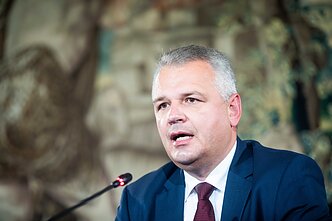










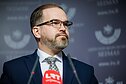





Lithuania would take part in efforts to strengthen security in the Arctic only within a NATO framework and with US backing, Foreign Minister Kęstutis Budrys said Wednesday.
“NATO involvement in Arctic security is mandatory – it has to happen,” Budrys told reporters. “Lithuania’s presence could take various forms, not only troops, but also technological contributions and the like. But the principle is clear: only under the NATO flag, with the blessing of the Americans.”
Budrys spoke amid rising tensions over Greenland after US President Donald Trump repeatedly said he wants to take control of the autonomous Danish territory, straining NATO unity and prompting European countries to push back against Washington’s ambitions in the Arctic.
The foreign minister said Lithuania has not received an invitation from Denmark to participate in any Arctic-related exercises outside a NATO format.
“No one can even entertain the idea that operations of this kind – whether exercises or a presence – would be directed against any of our allies,” Budrys said. “Any such considerations can only be about one thing: ensuring the security of the Euro-Atlantic space and the North Atlantic area.”
He dismissed suggestions that NATO allies could act against one another in the region. “It is strange to me how anyone could come up with such ideas, that we would somehow deploy forces against one another,” Budrys said, adding that such interpretations would reflect “extremely poor communication”.
“I see this as an area where we can work well together, both with Canada and with the United States,” he said.
Trump also said this week that beginning in February he would impose a 10% tariff on imports from eight European countries that sent troops to Greenland for an exercise, including Germany, France, and the United Kingdom. He said the tariffs would rise to 25% in June and remain in place until “a deal is reached for the complete and total purchase of Greenland”.
Denmark and other European countries have so far rejected selling or otherwise ceding Greenland to the US.
European Union leaders are scheduled to hold an emergency summit in Brussels on Thursday evening to discuss their response to what officials describe as one of the most serious crises in transatlantic relations in recent years.

Newsletter
Every Friday morning.