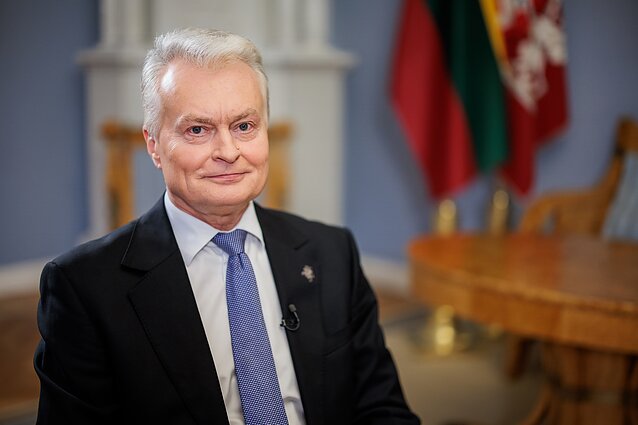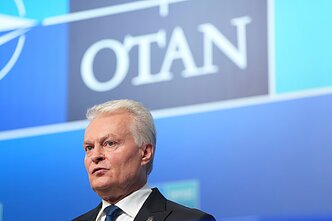

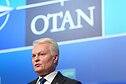








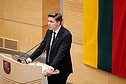
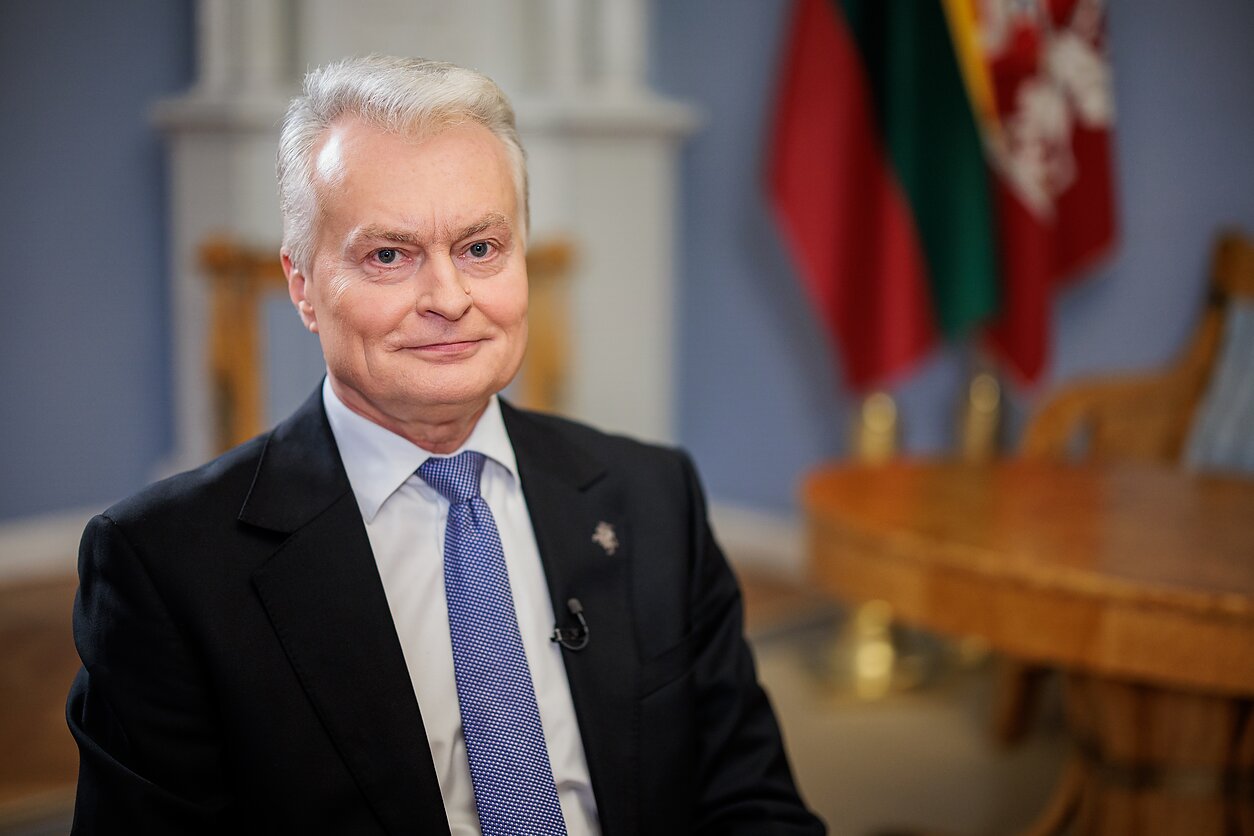
Lithuanian President Gitanas Nausėda has said that any suggestion of resuming the transit of Belarusian fertilisers through Lithuania in exchange for political or economic concessions would be “fundamentally unacceptable”.
“For me, values-based politics is not an empty concept or an empty phrase. Trading values is totally unacceptable to me,” he said. “This is also the policy of the European Union, as the sanctions imposed on Belarus are not Lithuania’s alone.”
The comments come after the United States lifted sanctions on Belarusian fertilisers late last year in exchange for the release of political prisoners. Political analysts have suggested Washington could now seek to persuade Lithuania to allow fertiliser transit through the port of Klaipėda, which was halted in 2022 on national security grounds.
The European Union later imposed its own sanctions on Belarusian fertilisers, with a decision on their extension due in February. Nausėda said he hoped countries in the region would maintain a united and firm position.
The president also said it was important for Lithuania’s parliament, the Seimas, to revoke the conclusions of a previous parliamentary inquiry that linked him to the Belarusian fertiliser business, describing such allegations as personally painful.
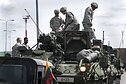
Separately, Nausėda said he suspected Russia was contributing to the spread of disinformation surrounding plans for a new military training area near the town of Kapčiamiestis in southern Lithuania.
He said he would visit the area later this week to meet residents and address concerns, which he described as largely unfounded.
“People now have many fears – about mass deforestation, land seizures and a lack of security” he said, adding. “I am definitely going there ready for a constructive and honest discussion, respecting people's opinions, trying to convince them and, first of all, refute the lies that are now pouring in from all sides, probably not without Russia's help.”
Nausėda argued that the training area would bring economic benefits to the region and help stimulate development in what he described as a relatively remote area.
Lithuania’s armed forces currently face a shortage of training facilities, he said, stressing that regular exercises were essential for national defence.
“An army that eats three times a day, sleeps and does nothing is not an army,” the president said.
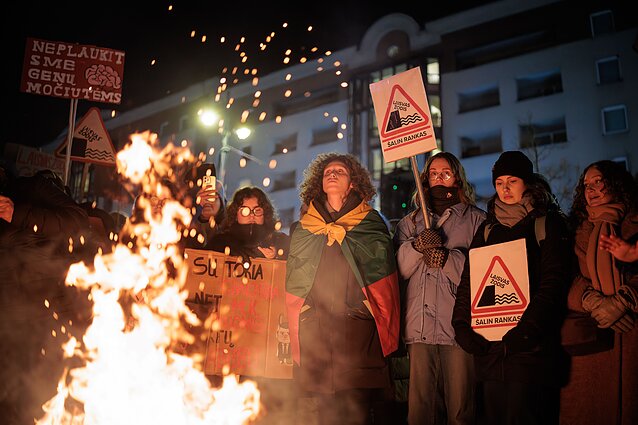
President criticises LRT protests
Nausėda has criticised the LRT protests for using airtime for moments of silence.
“In my view, it is not justified. However, it takes on a very specific commercial form, and then I ask very clearly whether they really got the consent of the public, which is essentially the taxpayer that finances LRT's maintenance, to express their protest in this particular form," Nausėda said in an interview with BNS published on Monday.
“There are other forms of protest, but this form involves money, and then the question naturally arises: who gave such permission?” he added.
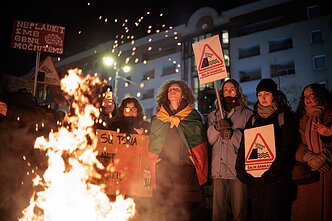
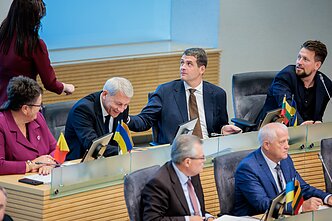
When Lithuania's parliament began considering a proposal to make it easier for the LRT Council to dismiss the public broadcaster's director general, journalists and other employees of the national broadcaster announced a protest for freedom of speech in December last year.
As part of the protest, LRT journalists held moments of silence on air, calling on politicians to keep their hands off the public broadcaster.
According to Nausėda, it was wrong to link the amendments intended to make it easier to dismiss the LRT director general with restrictions on freedom of speech.
"Similar provisions or principles existed [as proposed by the amendment] before the previous ruling coalition came into power. And they were changed at the last minute [...] to make the dismissal of the LRT director more complicated. Now, the status quo is simply being restored. I would like to ask those who are protesting – why didn't you protest until the end of 2024, when the circumstances were similar?" the country's leader said.
Nausėda also downplayed the need expressed by LRT journalists to depoliticise the supervisory LRT Council, where the president nominates a third of the 12 members.
"The very principle of having [council members] appointed by the opposition, the ruling bloc, the president, and public organisations, I believe, diversifies the composition of the LRT Council itself and, accordingly, allows us to believe that it is a sufficiently depoliticised institution," Nausėda told BNS.

Doubts about coalition
Nausėda also said he doubted that the government would survive until the 2028 parliamentary elections, adding that the populist Nemunas Dawn party could leave the ruling coalition.
"[The Lithuanian Social Democratic Party] has to understand that, one way or another, this ruling coalition, as it exists today, is unlikely to last until the next elections,” Nausėda said.
“And not even because of their will, but because some of the parties currently in the coalition will say 'goodbye' ahead of the elections," he added, confirming he was referring to the Nemunas Dawn party.
Lithuania's next regular parliamentary elections are scheduled for the autumn of 2028.
"I have no intention of instructing them in any special way, because this is an independent party. They must assess the statements made [by the leader of the Nemunas Dawn party, Remigijus Žemaitaitis] and, above all, statements on issues that are not cosmetic but are truly essential to our security and foreign policy," the president said.
"Questioning whether we need vital elements that form the backbone of our security, or suggesting that we should fundamentally change our foreign policy and start trading it away... These are alarm bells that cannot be ignored. Like an alarm clock – it may start with an irritating beep, but eventually it has to provoke a response," he added.
Nemunas Dawn, which holds 18 seats in the parliament, has been part of the ruling coalition since November 2024. At the time, Nausėda criticised the decision to bring the party into the governing majority.
Further reading

Newsletter
Every Friday morning.