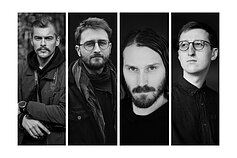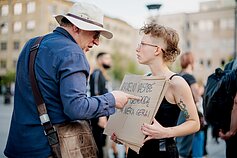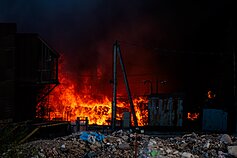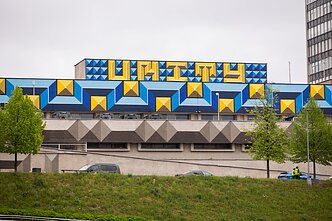




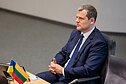
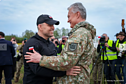


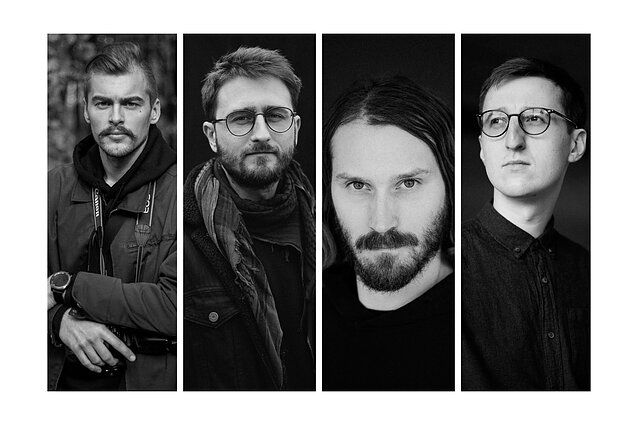
2025 was marked by protests, according to LRT photographers. Demonstrations, key political events, powerful personal stories and moments of everyday life were captured in striking images by LRT photographers Justinas Stacevičius, Edvardas Blažys, Vilmantas Raupelis and Domantas Umbrasas.
The photographers say they value the opportunity to act as the eyes of society and stress that freedom of expression is inseparable from creative freedom.
A year of protest
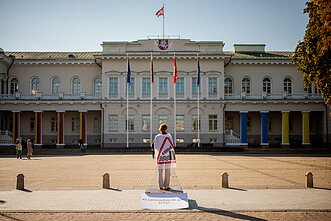
LRT photographer Edvardas Blažys says the year stood out for the sheer number of protests – involving police officers, farmers, later lorry drivers, and, most notably, the widely reported cultural protests followed by demonstrations in defence of free speech.
“Many protests merged into one, united under a single symbol – a warning sign, Lithuania, culture, free speech... For me, this was a year of protest,” Blažys told LRT.lt.
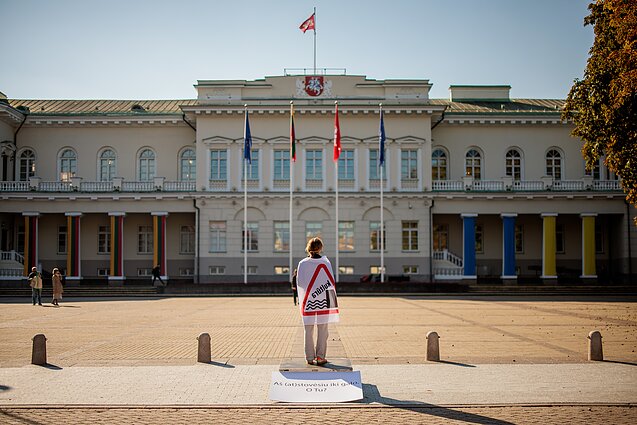
“There were numerous demonstrations outside the Presidential Palace, the Seimas and the Government,” says photographer Vilmantas Raupelis. “It is striking that just a year after the elections, so many protests have already taken place.”
Alongside cultural protests and rallies in support of free speech, another LRT photographer, Domantas Umbrasas, highlights demonstrations related to the situation in the Gaza Strip, as well as in Belarus.
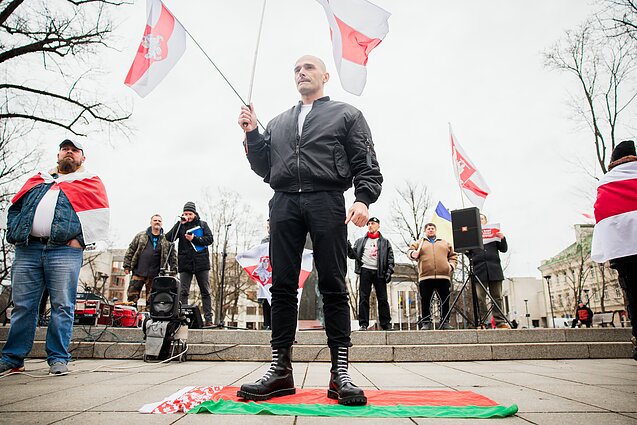
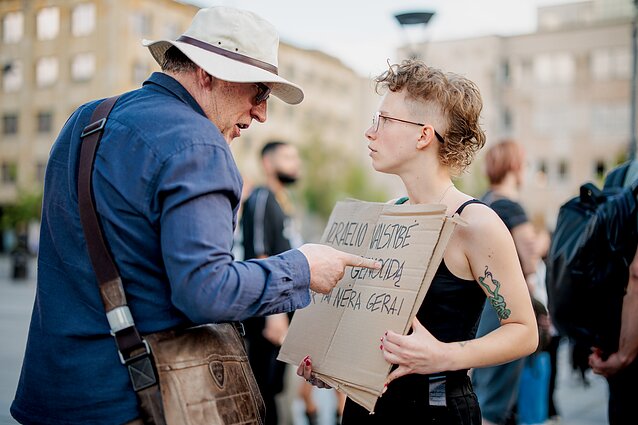
LRT photo editor Justinas Stacevičius echoes his colleagues. In his view, 2025 was a year of the people and of protest, marked not only by growing public dissatisfaction but also by greater courage to take to the streets and openly express opinions and views.
Covering fires and leaving emotions aside
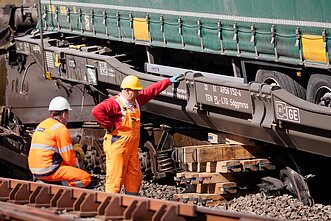
Domantas Umbrasas says that 2025 was also a year of fires. For a period, various waste management companies were going up in flames with striking regularity. This year, photographers were called on to document more than one blaze.
“I photographed one waste processing plant fire from quite far away, but the wind blew the smoke straight over me, and large, smouldering chunks of soot were falling on me. It was a surreal sight,” Umbrasas recalls.
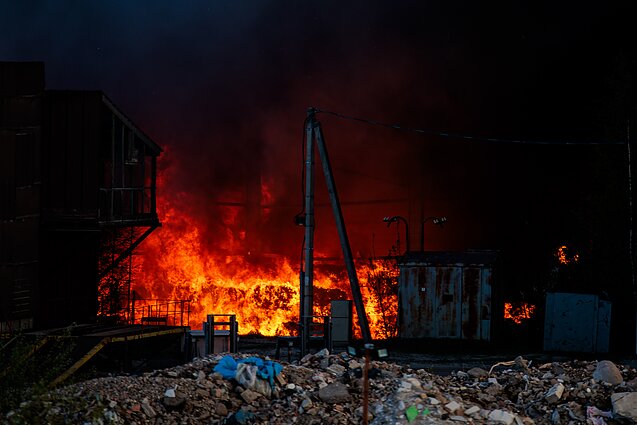
His colleague Vilmantas Raupelis witnessed a gas-leak fire at close quarters. “We had to get almost right up to the fire – you see flames five metres high, hear explosions and feel the shockwave coming towards you.”
Although photographers often find themselves in dangerous situations, Blažys says it is part of the job and emotions must be put to one side.
“There are angry people who try to push you, people who are unhappy. But work is work – you have to do it. You put your emotions aside and get on with the job. Later, when everything is done, I go home and calm down psychologically – I sit down and play a computer game,” he says with a smile.
Umbrasas adds that photographers are often required to capture distressing situations where people do not want additional attention, such as traffic accidents.
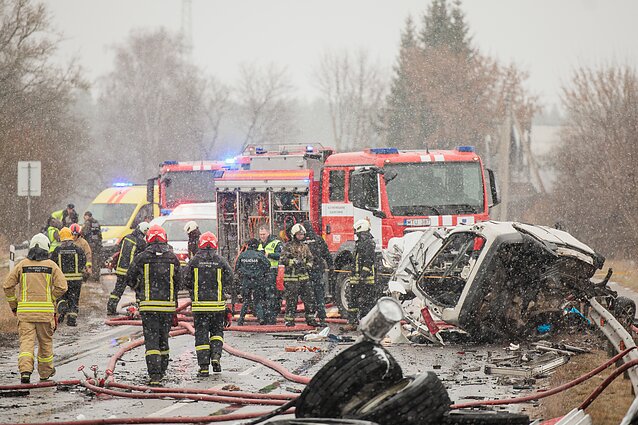
“In those cases, you try not to photograph people directly, but you are still close by. They don’t want attention, and that’s not pleasant. But you understand that you have to do your job, trying not to cross moral boundaries and listening to what people ask of you. If you don’t offend anyone, you don’t feel you’ve done something wrong,” he reflects.
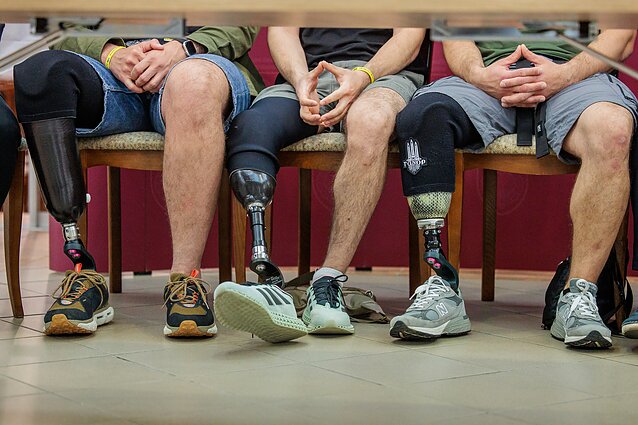
According to Umbrasas, one of the hardest parts of covering events is making quick decisions about where to be in order to get a strong image.
“Time pressure is usually intense. For example, when photographing a fire, the area is huge and you have to decide which direction to go. That takes time, and if you choose the wrong direction, you simply won’t get the picture,” he says.
Sensitive moments and tragedy
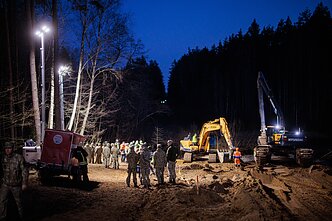
The photographers were deeply affected by witnessing the US military search and rescue operation in Pabradė at close range. Raupelis says the work there was demanding and time-consuming. Photographers arrived early in the morning and spent long hours waiting for updates. The task was made harder by long distances on foot, poor internet connections and the emotional weight of the situation.
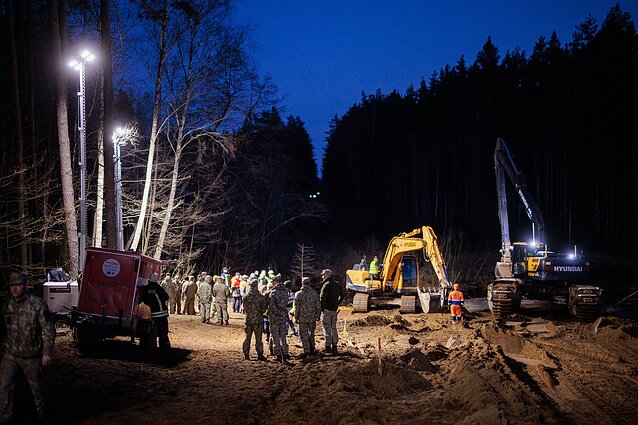
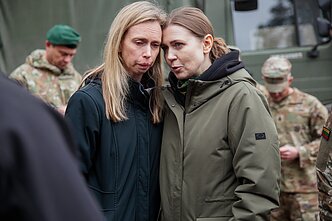
It was during this operation that a photograph taken by Raupelis of the then defence minister Dovilė Šakalienė and US ambassador Kara McDonald spread widely on social media. The image shows a moment of comfort, with Šakalienė embracing the ambassador and offering words of reassurance. For Raupelis, it remains one of his most memorable photographs.
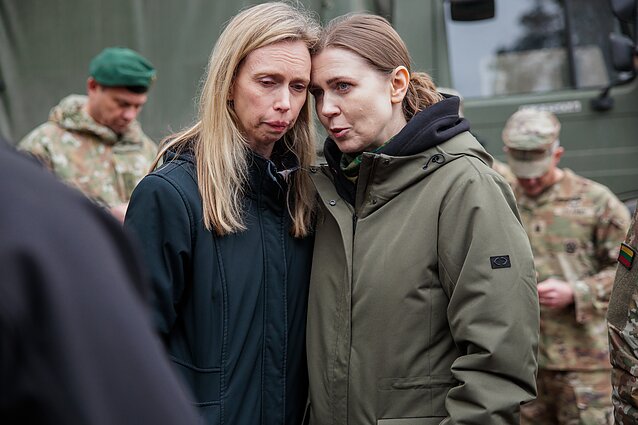
“I was very lucky to turn towards the minister and the ambassador at that moment. A press conference was taking place, and they were standing some distance away – the media was focused on the briefing, not on them.”
Reflecting on his own work, Blažys highlights images from the visit to Lithuania by social media star IShowSpeed.
“I was watching a documentary about The Beatles, showing girls running after them. When IShowSpeed came to Lithuania, children were running after him through the rain just to take a photo. It reminded me of the Beatles era. It’s strange to see crowds chasing a single person who is famous on the internet,” Blažys says.
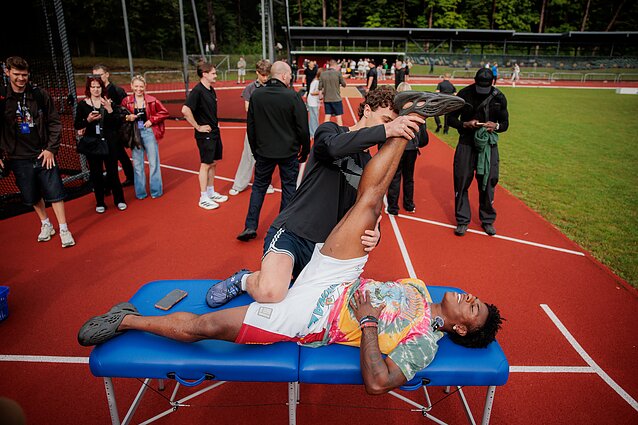
Stacevičius also recalls the event, describing IShowSpeed’s appearance as a cultural phenomenon rarely seen in Lithuania.
“It says a lot about our society – we can reach young people, but only through different means that are not familiar to us,” Stacevičius reflects.
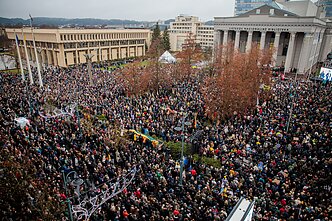
Umbrasas names one of his own photographs from a fire as his image of the year, while praising Stacevičius’s aerial shots of crowds at protests in support of free speech. Stacevičius himself also selected those images as his photographs of the year.
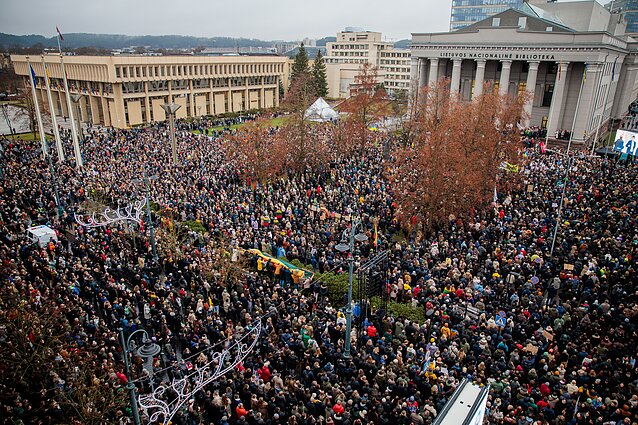
“I’ll admit I’m not particularly fond of crowd shots – they’re not technically complex, you just need to be in the right place at the right time. But these images became important both to me and, I think, to society. When people see them from above, they realise they are not alone. People often say: will I really go out alone and fight the whole world? Looking at these photos, you understand that you’re not alone, that there are many like-minded people,” Stacevičius says.
Discussing his colleagues’ work, Stacevičius also singles out a photo by Blažys from Užgavėnes – a traditional Lithuanian folk festival marking the end of winter and the approach of Lent, usually celebrated with masks, exaggerating human flaws. The photoraph depicted a man wearing a mask of US President Donald Trump.
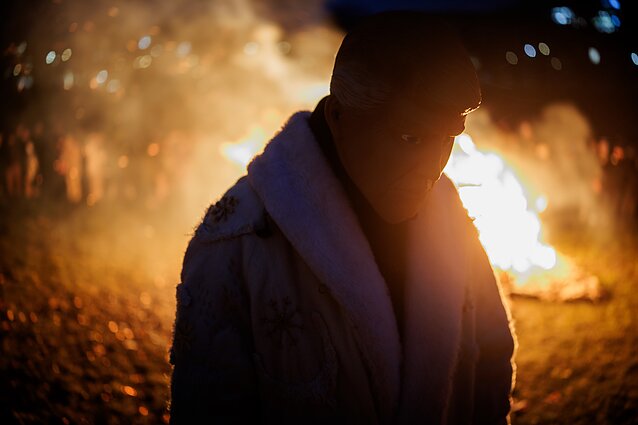
“Traditionally, Užgavėnes' masks are devils and all sorts of monsters. When we start using the faces of certain politicians and go out dressed like that to scare others, we are speaking through culture and tradition about very deep political phenomena,” Stacevičius says.
Emotion, clarity and timeless shots
For Stacevičius, a good photograph is one the audience can feel. It should not be difficult to understand or visually distracting – the meaning ought to be immediately clear, and the emotion palpable.
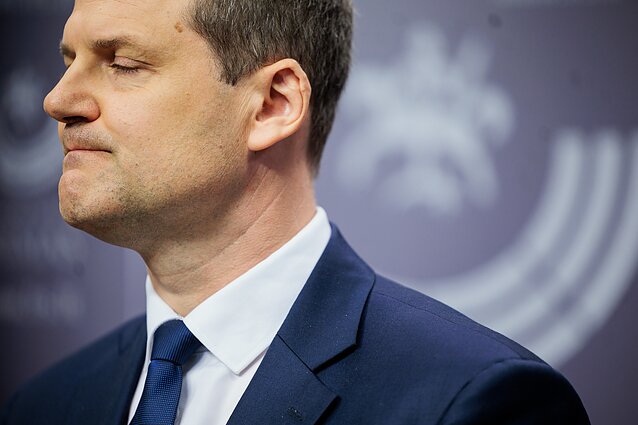
Blažys says a strong image is one that resonates with its viewers, while for Domantas Umbrasas the key is authenticity. “It does not matter what is photographed – whether it is a tragedy or a joyful moment – what matters is whether the image conveys real emotion,” he says.
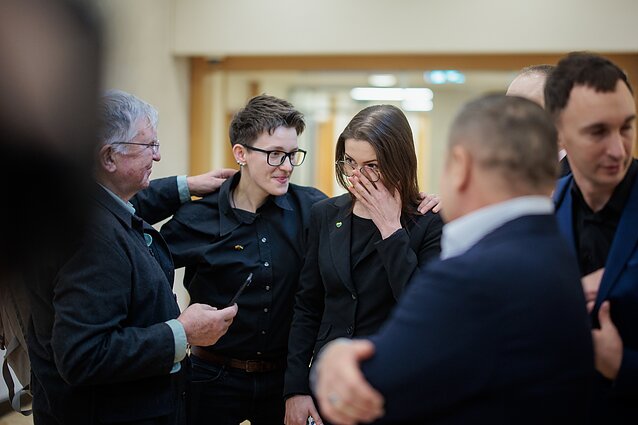
Raupelis values photographs that last longer than a single news cycle and remain relevant over time. With events rapidly replacing one another, he notes, images can quickly lose their impact and be eclipsed by the next story.
“A good photograph is one that is not tied to the moment,” Raupelis says.
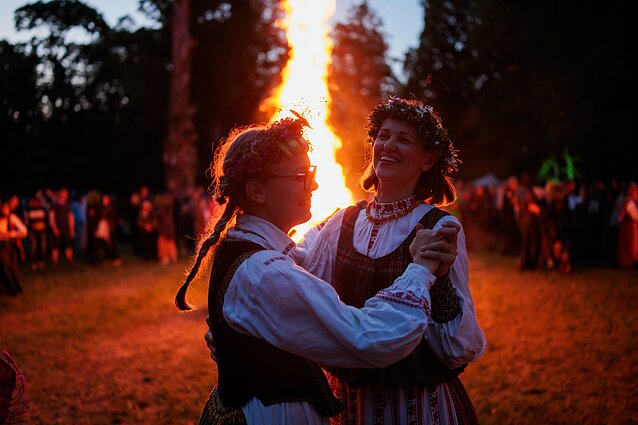
He adds that the surroundings captured in an image are just as important as the subject itself, helping to communicate the central idea.
“When you see a photograph, everything should be clear without a headline. If the person is a carpenter, the picture should show that – not place them against a black background next to a sofa,” he says with a smile.
What remains out of frame
The photographers agree that viewers usually see only the final result. As Blažys explains, there is often a great deal of planning and waiting behind a single image.
“Typically, you wait for hours in one place to take ten shots, and from those you get one photograph that everyone ends up sharing. After the protest in defence of free speech, people shared an image taken from above showing a large crowd. Capturing that shot involved days of planning – working out how to access the location, from where to shoot, and the exact moment to press the shutter,” he says.
Another invisible part of the job is long hours of waiting. “Waiting makes up most of our work. Even when covering a court hearing, you arrive an hour before the prison convoy, secure a spot so other photographers do not block your view, and then you wait – in the cold or in the heat. The cold is what you remember most,” Umbrasas says with a smile.
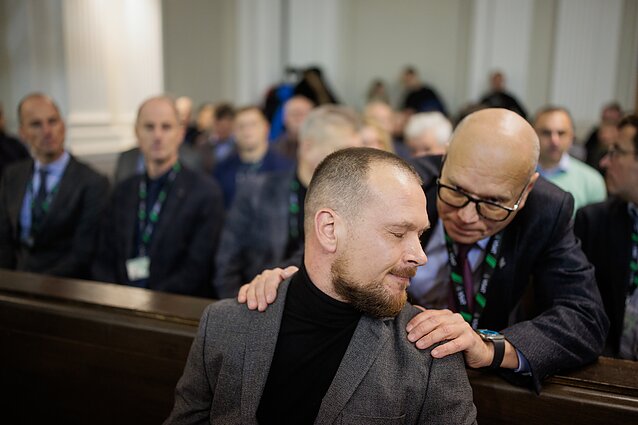
Stacevičius agrees. Photographers often work in harsh conditions, standing outdoors for long periods.
“You need a lot of willpower – to stay awake, push aside boredom and hunger, and find the motivation to wait for something that may or may not happen. But I have always said I am not a desk person – the world does not happen at a desk,” he says.
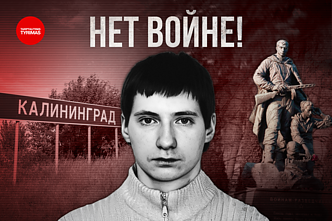
![Rusijai toliau vykdant brutalų karą, žuvo už Ukrainą kovojęs lietuvis Tomas Valentėlis. „Nemanau, kad mano komanda ar aš esame pajėgūs [stiprūs] – realiai vis tiek labai daug ko nepadarai fronte kaip pėstininkas, sėdi bunkeryje 10 dienų, kol tave bombarduoja. Draugai galvoja, kad aš durnas, kad esu čia. Norisi padaryti kažkokį skirtumą, kovoti, bet nesinori numirti“, – LRT.lt yra pasakojęs Tomas. T. Valentėlis žuvo vykdydamas kovinę misiją Kupjansko rajone, Charkivo srityje, tai buvo jo pirmasis išvykimas į frontą. Su žuvusiu savanoriu atsisveikinta Kyjive, vėliau į paskutinę kelionę jis palydėtas Lietuvoje. Rusijai toliau vykdant brutalų karą, žuvo už Ukrainą kovojęs lietuvis Tomas Valentėlis. „Nemanau, kad mano komanda ar aš esame pajėgūs [stiprūs] – realiai vis tiek labai daug ko nepadarai fronte kaip pėstininkas, sėdi bunkeryje 10 dienų, kol tave bombarduoja. Draugai galvoja, kad aš durnas, kad esu čia. Norisi padaryti kažkokį skirtumą, kovoti, bet nesinori numirti“, – LRT.lt yra pasakojęs Tomas. T. Valentėlis žuvo vykdydamas kovinę misiją Kupjansko rajone, Charkivo srityje, tai buvo jo pirmasis išvykimas į frontą.](/img/2025/12/16/2267140-614209-756x425.jpg "Rusijai toliau vykdant brutalų karą, žuvo už Ukrainą kovojęs lietuvis Tomas Valentėlis. „Nemanau, kad mano komanda ar aš esame pajėgūs [stiprūs] – realiai vis tiek labai daug ko nepadarai fronte kaip pėstininkas, sėdi bunkeryje 10 dienų, kol tave bombarduoja. Draugai galvoja, kad aš durnas, kad esu čia. Norisi padaryti kažkokį skirtumą, kovoti, bet nesinori numirti“, – LRT.lt yra pasakojęs Tomas. T. Valentėlis žuvo vykdydamas kovinę misiją Kupjansko rajone, Charkivo srityje, tai buvo jo pirmasis išvykimas į frontą. Su žuvusiu savanoriu atsisveikinta Kyjive, vėliau į paskutinę kelionę jis palydėtas Lietuvoje. Rusijai toliau vykdant brutalų karą, žuvo už Ukrainą kovojęs lietuvis Tomas Valentėlis. „Nemanau, kad mano komanda ar aš esame pajėgūs [stiprūs] – realiai vis tiek labai daug ko nepadarai fronte kaip pėstininkas, sėdi bunkeryje 10 dienų, kol tave bombarduoja. Draugai galvoja, kad aš durnas, kad esu čia. Norisi padaryti kažkokį skirtumą, kovoti, bet nesinori numirti“, – LRT.lt yra pasakojęs Tomas. T. Valentėlis žuvo vykdydamas kovinę misiją Kupjansko rajone, Charkivo srityje, tai buvo jo pirmasis išvykimas į frontą.")
He also emphasises the need for photographers to follow the news closely in order to understand what needs to be documented.
“You can take beautiful, technically perfect photographs, but without context – without symbolism coming together – they will not tell a story,” he says.
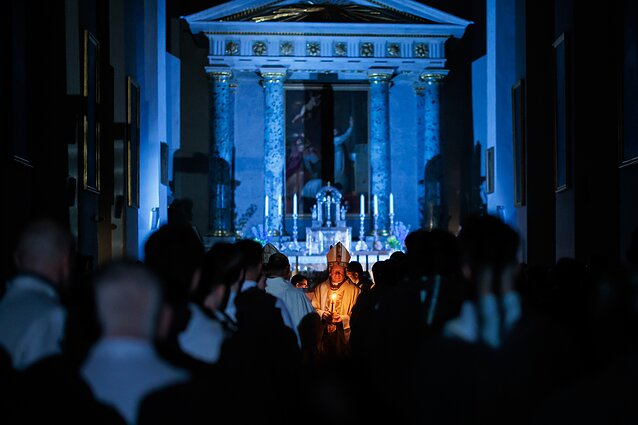
Raupelis adds that conversations with subjects and an effort to sense their emotions also remain unseen. Each person brings their own experiences to a photo shoot, he notes, and it is important that both photographer and subject feel comfortable.
Dream shots: the Earth and Vilnius Stadium
Looking ahead, the photographers also share what they would like to capture in the coming years. Blažys jokes that he would like to prove to conspiracy theorists that the Earth is not flat.
“That opportunity has not come yet, but hopefully one day it will,” he says, laughing.
Raupelis says he would particularly like to photograph a long-awaited landmark closer to home.
“The football stadium. I would like to photograph the opening of the stadium in Vilnius,” he says with a smile. Its construction has been delayed for many years now.
Stacevičius, however, admits that he no longer dwells on such ambitions.
“I used to think a lot about what I wanted to capture, having seen so many remarkable photographs by Lithuanian and international photographers. But I stopped doing that. When you start imagining too much, there is a risk of looking for things that are not really there and imposing them on people,” he says.
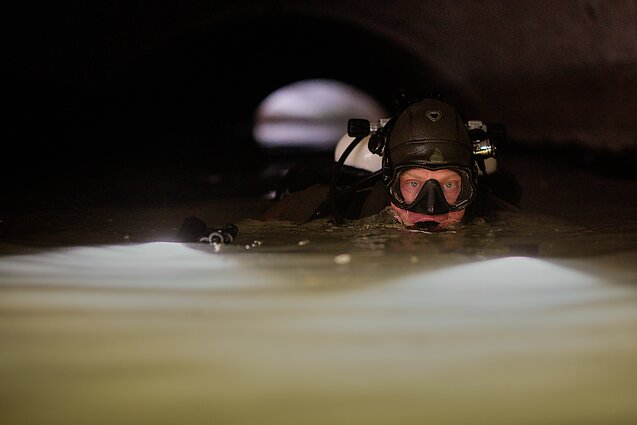
Recording and preserving history
Photographers are the eyes of society, says Stacevičius. In his view, they allow the public to see events and places that many people might never otherwise witness.
“We see on behalf of a great many people, and we present information from angles that not everyone can reach. I think our work is very important and carries a great deal of responsibility. We visualise events in a way that avoids inventing or embellishing reality,” Stacevičius says.
For Blažys, photography is first and foremost about documenting history. “For now, I am archiving history,” he says. As a school pupil, he was always drawn to history lessons. At the back of textbooks, where the photographers’ credits were listed, he would turn the pages to read the names of the image authors.
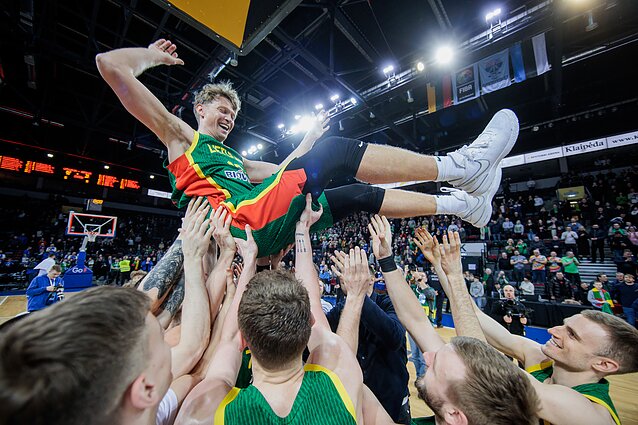
In documenting historical moments, Blažys has himself made his way into history textbooks through his photographs. “I hope that one day children will open a textbook, turn to the final pages and see my name there,” he says with a smile.
For Umbrasas, photography is first a passion and then a profession. That combination, he says, brings particular satisfaction. “When your hobby is also your job, everything comes together very well.”
Freedom of expression and creative independence
As protests in defence of free speech have taken place, LRT photographers say the accurate documentation of events – and the freedom to do so – is especially important.
“I cannot lie, I cannot erase people from photographs like they did in the Soviet Union. That no longer happens – no one tells me how I must do my job. And I would not want anyone to do so,” Blažys says.
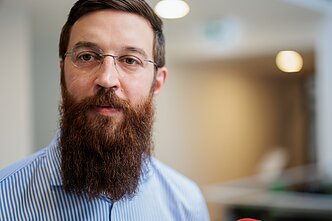
![“I was just four years old when I was deported to Siberia, to the Tomsk region, by the Soviet occupiers and Lithuanian collaborators. I returned in 1960,” recalled Jonas Stasevičius, who spent nearly 13 years in Siberia. Now 82 and living in Panevėžys, he takes pride in independent Lithuania and is engaged in educational work, but he remembers that returning deportees were not welcomed home with open arms. “The worst moment of my life was when we came back here [to Lithuania]. We got off the train at Panevėžys station and there was nothing, our home had been destroyed,” he said.](/img/2025/12/16/2267123-50463-756x425.jpg "“I was just four years old when I was deported to Siberia, to the Tomsk region, by the Soviet occupiers and Lithuanian collaborators. I returned in 1960,” recalled Jonas Stasevičius, who spent nearly 13 years in Siberia. Now 82 and living in Panevėžys, he takes pride in independent Lithuania and is engaged in educational work, but he remembers that returning deportees were not welcomed home with open arms. “The worst moment of my life was when we came back here [to Lithuania]. We got off the train at Panevėžys station and there was nothing, our home had been destroyed,” he said.")
Stacevičius echoes that view, noting that images, like words, can be used for propaganda. For that reason, he argues, freedom of expression must include the freedom to document moments independently.
“Just as you can block your ears, you can also close your eyes to certain events. Press photography is an inseparable part of freedom of expression,” he says.
Raupelis also stresses the importance of working independently, without directives. “Otherwise, personality disappears and you become a tool that presses a button and produces a neat image – but only in one prescribed way. Emotion, history and the sense of truth would be lost: how things really were, not how they were supposed to be. Today, the value lies in being able to photograph reality as it is, not as it should be. That is something to be glad about.”
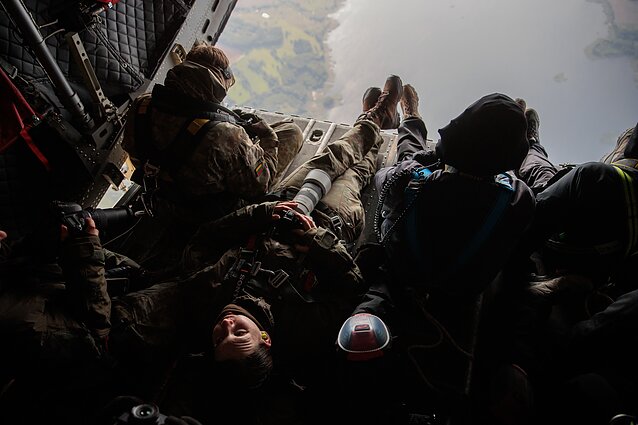
For Umbrasas, freedom of expression goes hand in hand with creative freedom.
“When you have that freedom – when you are not constrained by templates and politicians are not telling you what you can or cannot photograph – the images turn out better. It matters that you can do the work you want to do, without being dictated to,” he says.