















Lithuanian farmers are raising concerns that a proposed European Union trade agreement with the South American bloc Mercosur could flood European markets with cheaper imports, undercutting domestic production.
“At the same time that we in EU countries cannot grow cheap products using inexpensive chemicals or prohibited substances, the EU wants to sign agreements with South American countries so that such products reach our consumers’ tables and our store shelves,” Dainius Arlauskas, a board member of the Lithuanian Grain Growers Association, said Monday at a press conference.
“This will undermine everything that can be imported into the European Union, and not all of it will even be grown in Latin America,” he added.

Gedas Špakauskas, vice chairman of the Lithuanian Farmers’ Union, highlighted Brazil as an example, saying the country produces twice as much beef as the EU consumes. “Imagine the vast resources they have, and all that beef will try to reach us here in the EU,” he said.
Špakauskas said the deal is likely to be signed, but Lithuanian farmers will pressure Brussels to “act fairly” and provide compensation if markets are distorted.
“We will continue not to support it [the Mercosur deal], but in doing so, we can keep drawing attention to the need for fair treatment, focus on food quality, and proper compensation for farmers if markets are skewed,” he said.
Farmers also criticised the lack of clear mechanisms for compensating for market distortions from Mercosur imports, as well as concerns about ensuring the safety of imported food. Špakauskas noted that current inspections of imported products are insufficient and warned that Lithuanian producers will struggle to compete.
“Currently, the imported products arrive with higher tariffs. We have experience that their safety is not fully verified. People want Lithuanian products, but eventually they may prefer cheaper imports, and our products will be forgotten,” he said.
Eimantas Pranauskas, president of the Lithuanian Agricultural Companies Association, said high EU regulations make domestic products more expensive. “Farmers cannot produce cheaply in the EU because they must comply with numerous environmental, animal welfare, and climate action requirements. All of this comes at a cost,” he said.
Farmers also expressed concern over EU plans to review agricultural subsidies and the upcoming Carbon Border Adjustment Mechanism (CBAM), which will tax imports from countries with high CO₂ emissions during production. Arlauskas said CBAM could increase their costs by 20–40%.
Špakauskas added that combined EU policies – including Mercosur, CBAM, and reductions in the new financial framework – could threaten farmers’ financial viability. “If all these decisions come together, we are thinking about survival,” he said.
Farmers argue that new taxes and higher production costs are not the right time, and they are calling for fair production costs and sale prices.
The agreement with Mercosur countries would allow the EU to export more vehicles, machinery, wine, and spirits to South America, while easing access for South American beef, sugar, rice, honey, and soybeans to European markets.
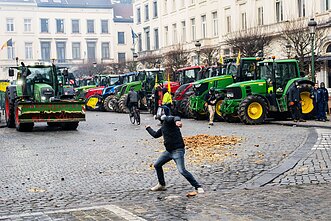
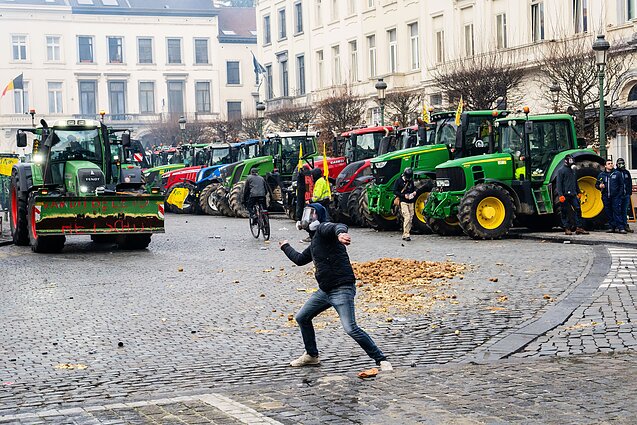
Last Thursday, at least 7,000 farmers with around 1,000 tractors staged a protest in Brussels against the deal.

Newsletter
Every Friday morning.