












Foreign nationals working in Lithuania’s service sector will be required to demonstrate basic Lithuanian-language skills starting in January, but officials say employers will not face penalties for at least six months because language exams will only begin in mid-January.
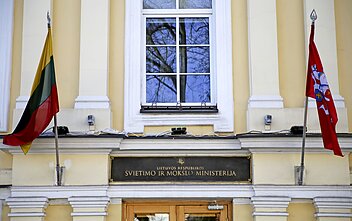
The Education, Science and Sport Ministry says that a grace period will apply as authorities finalise exam procedures and launch testing. The new requirement, approved earlier this year, obliges foreigners in service and retail jobs to prove proficiency at the A1, or elementary, level.
The ministry estimates that as many as 10,000 people may seek to take the exam early next year. Vice Minister Rolandas Zuoza previously said the National Education Agency is prepared to administer the tests.
However, some workers have raised concerns that the rollout has been poorly communicated. In a letter to public broadcaster LRT, one foreign resident said the government did not publish the language-level requirements until November 26 and that the testing schedule had still not been released.
She said documents indicated registration for some exams would open only in May, which could leave workers unable to meet the requirement for months.
Under the rules, foreigners will have to prove A1-level profficiency over the first two years of their residence and achieve A2 thereafter. The ministry told LRT that the two-year period for complying with the A1 requirement will begin on the date a foreigner first receives a residence permit. For those whose permits were issued before December 31, 2025, the two-year countdown will begin on January 1, 2026.

Still, employers will technically have to ensure compliance starting January 1, even though tests will not begin until mid-January. To bridge that gap, the ministry said it has agreed with the State Language Inspectorate to introduce a six-month “tolerance period” during which no fines will be issued.
The National Education Agency plans to hold A1 exams monthly at municipal and other local schools, with additional sessions added if needed.
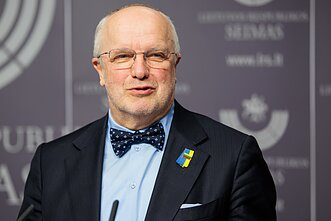
Last week, the Seimas Education and Science Committee reviewed the implementation of the policy and concluded that key information about exam procedures, registration and learning opportunities remains unclear. Lawmakers said the registration system is not user-friendly and that information for employers and foreigners is scattered across multiple institutions.
The committee recommended that the government designate a single coordinating body for foreign-language integration; that the Education Ministry simplify registration and consider decentralising exams; and that the Culture Ministry prepare an integration action plan by the third quarter of 2026.
It also urged the State Language Inspectorate to step up public communication and asked the State Tax Inspectorate to consider requiring proof of language proficiency for foreigners applying to start individual businesses that involve direct customer service.

Newsletter
Every Friday morning.