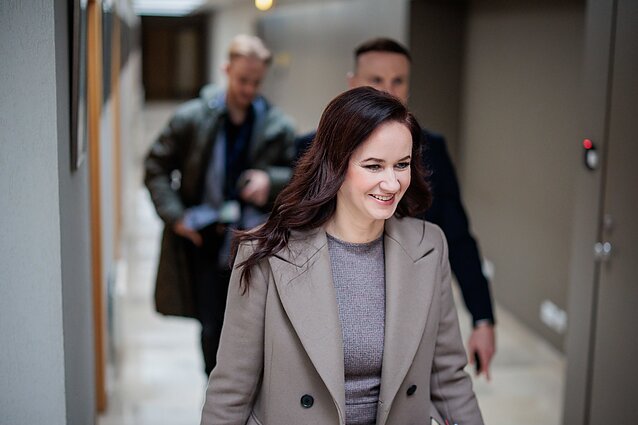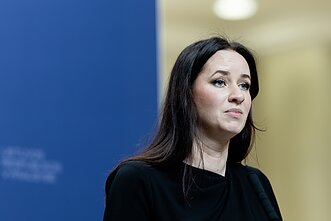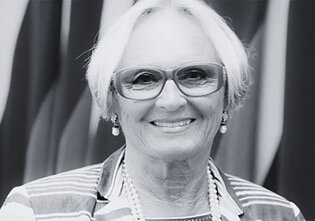











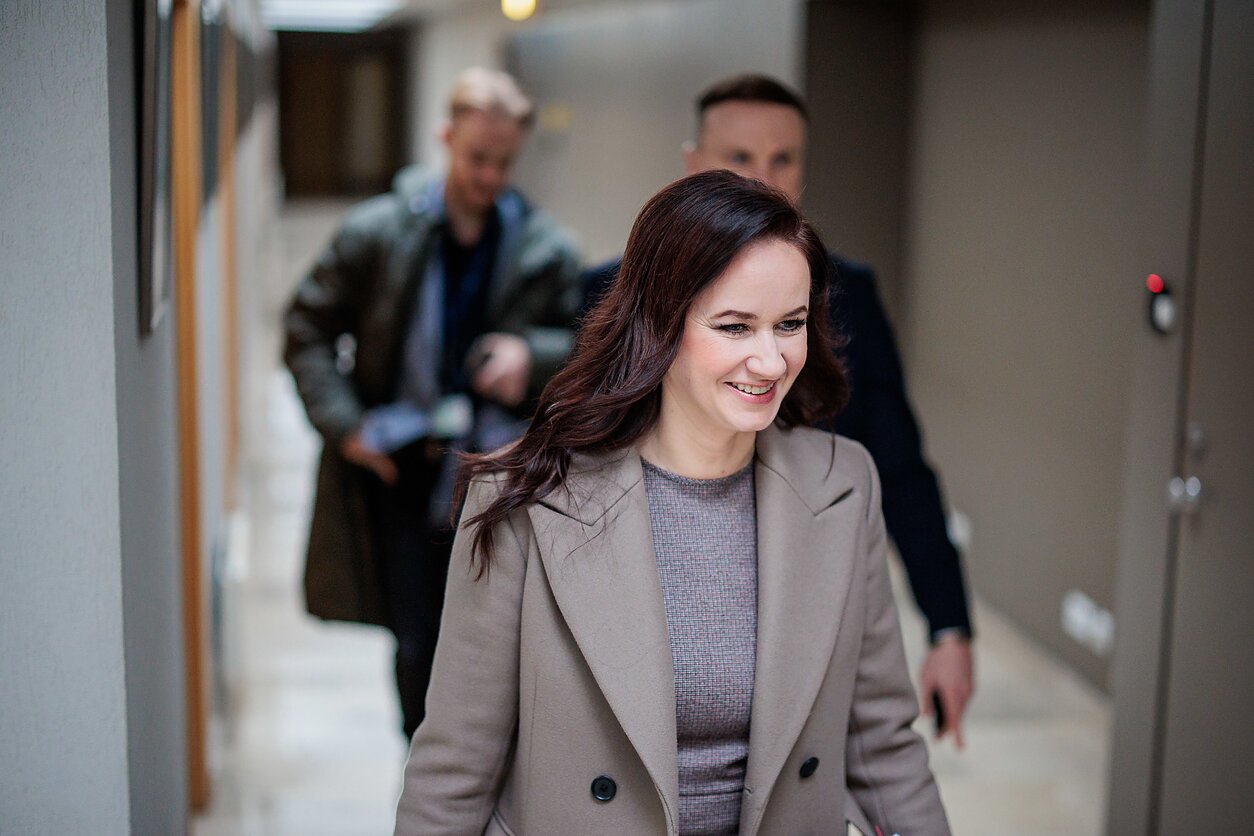
Lithuania may again close its border with Belarus if smuggling balloons continue to cross into the country, Prime Minister Inga Ruginienė said Tuesday, emphasising the need to coordinate closely with the United States.
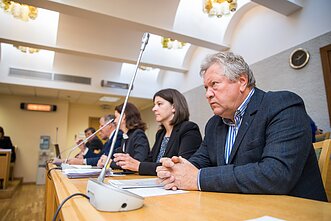
“If necessary, we will close the border, but please understand that we must coordinate every action with our strategic partners,” Ruginiene said after meeting opposition groups in the Seimas, Lithuania’s parliament. “Today, I will have a very important phone call, followed by a meeting with the Americans, and we will coordinate our actions.”
The prime minister argued that the reopening of border crossings with Belarus has shown that smuggling balloons are part of a hybrid attack organised by the Minsk government. “Our action plan has changed. Today, we are not only talking to our neighbours about joint action, but we are also talking to the European Commission, as well as to the Americans, about a broader package of sanctions,” she said.
Ruginienė confirmed her intention to speak with John Coale, the US special envoy to Belarus. “Thanks to our partners in America, who helped at the very beginning of the crisis, we saw positive signs from Belarus, but now we need greater involvement and to plan certain things together,” she said.
Short-term and long-term measures
The Lithuanian government has both short-term and long-term plans to address the smuggling balloons, which have disrupted civil aviation, though the prime minister did not provide full details.
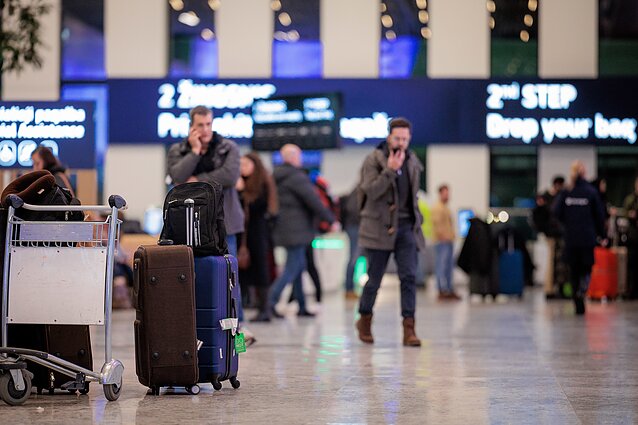
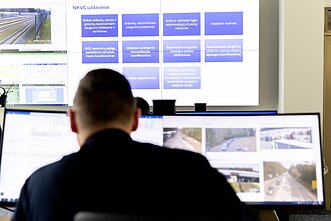
“The National Security Commission is holding regular meetings to discuss these measures. We are managing the situation as best we can,” Ruginienė said.
Among the proposals, the Transport Ministry has suggested moving night flights to Kaunas, but airlines have so far rejected the plan. Additional measures under consideration include tougher bills before the Seimas, criminalising smuggling, assessing the assets of suspects’ families, and granting the Financial Crime Investigation Service special powers akin to the ARAS police unit.
“We want to ensure that the State Tax Inspectorate has access to information about Lithuanian taxpayers’ assets and income abroad,” Ruginienė said. Discussions are also ongoing with telecommunications operators about sharing SIM card data with law enforcement in real time.
Border enforcement and seizures
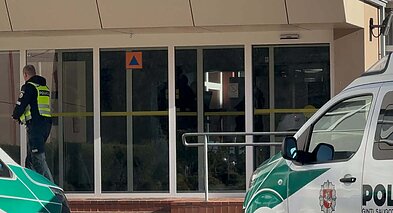
Joint mobile groups are patrolling the border nightly, and the government plans to expand these operations this weekend to include the Military Police, the armed forces, and volunteers.
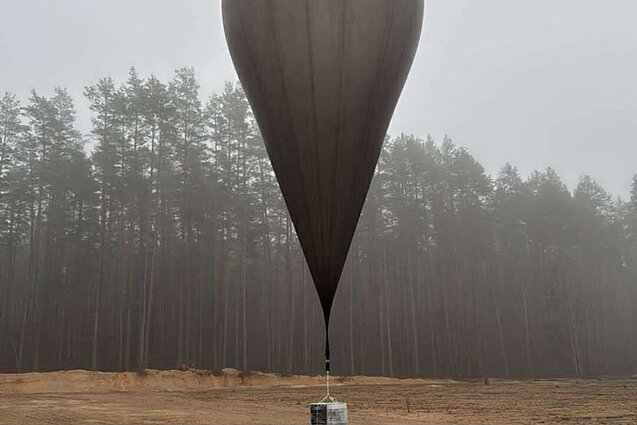
In the week starting November 24, authorities checked 3,500 vehicles and 4,500 people, issuing 53 protocols and seizing 14 balloons and 30,000 packs of contraband cigarettes. “Last night alone, up to 10,000 packs of cigarettes were seized,” Ruginienė said.
“Seeing such numbers, one cannot say that nothing is being done or that the actions being taken are not yielding results,” she added.

Newsletter
Every Friday morning.