













Lithuanian museums are beginning to experiment with artificial intelligence, but museum leaders say they are proceeding cautiously as they assess the technology’s capabilities. Historians working with AI-generated reconstructions report frequent inaccuracies, especially when depicting complex historical events.
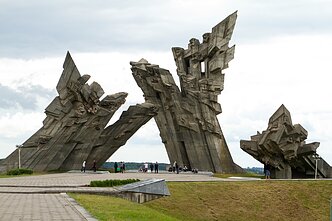
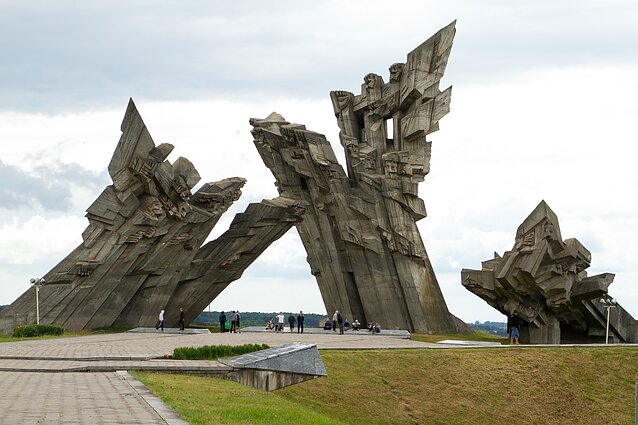
At the Ninth Fort Museum in Kaunas, curators are preparing an exhibition on rescuers of Jews during World War Two. Vytautas Petrikėnas, a historian and head of one of the museum’s departments, said AI tools were used to recreate five historical scenes – with mixed results.
“You have to consider every possible detail, from street lighting to location-specific features,” Petrikėnas said. “We want to portray Kaunas between 1940 and 1942 exactly as it looked. That requires real historical knowledge, and digital technologies without that knowledge can lead you down very misleading paths.”
He said one example involved instructing an AI program to recreate a Nazi German soldier’s uniform. The system interpreted the task too broadly.
“Everything from colours and shades to certain symbols and weapons must be precise,” Petrikėnas said. “You have to provide very concrete examples.”
Raimundas Gedgaudas, a video specialist with MultimediaMark and a co-author of the exhibition, said that at first it seemed AI would make visual design work simple. The reality, he said, was quite different.
“It generates image after image,” Gedgaudas said. “One batch can take about an hour, and sometimes it produces nothing useful. Then you wait again. Maybe from one version you’ll take the head, from another the body; you pick a table here, lighting there, a wall from somewhere else – and you assemble it piece by piece.”
The challenges were among the topics discussed at a forum in Kaunas on the use of AI tools in museums. Marius Pečiulis, head of the Lithuanian Museums Association, said institutions are intentionally moving slowly.
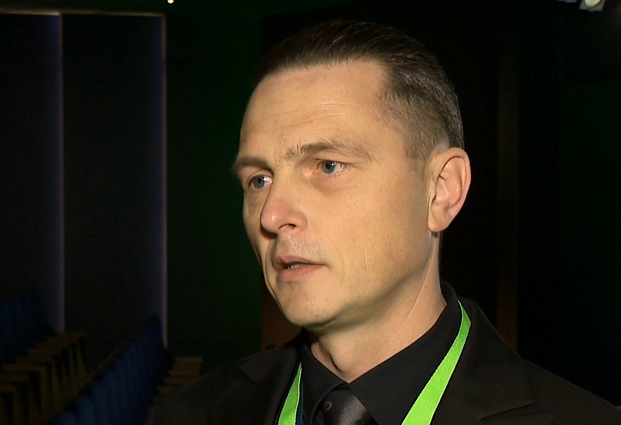
“Based on our past experiences, museums have rarely adopted new technologies in full,” Pečiulis said. “Our goal is to maintain a balance between authenticity and modernity.”
Technology commentator Lukas Keraitis said AI will inevitably change how museums work.
“Many people already use AI tools – from ChatGPT to others – and they are used to receiving information instantly,” Keraitis said. “They can generate images, videos or audio on their own and become creators in a way. AI first changes visitor expectations, but it also changes how museums must tell their stories.”
Keraitis added that AI programs could help museum professionals not only in developing exhibitions, but also in processing large volumes of archival data.

Newsletter
Every Friday morning.