













Lithuanians who earn at least €1,128 a month after taxes can already consider themselves part of the European Union’s middle class, according to Luminor Bank economist Žygimantas Mauricas. But not everyone agrees, with some experts arguing the definition oversimplifies economic reality and fails to match people’s lived experience.
The question of what income level constitutes the middle class has long sparked debate in Lithuania. Many residents interviewed in Vilnius said the amount must be far higher to ensure a comfortable life.
For Vytautas, €2,500 after tax would cut it: “Then you could save a little, take a trip to Greece. Prices are rising so fast that by spring we’ll probably need €3,000,” he said, dismissing economists’ calculations.

Margarita said she could meet basic needs with €1,300 a month but would struggle to afford travel. Julija, a young mother, argued that “anything under €2,000” is unrealistic with current prices and family obligations. Aurelija, who retired six months ago, said she believes a middle-class income begins at €2,500.
Even younger residents raised higher thresholds. “About €1,500,” said Nikita. “Not to be rich, but to afford basic things – entertainment, travel – without counting every cent. If you can’t do that, that’s poverty.”
Still, Mauricas, the economist, says that in the broader EU context, many Lithuanians already qualify for membership in the European middle class.

He notes that one common definition classifies the middle class as those earning 60% to 250% of the income median. Based on the EU median, that places the middle-class range between €1,128 and €4,700 net per month.
“Many people were surprised that the lower threshold is so small,” he said. “Before the euro was introduced in 2015, our average income was 3.5 times lower than the EU average. Now it’s only 40% lower.”

Rapid wage growth has helped Lithuania move closer to the European middle, he added. “We no longer look bad in the overall EU picture. We’re gradually approaching the average, and we’ve reached that psychological point where about 50% of Lithuanians can consider their income equivalent to the EU middle.”
However, he acknowledged that the EU median is also influenced by sluggish wage growth in southern Europe. “Our jump is partly the result of Europe slowing down. In Greece or Italy, incomes grow slowly, which drags down the EU average.”
Not all economists are convinced. Professor Romas Lazutka of Vilnius University said the calculation paints an incomplete picture.
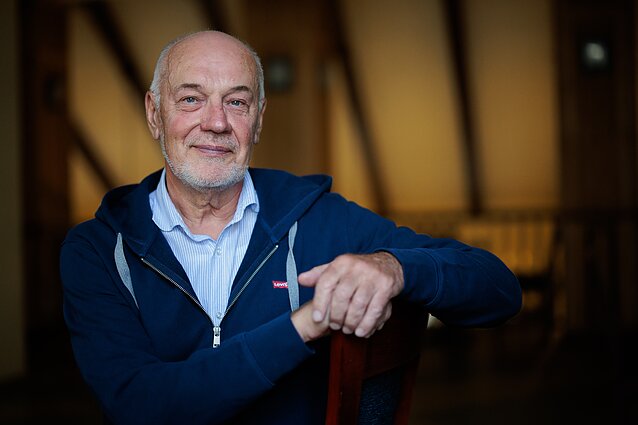
“We’re chasing a train that’s standing still,” he said, noting that some EU economies have stagnated or declined. “People don’t go to the store with percentages – they go with euros. If a German’s salary increases 5% and that’s €150, but a Lithuanian gets 10% and that’s €100, are we catching up or falling behind? In percentages, yes. In euros, no.”
Lazutka argues that defining the middle class solely by income is misleading, especially as modern societies have more complex economic structures than in the past.
“In earlier times, there were workers, aristocrats and the middle class – typically professionals like doctors and lawyers. Their lifestyle was different from that of workers,” he said. “Today you can have a plumber or electrician earning as much as, or more than, a teacher, but traditionally you wouldn’t call them middle class, and teachers would be.”
Despite fast wage growth, Lithuania still faces significant income inequality, Lazutka added, noting that the country has more work to do to narrow the gap.

Newsletter
Every Friday morning.