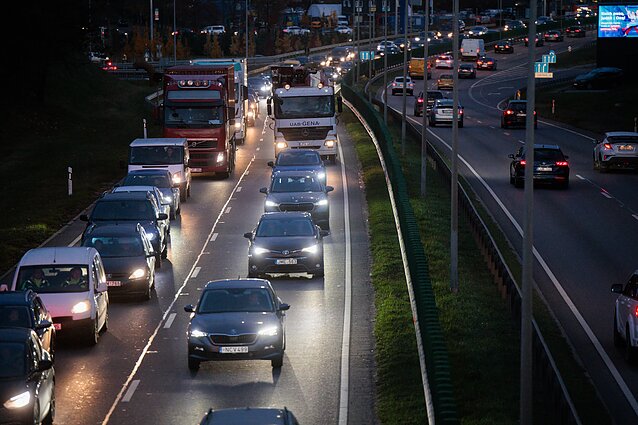








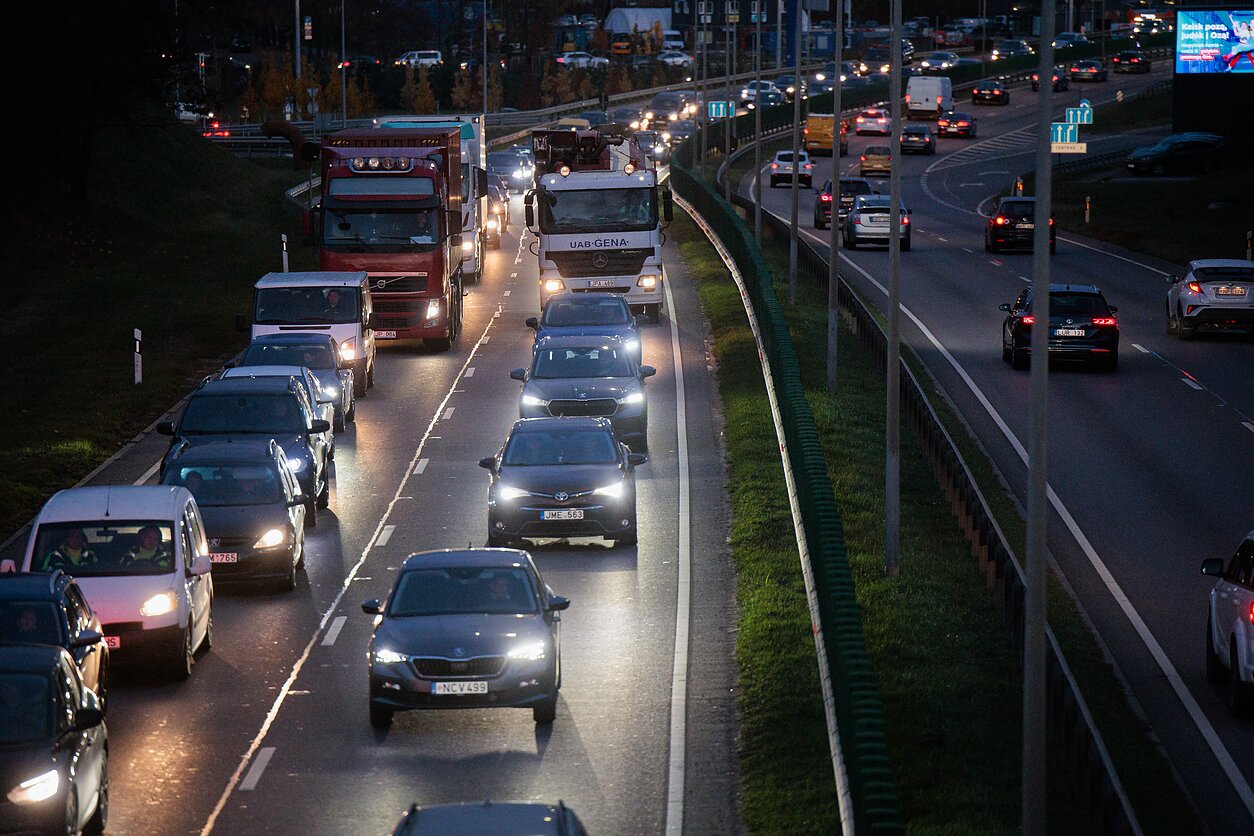
The amount of time drivers spend stuck in traffic in Vilnius is increasing each year, with drivers now spending the equivalent of eight to ten days a year behind the wheel, according to the Lithuanian Motorists’ Association. As the city is expanding other transport options, experts push for trams.
Every year, the amount of time spent driving in jams continues to rise, says Tomas Būdvytis, vice-president of the Motorists’ Association. He estimates that, on average, drivers spend around 48 minutes per day in traffic.
“This immediately affects impulsive, irritable behaviour. Some drivers respond by tailgating or pushing others, and it creates mini-chaos at certain junctions at particular times,” he explains.
Rush-hour frustration
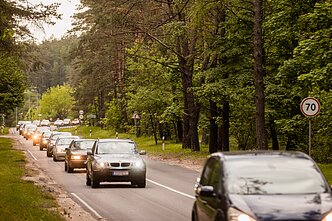
Daily morning and evening jams are particularly familiar to those living in the suburbs.
“Suburban residents know the 10-minute rule very well. If you leave late, say at 7.10am, you can end up an hour behind schedule. Traffic starts moving towards the city and congestion forms bottlenecks that are difficult to clear,” says driving instructor Giedrius Pivoriūnas.
Pivoriūnas notes that drivers’ habit of calling the police to issue paper traffic reports after accidents does little to ease congestion.
“Imagine it’s 8 am on Ukmergė Street or Pilaitė Avenue, there’s an accident, and we stop traffic for half an hour just to fill out a report. It seems short-sighted. We could take photos from all four angles, including the registration plates, move vehicles aside, and then complete the report,” he suggests.
Causes of congestion
Arnas Misiūnas, a representative of Vilnius municipality’s mobility company Judu (which roughly translate to I move), says traffic jams are caused both by the increasing number of cars and roadworks, some of which take place during peak hours. To tackle congestion, Vilnius is expanding alternative mobility options.
“We are upgrading paths – cycleways, pedestrian routes and others – because people need to move, and we want to offer solutions so that travel is fast, smooth and convenient, not just by car,” he explains.

However, experts warn that such measures alone are insufficient.
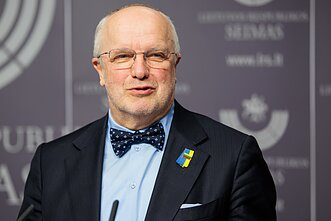
“I would say it is crucial to seriously consider other forms of public transport, such as trams. One or two metro lines could ease the city’s morning and evening flows and shift these journeys from the roads to public transport,” suggests Vidas Žuraulis, associate professor at Vilnius Tech’s Department of Automotive Engineering.

According to the Judu representative, all public transport alternatives are being considered.
“If we increase parking charges in the city centre and want more residents to switch to public transport, we need to change their behaviour and avoid making public transport more expensive,” Žuraulis adds.
Tomas Būdvytis also recommends AI-controlled traffic lights, expanding lanes, increasing speed limits by at least 10 km/h with protective barriers, creating underground pedestrian crossings, and modernising junctions to reduce congestion.

Newsletter
Every Friday morning.