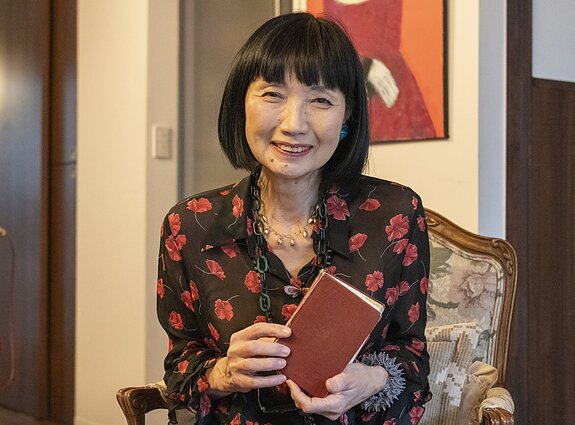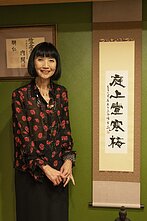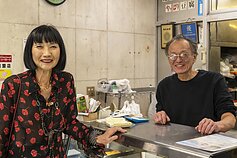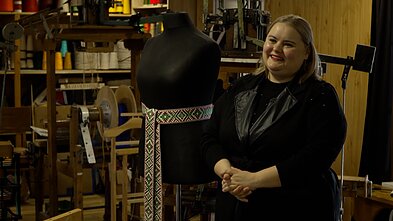












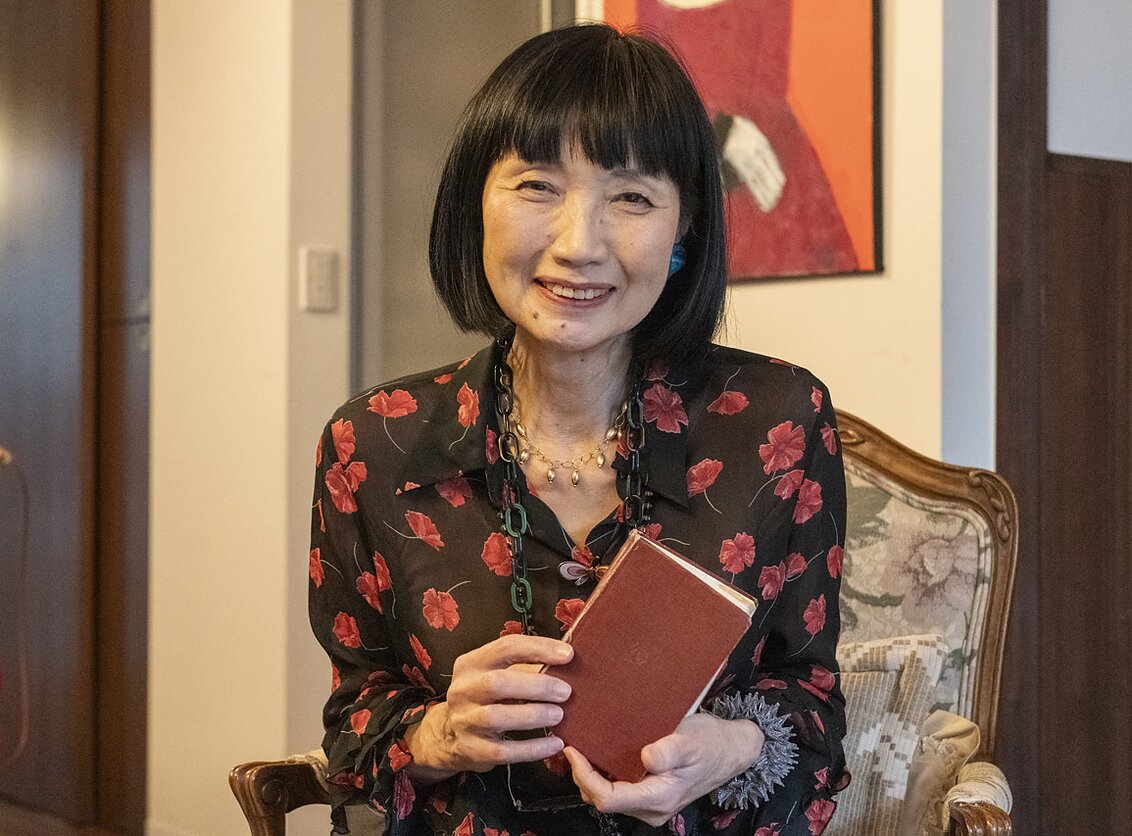
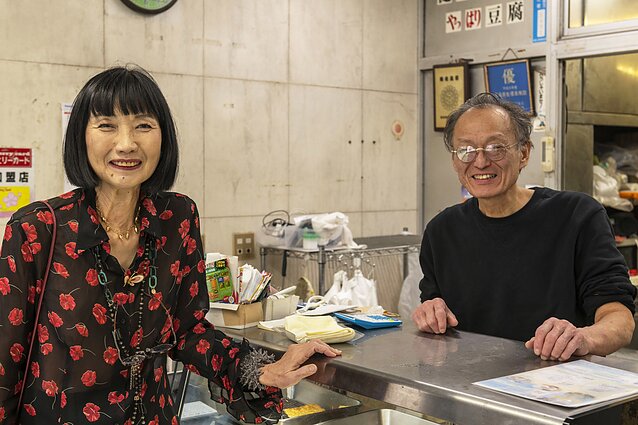
In a tranquil residential neighbourhood of Tokyo, worlds away from the city’s neon hustle, we meet Yuko Yamasaki on a sunny, warm autumn afternoon. As we walked from a metro station to her home, we stopped by an old, traditional tofu shop.
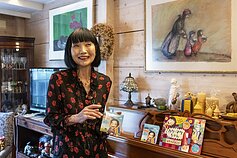
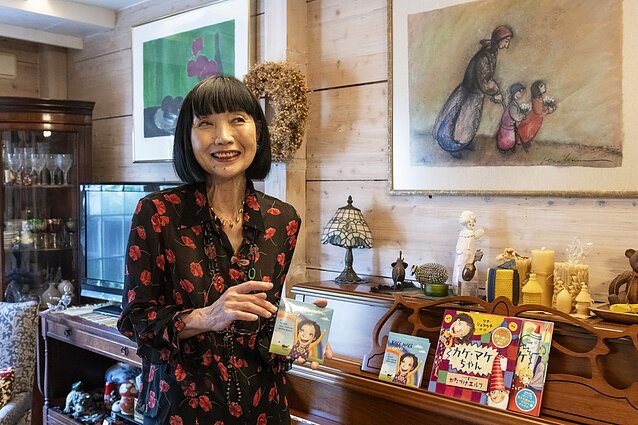
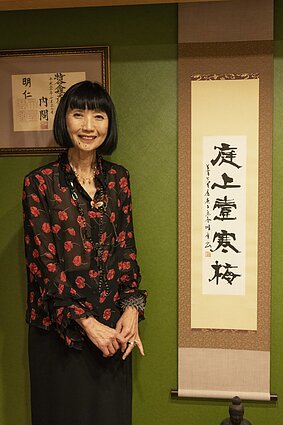
Her tastefully decorated residence contains many items from Lithuania, tangible reminders of a three-year diplomatic posting that became a deep personal passion. These objects are silent testaments to the friendships and cultural ties she cultivated, a profound connection that did not go unnoticed.
In 2024, Yuko Yamasaki was honoured by Lithuanian President Gitanas Nausėda with a special recognition for her work as a cultural ambassador. This rare acknowledgment for an ambassador’s spouse marked the exceptional nature of her involvement, tirelessly championing Lithuania’s cultural life in music and literature. Rarer still, as we would come to learn, is that Yuko Yamasaki’s love affair with Lithuanian culture started well before she ever set foot in the country.
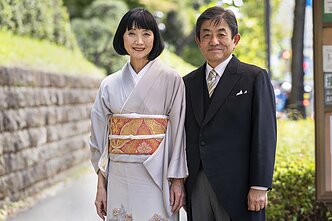
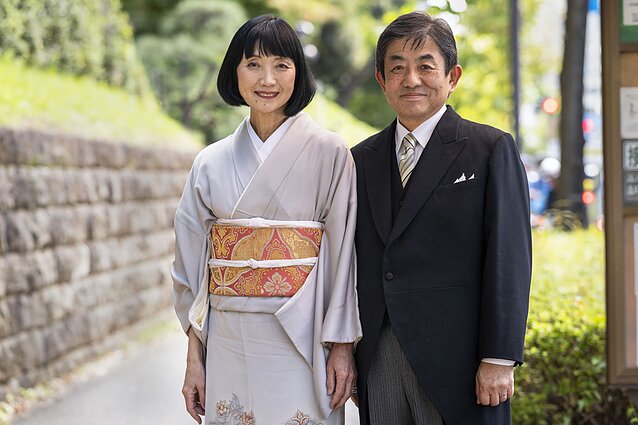
We also meet the next day, just before Yuko and her husband Shiro, formally dressed, enter one of the Imperial Palace gardens for a party hosted by the Japanese Emperor.
Before your arrival in Lithuania, what did you know of the country?
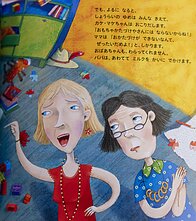
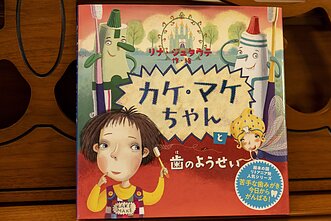
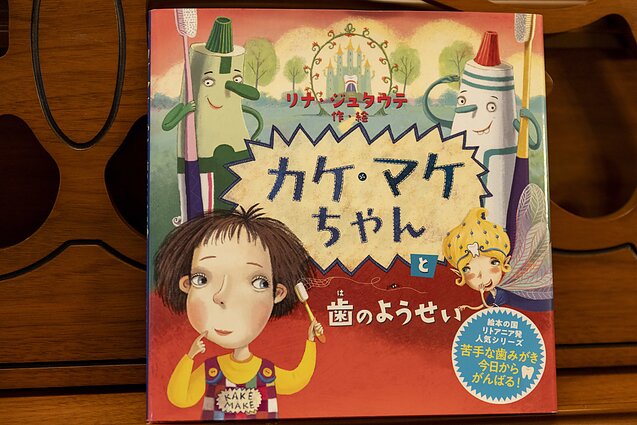
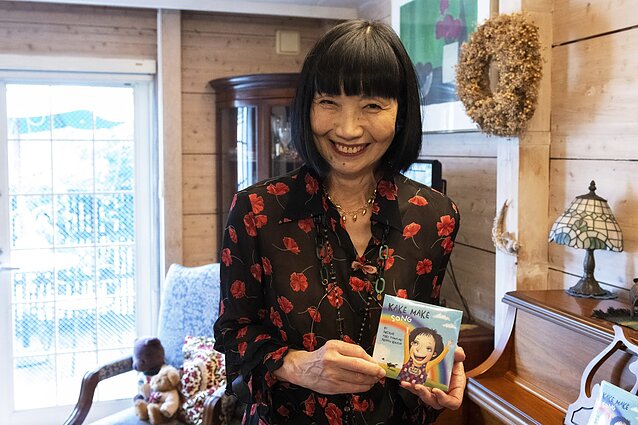
We had trouble finding contemporary information – just a small section in a Baltic states’ guidebook and one old book from the Japanese-Russian war era, which had no insight into modern life. Our luck changed just a week after the posting was confirmed when I met by chance the sister of Haruka Seto, working at the Japanese Embassy in Vilnius, who introduced me to Kake Make, Lithuania’s most popular children’s book.
As a former editor, I was immediately struck by the book’s high-energy, positive main character – a distinct contrast to the ‘soft’ style popular in Japanese children’s literature. I decided I had to publish it in Japan. This became my mission right before we left.
Most editors felt the girl’s face was too energetic for the Japanese public, but I persisted. At the very last minute, a former magazine colleague loved the book, and we secured a publishing deal just two days before our departure, with Haruka later translating the first book. When the Japanese version was ready in 2019, presenting copies to President Nausėda and the First Lady became a significant story for the embassy.
You have a cosmopolitan background, having lived in Tokyo and New York. What was the transition like to Vilnius?
We found Vilnius a wonderful place to live in. The size was just perfect, and I still miss that part now. In Tokyo, we have everything – theatres, museums, concert halls – but getting to them is sometimes tedious and tiring. In Vilnius, however, the museums and the concert hall were all within walking distance.
We could see friends easily and often found ourselves unexpectedly crossing paths with acquaintances. It is a very human-friendly place that allowed us to connect deeper. Meeting someone in Tokyo is stressful and complex, requiring careful organization, as people often live an hour or more away, which sometimes requires a lot of energy.
Did you encounter any specific challenges, perhaps related to the pace of life or the culture?
I found the Lithuanian names difficult in the beginning. The first names were the easy part, but the family names were a real challenge for us. I remember when my husband had to deliver a first speech in Kaunas and had to correctly pronounce the long name of the person.
And, moreover, there are the differences between the name of the husband and wife – that was initially a huge mental exercise. While we can manage it now, in the beginning that was a very real challenge for a Japanese person.
What aspect of Lithuanian life or culture surprised you the most upon settling in?
Very quickly, I discovered that Lithuanian people were deeply interested in Japanese culture, particularly things like Ikebana. I also found the learning style was one of the key similarities exists between our cultures. This became clear during an online charity Ikebana event raising funds for a children’s cancer charity during the pandemic.
The fundamental principles of Japanese Ikebana – such as the rule of three proportions – are very different from the Western approach, which focuses more on simply making a beautiful bouquet. While some international participants struggled with the strict rules, the Lithuanian ladies were extremely attentive. They listened carefully and followed the instructions precisely.
This led me to realize that Lithuanians and Japanese share a non-selfish approach to learning and art: we first master the fundamental movements and rules, sometimes imitating the teacher a thousand times out of respect for the tradition and history. Our own original taste is introduced only after the foundation is perfectly set. This common respect for the teacher and the culture deeply resonated with me.
Are there some funny or memorable moments during the early days in Lithuania?
We went to Kaunas to see a basketball game at the Žalgiris Arena invited by our first close friends Nida and Darius Degutis. They told us basketball is a Lithuanian specialty and invited us there. The cheering, the singing... wow! It was an incredible experience.
Did you manage to pick up any Lithuanian? How important was the local language in your daily life and connections?
My husband and I started lessons but quickly discovered the language was far more complex than French or German. We realised we could not master it during our posting, as full commitment would have taken too much time away from meeting new people and building connections.
However, I remain very interested and am now still learning via an online course offered by VIKC language school. The director Audronė Auškelienė is a close friend and my teacher, Daiva Mažiulytė, is wonderful and very patient. We share a deep common interest in haiku, which has led to fascinating discussions about the cultural differences in writing and appreciating it.
Are the Lithuanian and Japanese haikus similar?
Lithuanians are certainly interested in haiku, which they even learn in high school. While Lithuanian haiku is also short, the traditional Japanese form strictly uses 17 sound units (morae), with a 5-7-5 structure, and requires the right seasonal words (kigo) to convey a sense of a much larger universe. For instance, the word ‘yama’ (mountain) alone isn’t seasonal. However, using terms like ‘mountain-making-up’ indicates autumn, and ‘mountain-sleeping’ indicates winter.
These strict rules apply to all aspects of nature, allowing the kigo to convey a deep feeling. I find this connection interesting: the kanklės I learned to play has just 10 strings– only 10 sounds. This serious limitation, like the rules of haiku, allows us to convey deep emotions even without words. I have recently started to compose music for this instrument, embracing those constraints.
What were some of the most memorable events during your stay in Lithuania?
The most memorable event was the online concert we organized in February 2021 for the 80th anniversary of Chiune Sugihara’s visas. With all public events cancelled due to Covid, my husband suggested the online format. It required overcoming the Japanese Foreign Ministry’s initial hesitation about the budget, as this never had been done before.
I asked my musician friends Žemyna Trinkūnaitė, Giedrius Kuprevičius, Renata Marcinkutė Lesieur, Viktorija Miškūnaitė, Kristian Benedikt, and Agnė Sublytė to perform. They in turn invited their friends Ugnius Vaiginis, Džiugas Daugirda, Zbigniew Lewicki, and Leonas Somovas.
It was a wonderful group of dedicated musicians. Aleksandra and Vilius Keras did the recording. Everyone worked hard to create the best concert possible. It was a high-level cultural exchange between Lithuania and Japan, and broadcast by LRT on TV.
Žemyna Trinkūnaitė encouraged me to play the kanklės on stage. That was a very special personal moment and a cherished memory that I will treasure for the rest of my life. These musicians became all close friends.
Do you have a favourite Lithuanian artist, composer, or cultural figure?
In addition to these musician friends, my husband and I were impressed by the number of great artists in Lithuania! Especially the boys’ and women’s choirs, truly stand out for their positive energy and profound culture of communal singing.
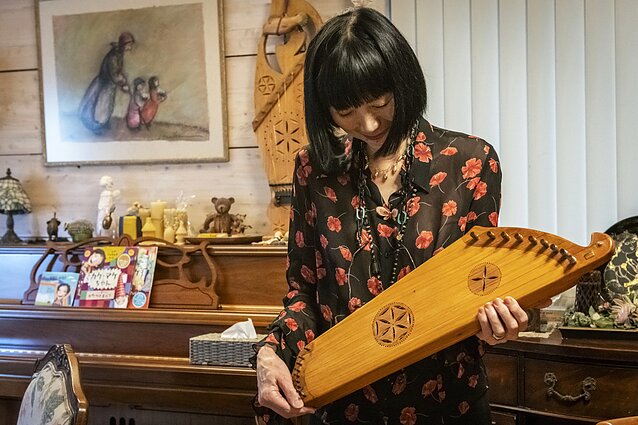
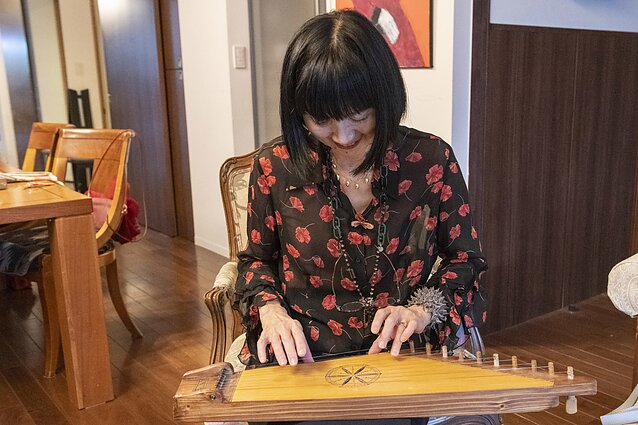
My biggest personal discovery, though, was the kanklės. Through performances by Žemyna Trinkūnaitė, I discovered how this simple-looking instrument could produce such a beautiful sound. As there were no schools, Žemyna generously offered to teach me the 9-string version, and I felt lucky to be accepted by the community despite starting to learn at my age.
They were very surprised that a Japanese woman was interested in learning this particular instrument. I had no idea I would perform in public, but Žemyna always encouraged me. I felt that if I wanted to learn the kanklės, it had to be in Lithuania, right then and there. I played in many small locations. This led to wonderful public performances, including the Joninės festival in Nida in 2021, which was broadcast by LRT, an unforgettable memory.
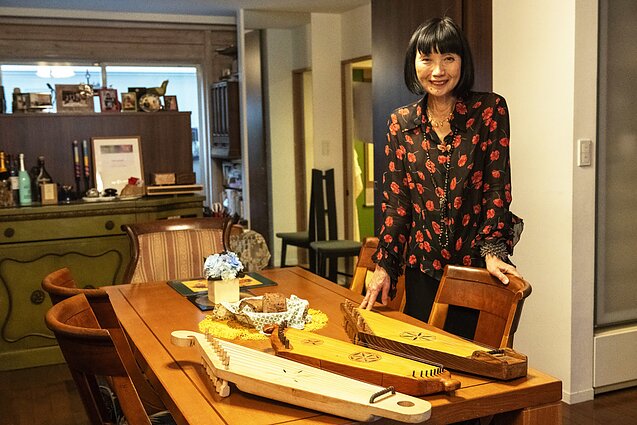
Yuko shows her collection of kanklės she brought over from Lithuania. She owns four of the instruments, all packed in custom carry cases. One model from the Klaipėda area, given by Donatas Bielkauskas, hangs above her piano, while another that she treasures was a gift from Albertas Martinaitis, an artist in Šiauliai. She recently composed a song on the 10-string kanklės and we are treated to a wonderful Japanese melody called Hanano-Autumn Flower Field, yet with a beautiful, resonant Lithuanian sound. She clarified that Hanano is a haiku kigo of autumn.
Lithuania celebrates this year the 150th anniversary of M. K. Čiurlionis’ birth. In Japan, he is primarily known as a mystical painter. Is there growing interest in his lesser-known work, particularly his music, in Japan?
Indeed, he is primarily known in Japan as a mystical painter, a reputation solidified by an exhibition in 1990 whose works were admired even by the Empress. Few people know him as a composer, but there is growing interest in his music.
We had Viktoria Miškūnaitė over singing in Sapporo two years ago, singing Lithuanian songs, and a Japanese string quartet performed several of Čiurlionis’ string quartets. It was beautiful, and the Japanese string quartet liked the music very much, as did the audience. So it is more a question of having more opportunities to have it performed.
Beyond the formal diplomatic duties, the ambassador’s wife often plays a crucial role in cultural and social engagement. How do you feel about your personal mission and role in contributing to Lithuanian society during your time in Vilnius?
My personal mission focused on two things: using cultural events to raise funds for vital causes, particularly for sick children struck by cancer, and raising awareness. It was Asta Kavaliauskaitė who introduced me to the Childhood Cancer Fund Rugutė and I was impressed by their efforts and wanted to support it.
I was thinking about activities that would promote a cultural exchange with Japan. During the Covid pandemic I thought we could online introduce Japanese Furoshiki to Lithuanians. Furoshiki is not available in Lithuania, so I asked Asta to make it using Lithuanian linen. It was nicely done.
Asta became a good friend and after our return to Japan, she continued to support my contribution to Rugutė, and I’m grateful for that. When I supported Ukraine’s sick children, we made Furoshiki with Ukrainian flag colours and I collected donations in Japan. I want Lithuanians to feel closer to Japan.
It is also good to talk about issues. It’s important to make people in Japan, who often feel safe due to our island status, aware that life is not peaceful everywhere. We often feel far away from the danger wars and the atmosphere of conflict. In Europe, the danger of conflict is closer, and as young Japanese people become more domestically focused, mainly due to a weaker Yen.
Most young people no longer read newspapers or use traditional media. Real world problems become someone else’s problems. The reality on the ground abroad is very different. I feel that in my position I can contribute to this awareness. I hope that through music and art, we can continue to bridge that gap in understanding.
Can you tell us a bit more about this? Was your approach more ‘fusion’, or did you find some links between Lithuanian and Japanese cuisine?
My approach was focused on simple Japanese home cooking, rather than complicated restaurant fare, to make it accessible to a Lithuanian audience. Nida Degutienė shared this philosophy and began publishing our simple recipes in her online e-book. We still plan to publish a full book combining easy Japanese dishes with Lithuanian recipes like tinginys (the delicious, no-bake chocolate cake).
I even discovered a fun historical link: the favourite dessert of Queen Elizabeth II was very similar to tinginys. It made me wonder if the British learned the recipe from the Lithuanians or if it was the other way around. Most likely it was developed independently due to common kitchen constraints. It’s just easy to make.
Beyond specific artists or figures, did you find a characteristic in the Lithuanian people that deeply resonated with you?
I was very lucky to meet so many nice people in Lithuania. Early on, the discovery of the kanklės was an important moment. Otherwise, the language barrier would have kept me within the diplomatic circle, especially with various charity events. Fortunately, I quickly developed genuine friendships with Lithuanians and discovered that they were warm and kind people who reached out to help me.
These connections allowed me to experience the country more personally: meeting people in their homes, seeing their well-kept gardens, and appreciating the small, everyday things, including the many small dishes of delicious food. This quiet, genuine life made me realize that Lithuanian and Japanese people are a very good match: we are not “show-off” people, but rather calm and modest.
What aspect of Lithuanian culture or society do you most often share with people in Japan?
I always tell people that Lithuanians love art, music, and most of all they love to sing. There is a profound culture of communal singing where songs are sung in beautiful harmony for every occasion. This love of music has created a wonderful exchange.
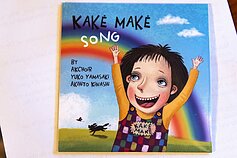
Akihito Kinashi, the conductor of AKchoir, was so moved by the enormous choir at the Song and Dance Festival in 2014. Later he sang Mano Kraštas with his choir, mixing Japanese into the song. This beautiful performance became known to Lithuanians.
Asta introduced Akihito to me, and we held two concerts in Lithuania with fellow musicians this summer. Akihito and I are planning a concert to be held by the Japanese Embassy next summer to commemorate the 35th anniversary of the re-establishment of diplomatic relations between our two countries. Akihito will come with the AKchoir, and I will bring my kanklės students. The instrument came to Japan and now will return to Lithuania to share its new Japanese musical touch. This bond between the two countries is getting stronger. It is good to see it develop.
Žemyna informed me that the Seimas has decided that 2026 will be the year of the kanklės. There seems a growing number of kanklės players in Lithuania. More people will discover this beautiful instrument.
After your return to Japan, you were honoured by the Lithuanian president. What was that recognition for?
I was surprised to be nominated for and win the award, especially three years after leaving Lithuania. My husband managed to take a couple of days off and we attended the ceremony. It was a once-in-a-lifetime honour.
The ceremony was wonderful, and I was genuinely surprised by how much the presenters knew about my continued work both during and after my stay, particularly my efforts to help Ukrainian young cancer patients via the Rugutė Foundation and the Lithuanian Black Bread Club. We even laughed and joked wondering if there was some keeping a tab on us and about my work from so far away!
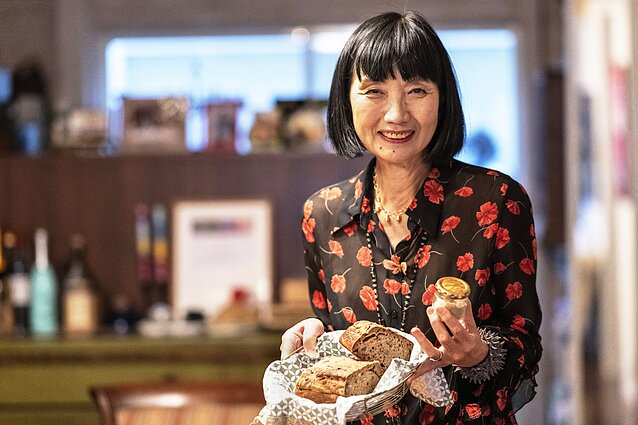
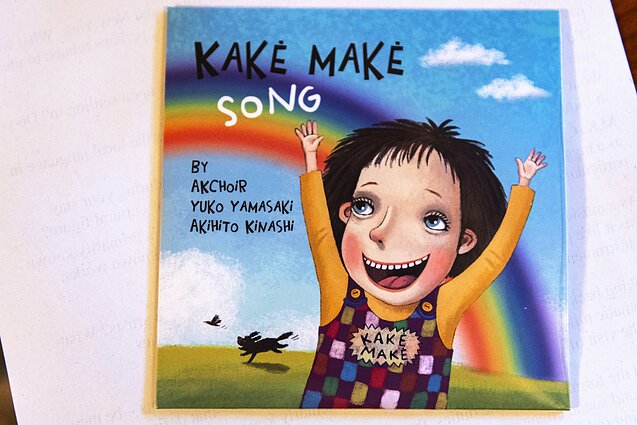
I’d certainly like to continue to convey the real atmosphere of Lithuania with people around me through its taste and tangible textures, introducing black bread, linen, kanklės, Kakė Makė and more. Before going to Lithuania this summer, Akihito and I created the Kakė Makė song and released it on CD. We hope the song will be loved and sung by the children in both of our countries.
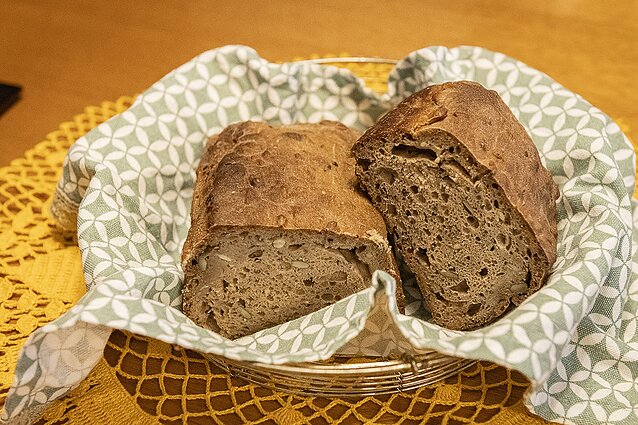
We are then treated to some very tasty Lithuanian-style black bread, which has a smooth, moist texture. This unique bread is made with flour from Hokkaido, the most northern large island of the Japanese archipelago, but uses yeast from Lithuania given by Kristina Zykienė, the wife of Ambassador Zykas, and is guarded as a precious treasure. Yuko started a Black Bread Club last year to share the recipe of juoda duona with her friends. This activity is supporting donations to the Childhood Cancer Fund Rugutė.

Newsletter
Every Friday morning.