




In October 1995, Lithuania’s headlines were dominated by turmoil in the banking sector and other financial institutions. Reports of vanishing millions and financial mismanagement appeared almost daily.
Alarmed depositors took to the streets in protest, while bank directors sought to reassure them that everything was under control. It wasn’t. The wave of bank collapses that followed became one of the defining symbols of Lithuania’s turbulent 1990s.
The series Thirty Years Ago in Lithuania revisits the everyday events and political climate of the mid-1990s through reports preserved in the LRT Archives’ Panorama broadcasts, offering a vivid snapshot of a society in transition.
Although it never quite became a tradition, 1995 saw Lithuania’s first tractor slalom competition – a quirky contest that also featured a record attempt: fitting as many people as possible into a single car.

In Vilnius, engineers were testing the newly constructed White Bridge over the River Neris. Designed for pedestrians, the bridge was intended to improve access between the left bank and the city centre. Heavy vehicles and marching soldiers were used to test its strength.
Even then, some voiced concerns that the bridge led into an already busy junction, potentially causing congestion. Urban planners proposed moving the crossroads underground.

The era of bankruptcies and crises
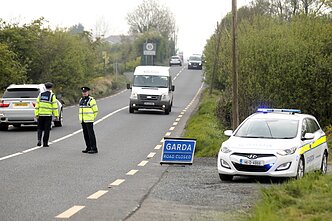
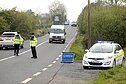
One of the most publicised cases that month was the robbery at the Hermis Bank branch in Šiauliai. Both a security guard and 940,000 litas (worth approximately 335,500 euros today) disappeared.
Investigators later found that the heist had been organised by the bank director’s driver and a former head of security, who still knew the alarm codes – which had never been changed after his departure. The night guard, according to reports, had been drugged with a sedative slipped into his beer.

Police also arrested the head of the company Fidus, accused of running a financial scam. The firm, which began operations in late 1992, collected around four million US dollars from investors, supposedly for projects in Tajikistan. None of the money appeared in the company’s accounts.

Meanwhile, Balticbank faced its own crisis. After 40 million litas (approximately 14.26 million euros today) were found to be missing, bankruptcy proceedings began. The case reflected the reckless speed of Lithuania’s early capitalist years. The chain of companies – starting with the oil firm Kovas in 1991, followed by the Lithuanian-American venture Lamaring and then Balticbank – soon unravelled amid allegations of mismanagement and lost funds.

Similar troubles hit Vakarų Bankas (the Western Bank), which had 2,300 shareholders. Between 1993 and 1995 it issued more than 45 million litas (approximately 16 million euros today) in bad loans. By 1996, it too was declared bankrupt.

Plans were also under way to create a new United Bank through the merger of the Lietuvos Jungtinis Bankas (Lithuanian Joint-Stock Innovation Bank) and Litimpeks. But by the end of 1995, both faced severe financial difficulties, legal investigations and accusations of embezzlement.

The final blow of that period came with protests by depositors of Kredito Bankas, which owed them around 10 million litas (approximately 3.57 million euros today). Demonstrators gathered outside the bank’s Vilnius branch, where the owner promised to repay the debts. Soon after, the bank also went bankrupt.

Tensions with Latvia
A simmering dispute with Latvia over maritime boundaries continued throughout 1995. Following a memorandum signed in Maišiagala that May, Lithuania had reportedly agreed to hand over nearly all of its claimed sea territory to Latvia.
When journalists began probing the secretive deal, officials struggled to explain its terms and refused to release the full text. It later emerged that the agreement had effectively transferred a significant offshore oilfield area to Latvia.

At the same time, Latvia was negotiating with the US consortium Amoco and Sweden’s OPAB over the exploitation of oil field E24 – a move that frustrated Lithuanian diplomats and ultimately led to difficulties for the Latvians themselves.
The oil deposits located within the disputed area became the main source of tension between the two Baltic neighbours. While Latvia pursued negotiations with foreign companies to begin drilling, Lithuania’s territorial claims threatened to undermine those talks. At the same time, Lithuania was also engaged in separate border negotiations with Russia.

By late October, more details of the controversial arrangement emerged: Latvia had, as early as 1993, sold seismic data on Baltic Sea oil reserves to foreign companies.
The Maišiagala memorandum added further confusion and eventually froze boundary talks altogether. Lithuania’s delegation insisted that negotiations should start anew.

Defence, pensions and notable visitors
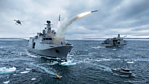
In October 1995, the Lithuanian naval vessel Žemaitis returned from NATO exercises – one of the country’s first joint missions with the Alliance. The drills involved warships from 13 nations and over 2,000 service personnel.

Public debate was also intensifying over the future of military training. Some proposed scrapping conscription and introducing defence education in schools instead. Many argued that Lithuania did not need a large standing army and struggled to feed and clothe its conscripts as it was.

At the same time, concerns were growing over pensioners’ welfare. People aged 60 and above accounted for 17% of the population. Average life expectancy stood at about 63 years for men and 75 for women. Demographic ageing was already being identified as a long-term challenge.

Visits from prominent international figures also featured on Panorama. In October 1995, fashion designer Pierre Cardin visited Riga at the invitation of the Latvian government, sparking envy in Lithuania as he explored the possibility of opening a boutique in the Baltic region.

Meanwhile, on October 16, 1995, philanthropist George Soros visited Lithuania. President Algirdas Brazauskas presented him with the Grand Cross of the Order of the Lithuanian Grand Duke Gediminas in recognition of his role as the founder and benefactor of the Open Lithuania Foundation.

In the Radviliškis district, a gang of cattle thieves was active. Over a period of three years, the group carried out 44 livestock thefts. Posing as legitimate cattle buyers, they made contact with farmers, then returned at night to steal the animals and sell the meat at local markets.

In 1995, Lithuania marked the 25th anniversary of the Vilnius–Kaunas motorway (which would celebrate its 55th anniversary today). Before the highway was built, the country’s two largest cities were connected only by a patchy, cobblestone road. The new motorway greatly improved transport and communication between them.


Newsletter
Every Friday morning.