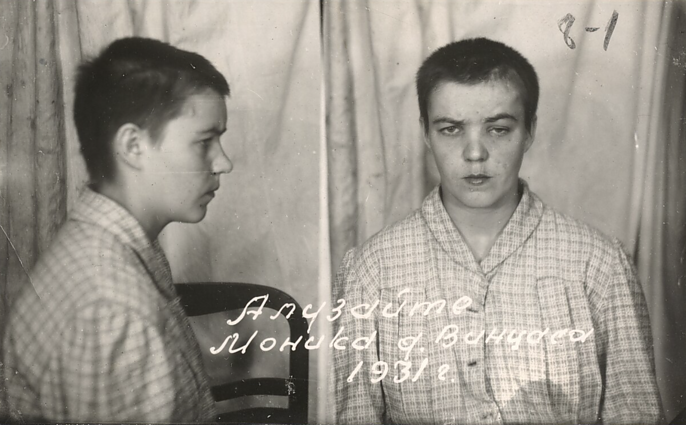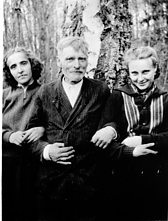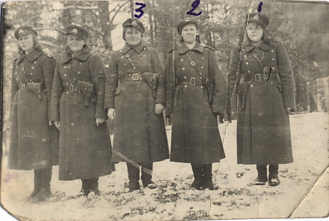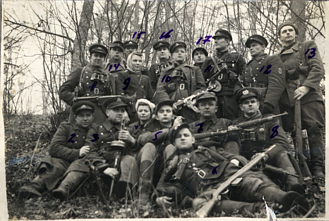









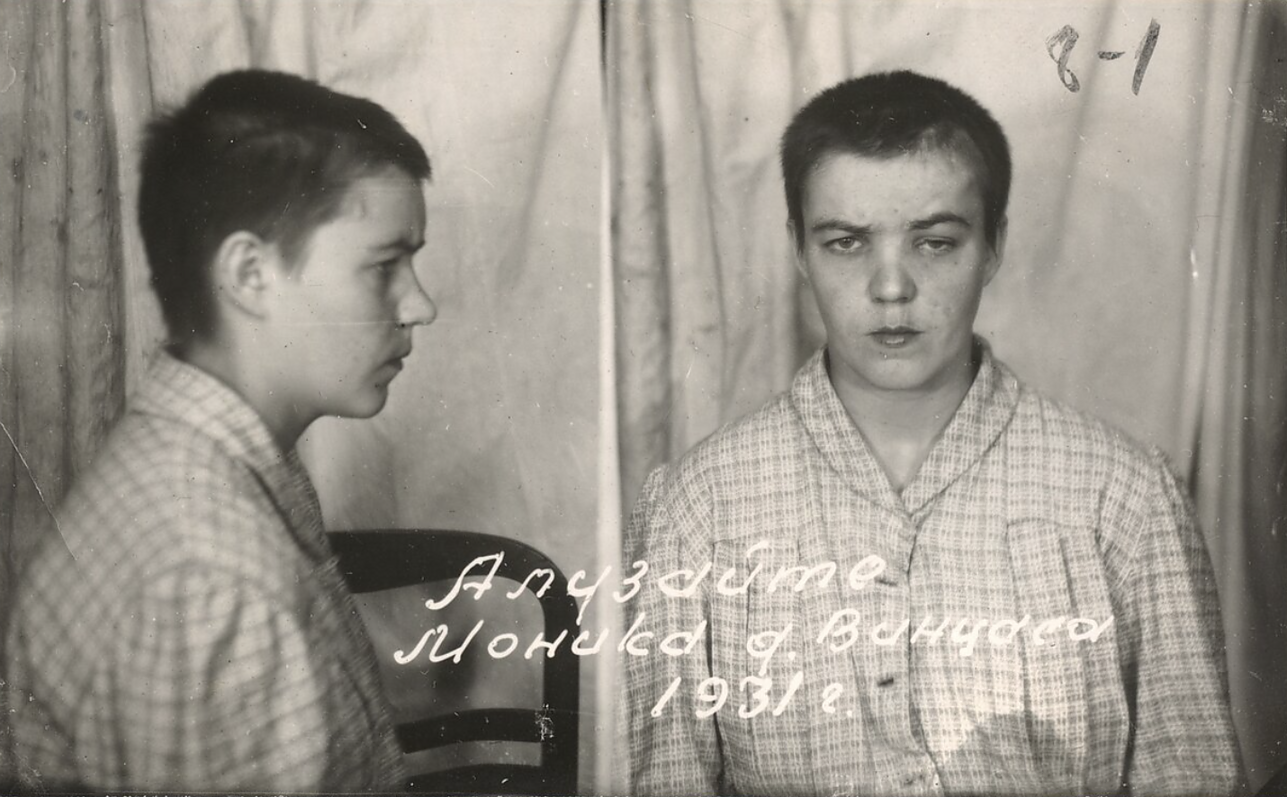
After surrounding her bunker, Soviet forces captured Monika Alūzaitė. She was interrogated and tortured, but she did not give up the names of the other partisans. Hers is just one of many stories of women partisans.
Alūzaitė was born into a Lithuanian farming family. According to Marius Ėmužis, a historian at Vilnius University’s Faculty of History and author of the book Monika Alūzaitė – A Woman in the Fight for Freedom (Partizanė: Monika Alūzaitė – Moteris Laisvės Kovose), Monika’s love for her homeland likely grew out of her patriotic family. Later, she was also influenced by her school environment.
When the Soviets occupied Lithuania, some of Alūzaitė’s teachers became involved in underground activities, helping the partisans.
Alūzaitė herself joined the resistance at the age of 19, while still in her final year of school. According to Ėmužis, it was not unusual – many young people at the time joined the underground movement.
Students in the upper grades usually became involved in underground organisations when their gymnasiums were being turned into Soviet-style secondary schools. While many young people wanted to become partisans, they were not immediately accepted and instead joined support groups.
“Partisans were careful about whom they accepted. First, they needed eyes, ears, and help from people living legally in society. Second, it was impossible to arm everyone willing to fight. Not all had military experience, and mass recruitment would have been dangerous,” Ėmužis said.
Alūzaitė joined such a partisan support group through her teacher, Irena Makuškaitė, and her classmate, Aldona Jokubauskaitė. Once involved, she wrote articles for the partisan press and distributed leaflets and other information.
Over time, the Soviets realised that a partisan support organisation was operating in Užventis. They began recruiting and blackmailing the pupils involved, and when they learned anything useful, they arrested them.
“The Soviets were quite clever about it – they did not arrest everyone at once, but one by one, and often in secret. They did this deliberately, so that rumours would not spread and they could watch how others reacted,” Ėmužis said.
Alūzaitė’s friend Aldona was arrested in this way – secretly, without her family being informed. When Alūzaitė learned of her friend’s arrest, she became afraid that she would be next and went into hiding.
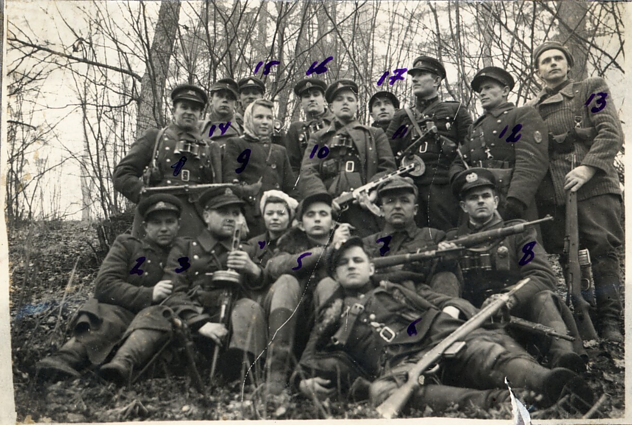
According to Ėmužis, it was risky to remain in hiding for long, so at the end of November 1950, Alūzaitė went to live in a partisan bunker. “Monika came as a partisan; she soon took an oath and received a weapon,” he said.
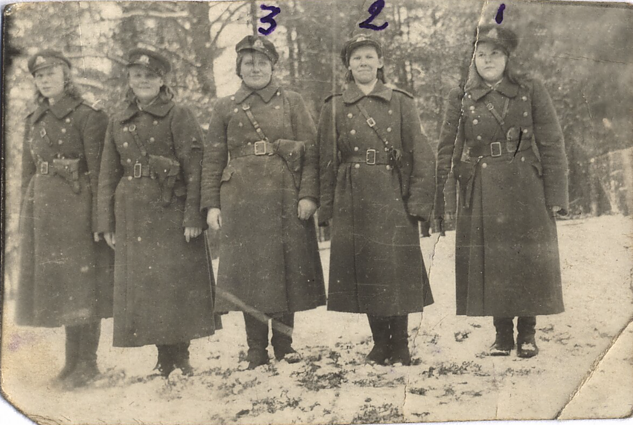
According to the historian, it was not common for women to become partisans, but neither was it unusual.
In 1949, when the Union of Lithuanian Freedom Fighters (LLKS) was established, the partisan leadership decided to avoid recruiting women. However, they were instructed to give persecuted women all possible help and opportunities to live legally.
There was no outright ban on women becoming partisans, and the leadership treated women fighters the same as men.
“Each unit commander could decide freely whom to accept. In the later years of the war, partisans were reluctant to take in inexperienced men, especially the young. They hoped for a possible war between the Soviets and the West, in which they planned to rise up.
In such an uprising, they would need manpower – if everyone went to the forest and perished, there would be no forces left to protect civilians or prevent deportations. They had to preserve people and form reserve units,” Ėmužis said.
Once she became a partisan, Alūzaitė carried a weapon – first a carbine, later only a pistol. According to Ėmužis, Alūzaitė did not have combat duties but worked as a staff officer.
“Monika, being an educated person, was responsible for organising publications, typing texts for the press, writing commanders’ orders and instructions, and keeping accounts. [...] It was a tedious and demanding job. Non-combat duties were less dangerous but by no means easy,” the historian said.
Living and working conditions were also harsh. “The bunker was cold and damp, lit only by a kerosene lamp. There was little oxygen, and breathing was difficult. It was hard work, but essential,” he said.
Holding out under torture
In December 1952, the Soviets surrounded the bunker where Alūzaitė was hiding. Fearing torture and wanting to protect her comrades, she tried to take her own life. Although seriously wounded, she survived. While in the hospital, she attempted suicide again.
According to Ėmužis, partisans often chose suicide when facing capture, and they sometimes injured their faces so that their families would not be recognised by the Soviets and subsequently persecuted.
“They did this with full understanding of why. In a sense, they were saving themselves, knowing they could not endure torture. Partisans often said they were not afraid of death, but of surviving. They knew that torture could be brutal, and that under such pain one might betray others, however unwillingly. [...]
The partisans also knew that the Soviets used psychotropic substances to intoxicate prisoners to get them to speak. Thinking of others they did not want to betray, out of honour and care, they chose suicide,” Ėmužis said.
At first, Alūzaitė was taken to the hospital for treatment. After her second suicide attempt, she was transferred to a prison hospital.
When her condition improved, the Soviets began to interrogate her. According to the historian, they wanted to extract information about other partisans and recruit her.
After her suicide attempts, Alūzaitė required another operation and suffered severe pain. The Soviets promised to perform the necessary surgery in exchange for information about her brother, who was also a partisan.
“In essence, Alūzaitė did not want to fulfil those promises, and she did not. She tried in every possible way to warn her brother and mother. Most likely, Monika succeeded in alerting her family, and the Soviets realised that they would get nothing from her, that she was not showing them ‘loyalty’,” said Ėmužis.
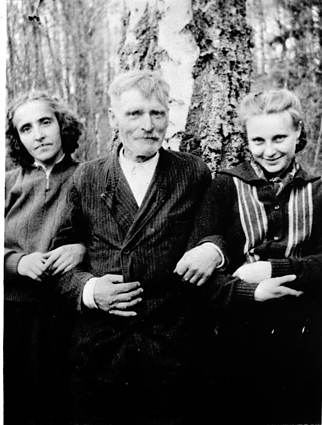
Because she didn’t break, Alūzaitė was imprisoned. In her testimonies about the interrogations, she described the torture and violence inflicted by the Soviets – she was beaten, deprived of sleep, and blinded by bright light.
“Monika was, in a way, lucky – after her injury, her health was so poor that she would faint quickly, so no one wanted to torture her too much, as you cannot extract anything from someone who has fainted. Others endured worse torture,” said the historian.
The Soviets sentenced Alūzaitė to 25 years in prison and sent her to a forced labour camp, where she worked in a mineral wool factory.
“The material was toxic, and the workplace was full of dust, so the job severely damaged Monika’s health. Later, she asked the factory director to assign her lighter work, and she was moved to cleaning duties, but she still inhaled a lot of dust,” said Ėmužis.
Alūzaitė returned home earlier than expected – after several years in prison, in 1956, the Soviets released her, though she remained under close surveillance for some time.
“Monika came under the attention of the security services because she corresponded with people she had been imprisoned with. Such communication was a red flag for the Soviets, suggesting she might be organising something.
The university was closed to her, but she became a nurse. Local communists, however, would grumble about who she was and why someone like her was working with medicines and children,” said Ėmužis.
According to Ėmužis, her story stands out for its determination and sense of duty.
“Monika placed the partisan’s duty not to betray known secrets above her own life. And what more do we have than our lives? It is the greatest thing one can give,” said Ėmužis.

Newsletter
Every Friday morning.