













As Lithuania's attractiveness to foreign jobseekers coninues to trail behind Latvia and Poland, businesses, while recognising the security risks, are urging the government to distinguish between economic migrants and those seeking long-term residence in Lithuania.
The President’s Office, meanwhile, says it is time to review the current quotas for hiring workers from non-EU countries.
For new foreign employees, the light has turned red. The Migration Department has stopped accepting applications to hire new foreign workers as the annual quota has been reached.
“This poses a challenge for the entire Lithuanian economy, as a large part of our industrial and service sectors depend on workers from third countries,” said Povilas Drižas, Vice-President of the Lithuanian Confederation of Industrialists.

“For some companies, this comes as a real shock,” added Saulius Drazdauskas, Director of recruitment agency On Top LT.
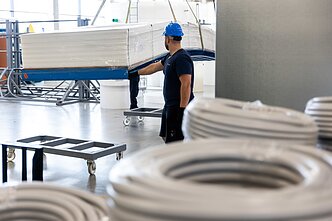
The most serious difficulties are expected in sectors such as transport and metalwork, where demand for drivers and welders is highest. It is estimated that the transport industry alone could lose around €30 million in revenue.
“In practice, some 4,000 lorries will have to wait until next year,” Drižas said.
“When there’s a gap in recruitment, companies that have already selected candidates risk losing them,” Drazdauskas explained.
It is worth mentioning that Lithuanian businesses can still hire foreigners, but only by offering higher salaries.
“In reality, this distorts the economy – why should someone hired yesterday earn one salary, while someone starting tomorrow gets €900 more?” Drižas noted.
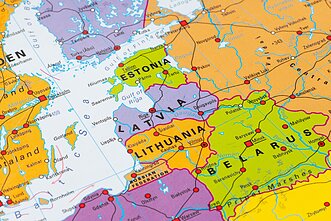
Recruitment agencies also report that Lithuania is becoming less attractive to jobseekers, who are increasingly choosing Latvia or Poland instead. Most foreign workers still come from Central Asia, Ukraine and Belarus.
“When it comes to workers from further afield who speak English, some employers find that language barriers make them unsuitable,” said Drazdauskas.

Politicians, however, are focusing less on economic benefits and more on security risks.
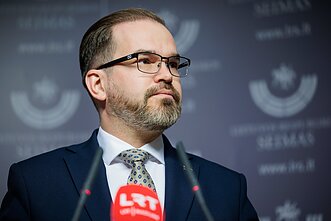
“It’s a matter of weighing two things – the presence of these individuals in Lithuania or national security,” said Deputy Minister of the Interior Alicija Ščerbaitė.
Although the number of migrants has stabilised at around 210,000, the Migration Department reports a growing influx from Central Asia – roughly 20,000 people.
“The risk of radicalisation exists, even if we don’t currently face major problems,” said Deividas Matulionis, the President’s Chief Adviser.
As a result, the government has tightened the list of countries from which employers can hire low-skilled workers.
“Most of the removed countries are in Central Asia and India – states that pose a national security risk,” Ščerbaitė said.

Business urges distinction between migrants
Business leaders say they understand the risks but want a clearer distinction between economic migrants and those intending to settle permanently.
“There should be two paths – economic migrants, whose employment and income we can monitor, and those who come to live here with their families, who have to learn the language, culture and history,” said Drižas.
Politicians, however, are pushing for stricter controls and a review of foreign worker quotas. They argue that Lithuania should invest more in vocational education to train local workers.

“It’s in business’s interest to have our own citizens, our own people, capable of doing these jobs – without needing to bring in labour from abroad,” Matulionis said.
According to the Migration Department, about one in five foreign workers who come to Lithuania for work eventually stay and are able to bring their families to join them.

Newsletter
Every Friday morning.