









Lithuania's decision to lower the level of protection for Sviatlana Tsikhanouskaya has been met with mixed reactions from politicians and experts in the Baltic country.
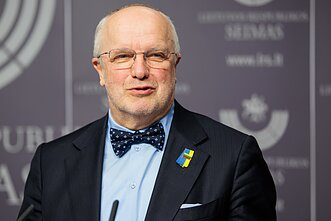
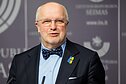
“Some groups will make use of this,” said Vytis Jurkonis, a political analyst and head of the Freedom House in Vilnius, which has been helping the Belarusian and Russian opposition.
Earlier this week, Lithuanian officials announced that Tsikhanouskaya, a Belarusian opposition leader, would no longer receive the same level of security protection as state leaders. Instead, her security would now be looked after by the criminal police officers, saying this reflected the security situation.
Further reading
“There are local politicians, seemingly not connected with social democrats or foreign policy, but they have expressed opinions about Tihanovskaya and Belarusian democrats more broadly. As a result, it creates the impression that their public statements resonate with the decision,” said Jurkonis.
The main criticism of this decision, according to Jurkonis, is the lack of transparency. According to him, neither the process nor the arguments have been properly explained.
“Hence the question: who promoted this decision and what is their interest,” said Jurkonis, adding that reducing the story to “cost optimisation” was a mistake.
The decision has signs of a deeper systemic problem and raises more serious questions, according to him. “If certain actors influence such a decision, it is only a symptom, behind which others may follow,” said Jurkonis.
“To talk of economy is populism: the main costs are salaries for Lithuanian officers and their daily allowances during travel,” he said, adding that the fact there were no attacks against her proved that the officers did their jobs.

According to Jurkonis, there has been a growing feeling of mutual fatigue, both among the Belarusian opposition and within the Lithuanian society.
“Some Belarusians have believed that Lithuania will always be supportive by default. [...] Meanwhile, if you read independent Belarusian media, you often encounter reproaches toward Lithuania over each cancelled residence permit – without understanding Lithuania’s reasons, including security concerns,” said Jurkonis.
“Lithuania is reacting to national security risks, introducing border restrictions, supporting Western sanctions and so on, yet it is depicted as the ‘bad guy’,” he said.
Changing times?
Vytenis Andriukaitis, the honorary chairman of the Social Democrats (LSDP) and member of the European Parliament, pinned the country’s decision on the changing status of Tsikhanouskaya herself.
“New centres, new faces have appeared. The attention of the international community, the media, and politicians is gradually shifting. This is a natural process,” he said.
“I think one must look at the situation more broadly. Objectively speaking, Tsikhanouskaya today does not play the role she played two or three years ago, especially after her husband’s release,” Andriukaitis said.
He added that the position of the regime of Alexander Lukashenko was also changing.
“The regime is releasing political prisoners, trying to establish external contacts, including with [US President] Donald Trump. It’s a more complex and layered picture than simply a decision about someone’s security,” said Andriukaitis.
When asked whether Tsikhanouskaya might face security threats, the politician was blunt: “She is unlikely to significantly influence public opinion inside Belarus. The situation has changed, and her figure is no longer seen as a threat.”
He also said the costs may have played a part – media reports indicated that Tihanovskaya’s security had cost about €1 million per year.
“The economic factor is important. If the level of threat falls, continuing to spend substantial resources on unnecessary security measures is simply irrational. That’s obvious,” Andriukaitis said.
“I believe this decision was taken based on analysis of the circumstances, primarily the level of threat. If the threat level decreases, logically the protection level should decrease too,” he added.

Pavilionis: ‘Dangerous decision’
Conservative MP and member of the parliamentary group For Democratic Belarus, Žygimantas Pavilionis, called the decision to reduce Tsikhanouskaya’s security level premature and dangerous.
“We don’t understand this decision, because it is absolutely unclear why the threat level is now considered lower,” he said.
“On the contrary, the situation in our region is only getting worse. Perhaps this is due to policy by some radical parties in the government, who want to normalise relations with the Lukashenko regime,” Pavilionis said, in reference to the populist politicians now part of the ruling coalition.
He also downplayed the improtance of the prisoner releases and Lukashenko’s contacts with the West.
“We’ve heard this for 30 years. He [Lukashenko] continually releases some prisoners – and immediately detains others. And every time those who believe in these stories win, those who trust them lose,” Pavilionis said.
“The Lukashenko regime is only gaining strength,” he added. “Someone has apparently believed these stories again – both in Lithuania and possibly in Washington.”
The support for the Belarusian opposition has always been part of Lithuania’s foreign policy, according to Pavilionis.
“The fight for Belarus’s freedom began 30 years ago. And it was not just conservatives who started it – it was the stance of all Lithuanian foreign ministers. This is a big, long-term struggle. And we cannot agree to attempts at ‘thawing’ in relations with Lukashenko, because he is not free in his actions,” the politician said.

Tsikhanouskaya’s office: ‘Security for us is a matter of survival’
Dzianis Kuchynski, diplomatic adviser to Tsikhanouskaya, told LRT.lt that they are now working remotely.
“We will consider all permanent and temporary options to maintain the necessary level of protection for Tsikhanouskaya and her team,” Kuchynski added.
He said the team was grateful to Lithuania for its support of a democratic Belarus, but said that security is “a matter of survival.”
"We remain targets for the regime, and Svetlana Tikhanovskaya is Lukashenko's number one enemy. We know he has physically eliminated his opponents before,” said Kuchinsky.
“We know his services continue to carry out attacks abroad. [...] We don't have to look far – in Vilnius, shops, cultural centers, and a church have been attacked over the past year," he said.

Newsletter
Every Friday morning.