














A woman who twice applied to join the Lithuanian Riflemen’s Union says she never received a response, highlighting strains within the volunteer paramilitary group that has seen a surge of interest amid regional security concerns.
Colonel Linas Idzelis, commander of the union, acknowledged that long waits are common in some areas, especially in the capital.
“In Vilnius, you can wait up to six months, because there simply are no resources,” he told LRT. “At an oath ceremony in Trakai this year, more than 600 people took part – that’s a new battalion. Managing such numbers when only one person works in the personnel office is very difficult.”
Idzelis said new applicants in crowded units are sometimes redirected to nearby branches in towns such as Giedraičiai, Molėtai, Varėna, or Ignalina. He urged applicants to be patient and proactive in following up.

The Riflemen’s Union, founded in 1919, has played a symbolic and practical role in Lithuania’s defence strategy, attracting thousands of new members since Russia’s invasion of Ukraine in 2022.
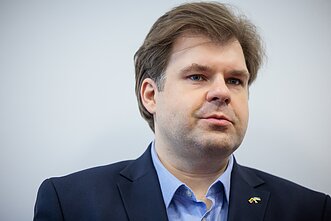
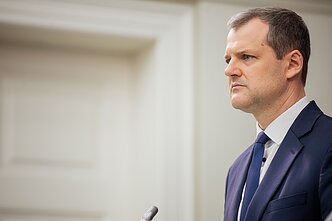
Giedrimas Jeglinskas, chairman of parliament’s National Security and Defence Committee, said the bottlenecks reflect deeper shortcomings.
“The Riflemen’s Union is a cornerstone of our defence,” he said. “This is not so much about leadership competence as about resources, priorities and scale. Lithuania often struggles to work on a large scale – we need thousands, but we have too few people and too little funding.”

He called for stronger integration with the armed forces and clearer objectives. “Some riflemen are combat-ready, but what about the rest? We need debate, a vision and more resources. For now, it’s a typical Lithuanian problem – good ideas but lacking scale,” Jeglinskas said.
Idzelis said the union is expanding, but slowly. “To create full capacity takes seven to 15 years,” he said.
“Funding that began in 2023 allows us to grow gradually. We have a strategy until 2035, but for now we are building piece by piece – equipment is lacking, infrastructure is outdated, and there are too few people. Still, we are developing not only combat units, but also cyber, information warfare and drone capabilities.”
Jeglinskas said the public discussion should remain candid. “If three times more resources are needed, we must acknowledge that. The goal of the Riflemen’s Union is to empower society to defend itself and involve citizens in national defence. This is not an existential crisis, but the question is whether we can build a clear system where anyone willing to contribute finds a place.”


Newsletter
Every Friday morning.