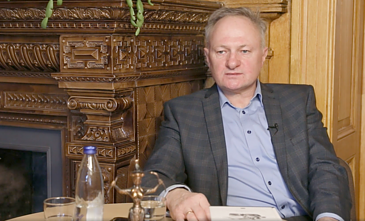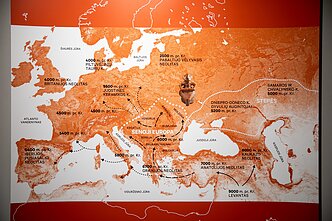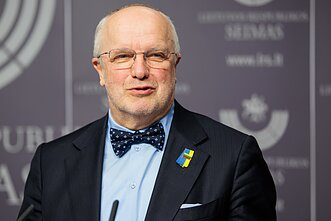














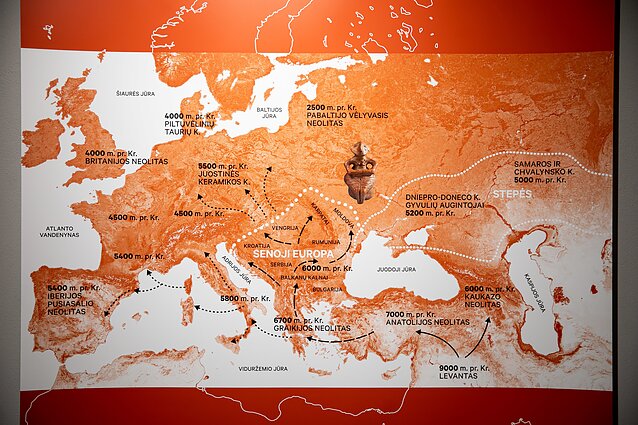
Literary scholar Eugenijus Žmuida says that the mystery of human life was a central theme in the Old Europe reconstructed by renowned Lithuanian archaeologist Marija Gimbutas. He speculates that women may have been venerated as goddesses at the time because it was not yet understood that pregnancy resulted from sexual intercourse.
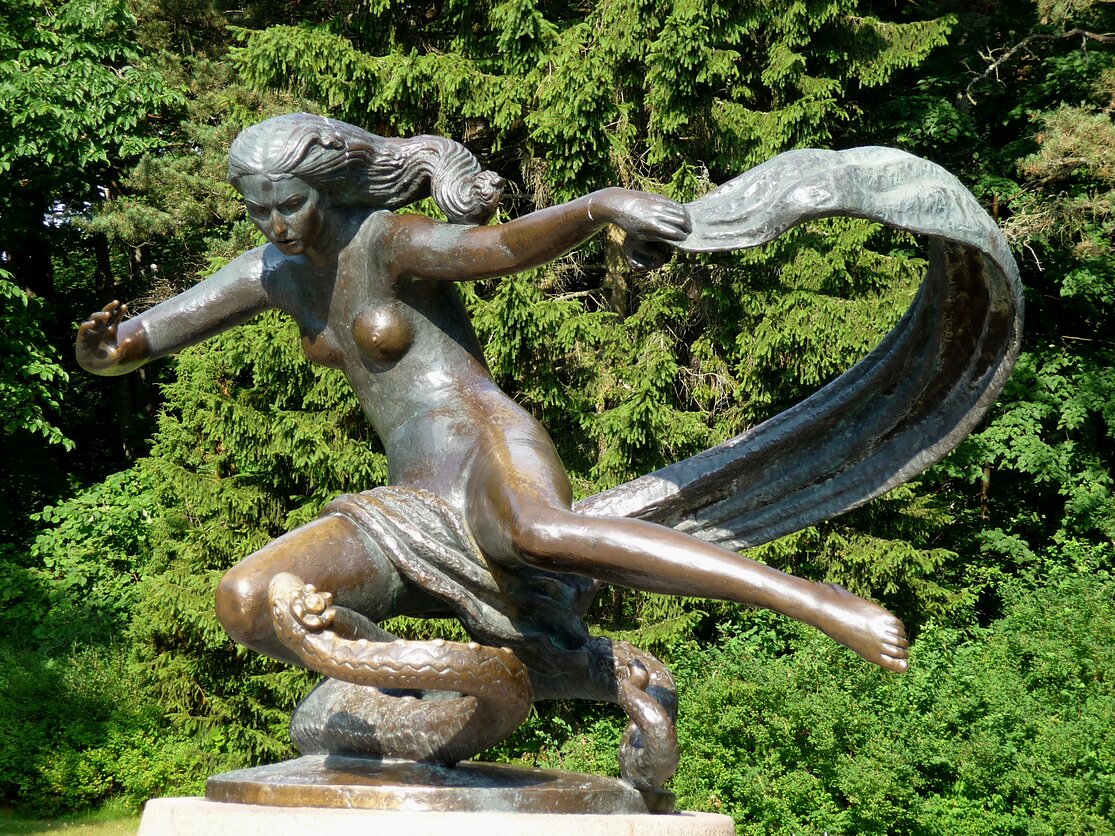
The scholar argues that the epic ‘Eglė the Queen of Serpents’ (Eglė Žalčių Karalienė) acts as a key to understanding ancient narratives.
The epic speaks of the prehistory of all of Europe
Žmuida notes that ‘Eglė the Queen of Serpents’ is one of the most important epics, telling the story of a lost civilisation whose elements were preserved by few. He points out that this epic is the first recorded fairy tale collected during the folklore boom, which reached Lithuania in the first half of the 19th century. The fairy tale was first published in the almanack ‘Biruta’, where it was simply called ‘A Lithuanian fairy tale’.
“It contains the pure plot of ‘Eglė the Queen of Serpents’ and even rhymed passages, formulas and incantations used to turn characters into trees. The entire fairy tale was written in Polish, but with Lithuanian interludes. The Pole who transcribed it included Lithuanian elements to preserve its authenticity as much as possible. This is the beginning of that fairy tale; it is how the cultural world learned about it,“ the scholar explains.
He notes that after the epic appeared in the almanack, other authors began to adapt the work or incorporate its elements into their works. For example, the Polish writer Józef Ignacy Kraszewski rewrote ‘Eglė the Queen of Serpents’ into a poem, while the Lithuanian writer Antanas Baranauskas included an episode from his fairy tale in his work ‘Anykščių Šilelis’ (Anykščiai Forest).
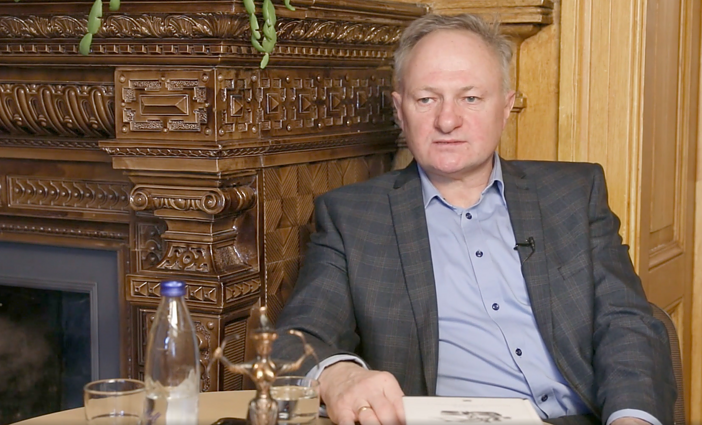
Žmuida emphasises that the epic of ‘Eglė the Queen of Serpents’ speaks of the prehistory of all of Europe. He says it transports us to a deep antiquity, which many scholars hesitate to explore because it is a realm of speculation and theories.
Speaking about various epics, Žmuida points out the recurring depiction of powerful female goddesses.
“All scholars and mythologists will agree that when studying ancient civilisations and their pantheons of gods, as early as the 19th century, it became clear that the more archaic the civilisation, the more female deities there are. In Greek and Roman mythology, they are already a minority and do not play the central role; Zeus is the most important. But in, for example, Sumerian mythology, female deities emerge as those who control the most fundamental aspects: life and death,” he comments.
Special bond between humans and beasts
The literary scholar says that many epics reveal a mysterious connection between humans and animals. Žmuida notes that such fairy tales reach as far back as the Stone Age.
“This was the longest period in the history of humans as Homo sapiens. Undoubtedly, many plots, myths, and rituals had emerged then, because societies could not survive without them. They arose naturally, a kind of cultural activity. These tales show that human psychology has changed little since; reading them, we can see the direct interaction between man and beast,” comments Žmuida.
Stone Age humans learned survival skills from animals. Žmuida notes that a Stone Age person was helpless, while animals were the masters of certain skills. He points out that, for example, the gods of the Egyptian pantheon are depicted as hybrids of human and animal form. In other words, the first gods were imagined as beasts.
Žmuida says that later fairy tales depict a civilisational transformation: humans become superior and can outsmart bears, lions, and other beasts.
Just like in 'Eglė the Queen of Serpents', marriages between humans and animals are also common in magical fairy tales.
“What makes ‘Eglė the Queen of Serpents’ unique in a magical sense is that the sympathy lies with the animal, that is, the serpent. This is almost unheard of elsewhere. Even in the versions of ‘Eglė the Queen of Serpents’ collected and recorded by Lithuanian folklorist Leonardas Sauka, that sympathy for the serpent exists uniquely in Lithuanian tradition,” Žmuida points out.
In the fairytale ‘Eglė the Queen of Serpents’, sympathy remains on the serpent’s side, reflecting Eglė’s bond with it.
“And here lies the great secret of this fairy tale, its great archaic nature, its mystery, which suggests that this fairy tale is a key to reconstructing the fragments of ancient narratives from lost civilisations,” the scholar adds.
The secret of women is revealed
The literary scholar speculates that in the civilisation of female deities reconstructed by archaeologist Marija Gimbutas, the central mystery was the origin of life.
“It is a mystery why a woman suddenly becomes pregnant, why men do not give birth, but women do. Where do children come from? Women probably didn't give birth in public; perhaps it happened in some closed temples, from which they would return with a baby, which was seen as a supernatural thing,” he states.
Žmuida notes that at the time, linking pregnancy and childbirth with sexual intercourse was not straightforward.
“And I would guess that there was a period, and perhaps an entire civilisation, when women, possessing this mystery of life, were truly worshipped as goddesses capable of giving life; new life, a new miracle, because every human being is a miracle, each with immense spiritual value,” he reflects.
He believes that the epic of ‘Eglė the Queen of Serpents’ tells of the lost myth of women. Žmuida points out that the fairy tale's plot circles around men determining who is the father of Eglė's children.
“I think ‘Eglė the Queen of Serpents’ is a fairy tale about a rupture, about the revelation of the female mystery; that is, the mystery of life. The secret of the origin of life is betrayed by the daughter Drebulė, who is forced to say who her father is. Well, beneath this formula, beneath this desire to know who the father is, lies what she is betraying: that secret only known to women,“ the scholar says.
Žmuida speculates that in the fairy tale, Eglė's sons did not betray the secret because they simply did not know it, while her daughter Drebulė did. It was she who revealed that beneath the water, the serpent was a man.
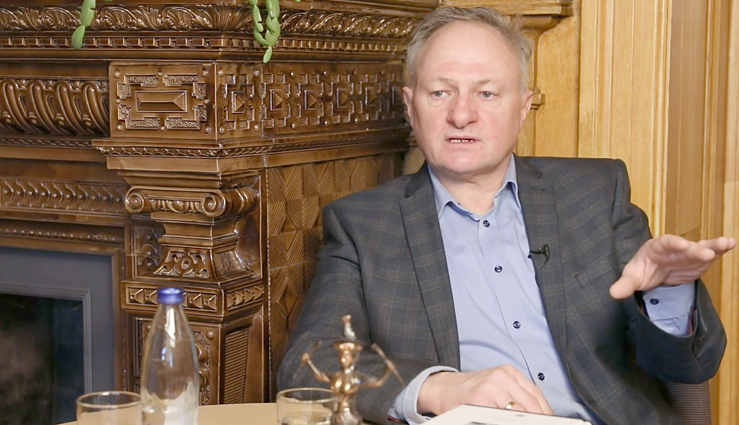
“So the father is human, not a beast, because, as I already said, the earliest gods were beasts. Thus, it was thought that women who brought a baby from who-knows-where would have had sexual intercourse with or received that life from the gods; that is, from beasts. But this fairy tale, where Eglė marries a serpent, shows a rupture, and explains why Eglė curses her children by turning them into trees,” the literary scholar says.
According to him, the tragedy revealed in the Lithuanian epic is not that of a single family but rather a collapse of the civilisation of women due to their secret being revealed.
“And everything in the fairy tale is symbolically focused on Drebulė, who is cursed to tremble through the ages. Thus begins the epoch of men,” Žmuida explains.
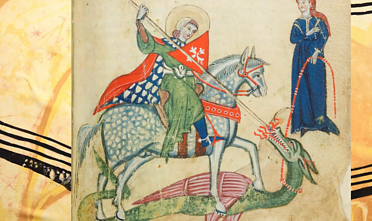
The literary scholar brings an example from religious art, which often depicts St. George slaying a dragon, with a maiden tied to it with a rope. According to him, the beast is overcome as a symbol of evil, but it is forgotten that what is truly slain is the primal father, the giver of life.
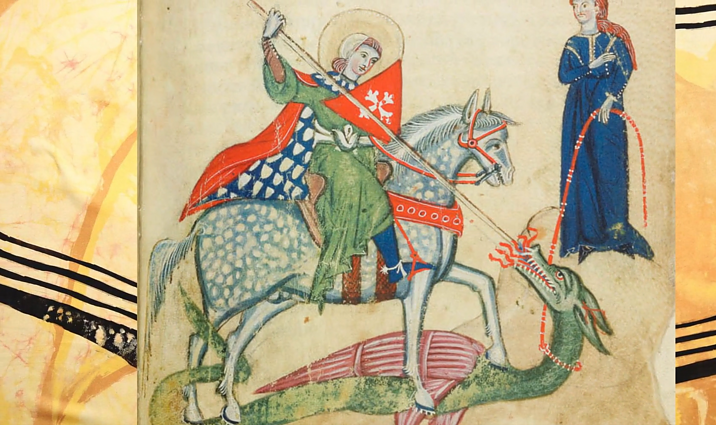
“Christianity battles some undefined evil, but in truth, it is fighting the primal father. Later again, for example, in one of the oldest monotheistic religions, like Judaism, the dragon or serpent is transformed into a half-human, half-beast devil with hooves and a tail,” the literary scholar comments.
Continued here.
Prepared by Emilis Jakštys.
Translated to English by Smiltė Titovaitė.

Newsletter
Every Friday morning.