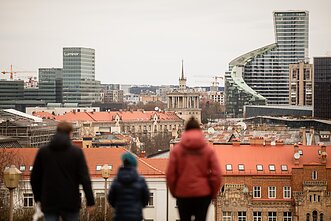















A low-emission zone introduced in Kaunas’ Old Town a year ago has reduced car traffic by about a quarter, according to the city municipality, which now plans to expand the scheme to cover more of the central part of the city.
Drivers passing through the Old Town without paying for parking are required to pay a €2 fee. Martynas Matusevičius, head of the municipality’s Transport and Traffic Management Division, said the measure has proven effective.
“The benefit, as we calculate, is that transit traffic through the Old Town has fallen by 25 to 30%,” Matusevičius said. “At first, we received a lot of complaints and requests for clarification. Now questions are rare, just a few per month. We have no plans to change the fee.”
Matusevičius said the Old Town initiative was the first step in Kaunas’ sustainable mobility plan. The next phase would establish a larger low-emission zone in the city centre, but only after a new bridge linking Užnemunės and Brastos streets is completed.
Once the bridge is built, the authorities will analyse the new traffic flows and assess further infrastructure needs, he added.

Implementation lags elsewhere
Under the Alternative Fuels Act, Lithuania’s six largest cities and several resort towns were required to introduce low-emission zones by this year. So far, only Kaunas has implemented one fully.
Vilnius has established a zone in its Old Town, but drivers there face no fee, only a recommendation to choose cleaner travel modes. Other municipalities have stalled or criticised the law.
Neringa Mayor Darius Jasaitis called the legislation impractical, saying a “one-size-fits-all” approach does not work.
“It was drafted by cabinet experts,” he said. “Municipalities in Lithuania are very different. Even resort towns, which may seem similar, are in fact very different. We need flexibility to decide ourselves.”

Jasaitis said Neringa explored building parking lots to keep polluting cars out of sensitive areas, but the €13 million cost was prohibitive. Legal restrictions also blocked the municipality from imposing fees on state roads.
Kaunas district and other resorts weigh options
Kaunas district, home to resort areas such as Kulautuva, Kačerginė and Zapyškis, has not yet prepared a formal plan but has started preliminary work.
“We don’t want to rush. We’ll consult with residents, businesses and tourists before making decisions,” said district administration director Marius Rikteris. He suggested future parking hubs outside residential areas could allow visitors to continue by bicycle or on foot.

Law under review
The Ministry of Transport told LRT RADIO that 13 municipalities were legally required to establish low-emission zones by the start of 2025, but Kaunas is the only city where such a zone is functioning. The ministry acknowledged that the law lacked clear implementation criteria, leading to uneven interpretations by municipalities.
Amendments to the law are being prepared and are expected to be debated in the Seimas during the autumn session.

Newsletter
Every Friday morning.