









Fewer and fewer pupils in Lithuanian schools are choosing Russian as a second foreign language – last year, less than half opted for it. Meanwhile, Spanish, French, and German are becoming increasingly popular. According to the president of the School Leaders Association, the demand for teachers of these languages is expected to rise significantly in the near future, and specialists need to be trained accordingly.
Morta, a secondary school pupil, has been learning Spanish since Year 6. She says she enjoys the language.
"I find Spanish a very beautiful language – how it sounds, how people speak it, and the culture is very interesting, which is why I wanted to learn it in the first place," shares pupil Morta Čičelytė.
A few years ago, there was no option to study Spanish as a second foreign language at her school, so the family decided to take the initiative and pursue it independently.
"We sat down – my husband, daughter, and I – and asked if she’d like to learn Spanish. She said yes. So what could we do? We had to convince her classmates – after all, they won’t start a class for just one child, no matter how eager. We found out what the minimum number of pupils was. Then our daughter prepared a presentation for her classmates, and it turned out there were 13 or 14 who wanted to learn Spanish," recounts Morta’s mother, Raimonda Makrickaitė-Čičelienė.
A Spanish teacher at one school in Kaunas says the language is becoming ever more popular among pupils.
"Interest in Spanish is growing every day in Lithuania. I believe it will soon become the third most popular choice in some schools, which is why we need more native-speaking Spanish teachers," says teacher Ery Martin.

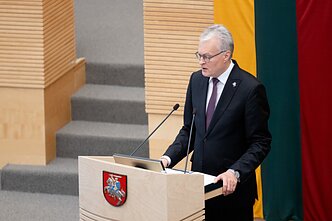
According to Deputy Education Minister Jonas Petkevičius, 2,500 pupils chose Spanish in the 2023–2024 academic year, compared to over 6,000 this year. He notes that more and more students are turning away from Russian.
"The decline has been particularly sharp since 2022. When the number of pupils studying Russian dropped by 10 percent annually, this year we’re down to just 43.5 per cent studying Russian as a foreign language. There is also a trend – in the first year of upper secondary school, pupils can drop Russian and choose another language," he says.
This shift is particularly evident in schools in Vilnius.
"Out of more than 6,000 Year 6 pupils, only 400 chose Russian – that’s just 6 percent. In Lithuania, there are 108 schools where Russian is no longer offered as a foreign language in Year 6," Petkevičius adds.

A growing number of Russian teachers are now retraining.
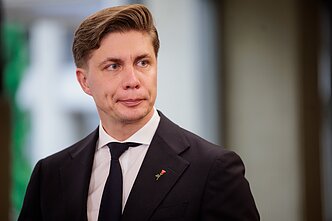
"When Russia launched its full-scale invasion of Ukraine, our attitude changed – we realised we had to distance ourselves even more from that world, and schools are no exception. As schools began to phase out Russian and offer pupils alternatives, it was only natural that lesson hours for these teachers were significantly reduced," says Mindaugas Nefas, Vice-Chancellor of the Education Academy at Vytautas Magnus University.
In addition to Spanish, German, French, and Italian are now among the most popular second foreign languages, according to Dainius Žvirdauskas, president of the School Leaders Association.
"It’s vital that specialist training is sustainable. If we already have Year 6 and Year 7 pupils learning Spanish, we’ll soon need more and more teachers. So training specialists and their entry into the job market must increase proportionally," he says.
The Deputy Education Minister also notes that the state-level school-leaving exam in Russian has been scrapped as of this year. As a result, he expects even fewer upper secondary pupils to choose Russian.

Newsletter
Every Friday morning.