











A group of Lithuanian lawmakers has proposed legislation that would bar individuals holding passports from countries deemed hostile to Lithuania from joining or founding political organisations.
The proposed amendments to the Law on Political Organisations would also require political parties to disclose members who hold dual citizenship and specify their second nationality in annual filings to the Justice Ministry.
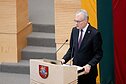
“Since the start of Russia’s full-scale war against Ukraine in 2022 – and before that – Russia has poured enormous resources into influencing democratic and political processes worldwide, especially in our region,” said Dalia Asanavičiūtė-Gružauskienė, a member of the conservative Homeland Union–Lithuanian Christian Democrats and one of the bill’s co-authors.
“This terrorist state exploits every opportunity to interfere in the life of our country,” she added, “and the situation where Russian citizens can be founders and members of Lithuanian political parties poses a threat to national security.”
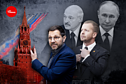
The initiative follows a July 7 investigation by the journalism group Redakcija, which revealed that Alvydas Brusokas, a co-founder of the political party Nemunas Dawn, now part of the ruling coalition, holds dual citizenship of Lithuania and Russia, has spent most of his life in Russia, and allegedly maintains ties with Russian oligarchs.
Asanavičiūtė-Gružauskienė said the case highlights the urgent need for safeguards. “The government already maintains a list of hostile states and territories, mainly used for public procurement decisions – but the risk extends to political influence,” she told BNS.
The government’s official list of hostile entities includes Russia, Belarus, the annexed Crimean Peninsula, Moldova’s breakaway Transnistria region, and Georgia’s breakaway territories of Abkhazia and South Ossetia.
Although Lithuania generally prohibits dual citizenship, exceptions exist, especially for descendants of Soviet-era deportees to Russia, she explained. “That's where dual citizenship [with Russia] can come into play,” Asanavičiūtė-Gružauskienė said.
In addition to the political organisation reforms, the MP has also drafted amendments to the Electoral Code that would prohibit citizens of “hostile states” from financing political campaigns. However, as the Electoral Code is a constitutional law, 36 parliamentary signatures are required to register such amendments. Those signatures are still being collected.
Currently, only Lithuanian citizens and EU nationals residing in Lithuania may participate in political organisations. The existing law does not specifically address dual citizenship.
The amendments were co-signed by nine conservative MPs and Social Democrat Indrė Kižienė.

Newsletter
Every Friday morning.