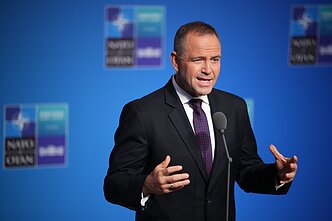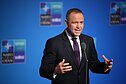







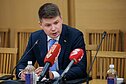




As EU member states approved the bloc’s 18th – and arguably one of its toughest – packages of sanctions against Russia on Friday, Lithuanian Foreign Minister Kęstutis Budrys said the measures strike at the core of Russia’s war economy.
“The 18th sanctions package got a green light! With that, Europe unleashes a sanctions strike Russia can’t ignore – targeting the heart of its war economy,” Budrys posted on the social media platform X on Friday.
He said the sanctions include measures against more than 100 shadow tankers, 22 Russian banks, and the Nord Stream pipelines, alongside a reduction in the oil price cap, all of which, he claimed, would ensure that Russia "stays right on the course of running out of blood money".
Lithuania's top diplomat also urged the United States to follow suit with tough measures.
“The EU paved the way. Now it’s time for the perfect storm – the U.S. Senate to vote on that Russia sanctions bill imposing crushing burdens on the Russian economy and those fueling Russia's war of aggression,” he said.
The 18th sanctions package since Russia's full-scale invasion of Ukraine in 2022 was agreed after Slovakia lifted its weeks-long block, following talks with Brussels on plans to phase out Russian gas imports.
According to EU diplomats, the package includes lowering the price cap on Russian oil sold to third countries to 15% below market value. The new level will initially be set at $47.60 per barrel, with scope for adjustment depending on global oil prices. The move is expected to gain support from G7 partners such as the UK and Canada.
The EU is also blacklisting over 100 vessels in Russia’s so-called Shadow Fleet of ageing tankers used to circumvent oil sanctions. Further measures will prevent the restoration of the decommissioned Nord Stream 1 and 2 gas pipelines in the Baltic Sea.
The sanctions are due to be formally adopted by EU ministers later on Friday.

Newsletter
Every Friday morning.