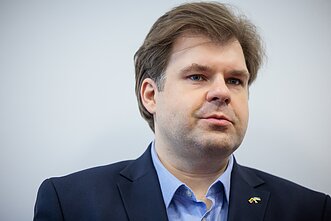




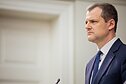








After a well-known journalist complained about hearing too much Russian spoken in Vilnius, Culture Minister Šarūnas Birutis says discussions should focus on teaching recent immigrants the Lithuanian language rather than restrictions.
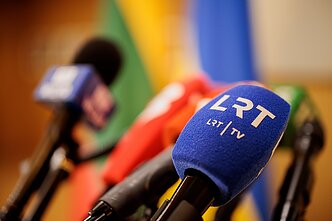
In an interview with LRT TV’s programme Dienos tema (Topic of the Day) on Wednesday, Birutis stopped short of saying whether Russian is used too widely in the capital but acknowledged it is heard often enough and encouraged integration instead of restrictions.
“I think there is a lot of Russian spoken. Is it too much? We haven’t measured it, but it’s clear that it’s widespread,” Birutis said. “I’m not in favour of bans. I believe we as a society should all contribute to their integration.”
His comments followed widely covered concerns voiced by journalist Edmundas Jakilaitis over the dominance of the Russian language in Vilnius’ public spaces.
The head of the Migration Department, Evelina Gudzinskaitė, has linked the increased use of Russian to the growing Ukrainian diaspora. Many Ukrainians, particularly in the war-affected eastern regions, are native Russian speakers.
Jakilaitis, however, disputed that explanation, calling it a distraction from the issue of Russian citizens in Lithuania. He insisted Ukrainians make a conscious effort to speak Ukrainian among themselves.

‘Teach your neighbour’ approach
Birutis suggested that public solidarity could play a key role in language integration, similar to how Lithuanians have united around major national efforts.
“As a society, we managed to buy a Bayraktar drone [for Ukraine] through crowdfunding,” he said. “I think one initiative could be: ‘Help your colleague, your neighbour, learn the state language’ – at least to a basic level.”
He emphasised that the A1-level proficiency required for service-sector workers is not high and could be achieved with community support.
“In Vilnius especially, we probably switch to Russian too quickly. In this fast-paced world, it’s easy for those who understand Russian to default to it,” Birutis said. “But I think society should help, because it’s important to prevent immigrant ‘bubbles’, which can be dangerous.”

Birutis warned that immigration to Lithuania is unlikely to decrease and said a lack of societal support for integration could lead to serious problems.
Dzianis Kuchynski, an adviser to Belarusian opposition leader Sviatlana Tsikhanouskaya, told LRT that the lack of available Lithuanian language courses is a significant barrier for newcomers.
Language law exemptions for Ukrainian refugees
Last October, Lithuania’s parliament passed amendments requiring foreign nationals working in direct customer service roles to know basic Lithuanian, with the rule set to take effect next year.
However, on Wednesday, the government decided to postpone the requirement for Ukrainian war refugees for at least another six months, or for as long as they retain temporary protection status. That status currently extends until March 4, 2026, but could be prolonged by a joint European Union decision.

Birutis previously told BNS that the delay was not entirely justified, but on Wednesday described the Education Ministry’s latest proposal as “a balance between necessity and realistic capacity”, saying the postponement would not slow integration.
The Ministry of Education, Science and Sport cited practical challenges in helping foreigners prepare for and take official language exams. Currently, only one accredited body – the National Education Agency – is authorised to administer such exams.
In May, linguists and university representatives urged the government not to delay the requirement and offered their support in providing Lithuanian language instruction. They also called on the ministry to recognise language certificates issued by academic institutions.

Newsletter
Every Friday morning.