
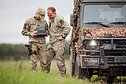

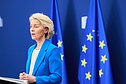













Over the next decade NATO member states have pledged to increase defence spending to 5% of their GDP annually – a move experts say reflects a shift in the Alliance's approach, with Europe finally assuming greater responsibility for its own security.
In response to threats – particularly the long-term danger posed by Russia – NATO members agreed on Wednesday to allocate 5% of GDP annually to defence by 2035. This figure is divided: 3.5% will go towards core defence spending, while 1.5% will support broader security-related needs, such as infrastructure and cybersecurity.
This commitment aims to ease pressure from US President Donald Trump and maintain his pledge to defend NATO allies in the event of an attack, amid growing warnings about potential Russian aggression against the Alliance’s eastern flank.
A Stirred Europe and Its Sleeping Giant
“Sometimes Daddy has to use tough rhetoric,” NATO Secretary General Mark Rutte quipped ahead of the summit, referencing Trump’s role in the Israel-Iran conflict. Under pressure from “Daddy,” NATO leaders in The Hague reached a historic agreement on increasing defence spending – a sign, experts say, that for the first time since the Cold War, Europe is beginning to take its security seriously.

“The balance is shifting because European countries are finally taking more responsibility for their defence. This is not just about Donald Trump, but also about the US pivot to the Indo-Pacific and its decreasing attention to European affairs. It marks a fundamental shift in the nature of the Alliance,” said Andreas Umland, an analyst at the Stockholm Centre for Eastern European Studies.
“This will represent a significant increase in financial investment in our military capabilities – building, modernising, maintaining readiness, training. It should at least partly make up for the long-standing neglect of armed forces that prevailed in much of Europe since the Cold War,” added Tomas Jermalavičius, Head of Studies at the International Centre for Defence and Security (ICDS) in Tallinn.
The unpredictable Trump and the growing Russian threat have awakened Europe – and, crucially, Germany.
“Germany’s budget plans indicate that by 2029 it will spend over €160 billion on defence – more than the UK and France combined today. This is a serious signal that Russia’s aggression and America’s wavering, weakness, and selfishness have awakened Europe’s industrial and financial giant, which had previously leaned heavily towards pacifism,” said Jermalavičius.

Still, experts point out two significant weaknesses in the newly reached defence spending deal. First, the goal of reaching 5% GDP on defence is spread across a decade. Critics – including Lithuania – argue this is too slow, given the possibility of Russian military threats emerging before 2035.
Second, the pledge is voluntary and carries no penalties for non-compliance. Observers note that a similar promise was made in 2014 to spend 2% of GDP within a decade – yet not all member states have met that target. Spain in particular resisted the new 5% commitment, drawing strong criticism from Trump.
“I think that there is foot-dragging among countries – Slovakia, Belgium, Spain – that would like to live in a different environment, a different era, in which the adversaries, Russia in particular, wasn't being aggressive, China wasn't looking to new capabilities, and critical infrastructure wasn't vulnerable – that it could just be like it has always been during the Cold War era,” said Kristine Berzina, head of the Geostrategic North program at the German Marshall Fund.
“It's much easier to complain about spending on buying guns rather than butter, when, frankly, the world is very different, and the opportunities that lie in defence spending are very significant for societies at large,” she added.

The NATO declaration notes that the “trajectory and balance” of these expenditures will be reviewed in 2029.
“The only real accountability mechanism is peer pressure – the exchange of views and criticism among allies. The biggest threat everyone fears is the US pulling back or withdrawing its security guarantees. That’s the real Damocles’ sword hanging over the Alliance,” said Jermalavičius.
That’s why NATO deterrence only works, Jermalavičius says, when all member states commit to collective, not individual, defence: “Security must be shared – indivisible. We must stick to the principle of ‘all for one, and one for all.’”
Berzina agrees, stressing that Spain will have to adapt to the new European security reality.
“The gap from 2% to 3.5%, it's just 1.5% over 10 years. That is not going to be all that painful for any country, and to make a big deal out of it for domestic political purposes is frankly insulting to countries like the Baltic states, like Poland, who are on the front lines. So, there are these hiccups and yet Spain is going to have to do this,” she said.

Eastern Flank and Article 5
It is the eastern flank that is often cited as most vulnerable if Russia achieves victory in Ukraine. Despite the new NATO pledges, Jermalavičius warns the region cannot afford to relax – for eastern members, 3.5% GDP on core defence should be seen as a floor, not a ceiling.
“We cannot rest. We must strive beyond what’s pledged. For us, 3.5% is the minimum. We must constantly monitor how others deliver on their commitments – remind them, and if needed, confront them behind closed doors,” he said.
Umland agrees. While the pledge is a step in the right direction, he believes NATO’s eastern flank must keep planning for the future – even exploring new defence partnerships beyond NATO.
“The US can no longer be relied upon as before. That’s why new forms of cooperation are needed – possibly with non-NATO countries like Ukraine – to stabilise and secure Central Europe,” Umland said.
Concerns ahead of the summit were also stoked by Trump’s comments questioning the interpretation of Article 5 – NATO’s mutual defence clause. Yet Jermalavičius points out that the declaration’s opening lines reaffirmed commitment to Article 5, indicating continued US endorsement.

Moreover, he suggests that the unpredictability of the Trump administration may present a strategic advantage: “The uncertainty cuts both ways – adversaries also cannot accurately predict how Trump or the US might react. That unpredictability can work to our strategic benefit.”
Message to Ukraine and Moscow
This year’s summit declaration offered Ukraine a single line of reassurance: “Allies reaffirm their enduring, sovereign commitments to support Ukraine, whose security contributes to our own, and will count direct contributions to Ukraine’s defence and defence industry towards national defence expenditure.” Notably, the document made no mention of Ukraine’s future NATO membership – a departure from previous declarations. Experts see Trump’s hand in this.
“To avoid even mentioning NATO membership while only talking about support shows a lack of unity or strength within NATO, and it's a message Moscow will welcome. It’s unfortunate when one state – the US – effectively grants Moscow a say in NATO’s enlargement. Politically, that’s a win for Moscow, achieved through American hands,” Jermalavičius said.
Still, the omission is seen more as symbolic than consequential – especially since earlier commitments remain in place.
“The membership perspective remains. Trump’s administration will not last forever. We’ll see what comes next. History will tell,” said Jermalavičius.
“Ukraine’s accession to NATO is still years away. So not mentioning it now isn’t a major blow. What matters more is the shift in European defence budgets,” Umland added.
Ultimately, the main message to Moscow from this summit wasn’t about Ukraine – it was about Europe’s determination.
“The increasing defence budgets of EU member states send a strong message to Moscow: there will be no victory for Russia in Europe – even if the US steps back,” said Umland.
“Getting 5% [of GDP] on a piece of paper is one thing but figuring out what to buy and how to buy it to provide a credible and meaningful deterrent against Russia – that's a huge task. Let's stop hand wringing and really get to the point where we're buying and building the right things at the right pace, to where Russia feels like there's something meaningful across a border that they're not going to be able to get through,” Berzina concluded.

Newsletter
Every Friday morning.