














A newly installed Holocaust memorial in the Vilkiaušis Forest near Joniškis, in northern Lithuania, has stirred controversy and condemnation from Lithuania’s Jewish communities, who say the project violates religious burial laws and was carried out without proper consultation or permits.
The sculptural composition, titled Memory, was installed by the Joniškis History and Culture Museum in 2023 and officially unveiled this February. Created by sculptor Lukas Šiupšinskas, the piece consists of 25 concrete blocks topped with bronze artefacts.
The memorial site commemorates the mass execution of more than 500 Jews from the local community, who were killed there in August 1941 by Nazis and Lithuanian collaborators. The area had previously been marked with a commemorative stone and an informational plaque.

However, the Lithuanian Jewish community and the Šiauliai County Jewish Community have strongly opposed the addition of the new memorial. They argue it was erected on a mass grave in violation of Jewish religious laws that prohibit disturbing burial sites.

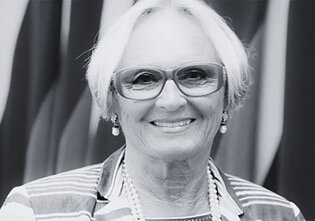
“The Jewish Community opposed this project from the very beginning,” said Rašella Galinienė, head of the Šiauliai County Jewish Community. “According to our canon, nothing can be touched or dug in a Jewish cemetery.”
The site had already been memorialised and there was no need for another monument, she added.
Jewish leaders have also condemned the concrete walkway encircling the site, calling it disrespectful to the sanctity of a burial ground.
Local authorities, however, defend the project. Joniškis Mayor Gediminas Čepulis called the initiative meaningful and educational. “I think it’s a successful and enlightening project. Many schoolchildren from Joniškis and across Lithuania now visit this place,” he said.

Čepulis acknowledged the backlash but dismissed the claims of serious violations, citing previous storm damage that also disturbed the soil in the area. The project was funded with €22,000 from the Lithuanian Council for Culture, plus €5,000 from the municipality.
Heritage authorities confirm the memorial was installed without the required permits or coordination with the Jewish community. “The site is a protected cultural heritage object,” said Kornelija Stonienė, senior specialist at the Šiauliai Division of the Department of Cultural Heritage. According to law, she said, such work requires approval from heritage authorities and consultation with the community, “but that did not happen”.
Stonienė added that the most serious issue is the disregard for Jewish religious customs. A final decision has yet to be made, but options include leaving the memorial as is, removing it, or pursuing administrative action.

Jewish organisations are calling for full removal of the monument and restoration of the site without further disturbing the ground. The Lithuanian Jewish Community has submitted a formal request to that effect, backed by the European Jewish Cemeteries Initiative.
Galinienė says the community is prepared to take the matter to court if necessary. “This must be restored to its original state,” she said, otherwise, this will set a dangerous precedent for disturbing Jewish mass graves across Lithuania.

Newsletter
Every Friday morning.