
















A notable shift is taking place among the five Central Asian countries — instead of clashing, they are working to consolidate a unified voice. But what are the goals of these countries' authoritarian regimes? And what roles are Russia and China playing in the region? LRT.lt discussed these political trends with Temur Umarov, a fellow at the Carnegie Russia Eurasia Center.
“For the first time since the collapse of the Soviet Union, none of the five Central Asian governments have any grievances against one another,” writes T. Umarov. In an interview with LRT.lt, he explains that due to the catastrophic border conflicts, Russia’s full-scale invasion of Ukraine, and the influx of foreign investment, the region has come to realize that cooperation not only enhances security but also boosts prosperity.
We begin our conversation by discussing recent changes in Central Asia, before delving into a topic that is shaping not only the region but the entire world — the relationship between Russia and China.
With the growing cooperation, what do you think Central Asian countries are trying to achieve collectively?
First of all, they want to have stability and security inside Central Asia. They don't want problems, because they already have enough problems outside: they have Afghanistan on the border, they have Russia, which is unpredictable, they have China, that is becoming more and more aggressive, they also have Iran on their border. So, it's already plenty of problems outside of Central Asia. That's why they want at least those five countries to be stable.

Second, they want development, they want more investment from the outside. Of course they have China, who is already heavily invested in all the countries, but in some of the countries Chinese investments are reaching a dangerous point, when Kyrgyzstan and Tajikistan, for example, owns China 40% of their GDP, and it's already a red flag for further cooperation. That's why they need diversification of their investment resources. To bring in more investment they need to prove to potential investors that they have their problems solved, it's a territory where you can bring your money and have a guarantee that your money will not disappear because of a conflict.
And the third - but not the least important - desire of Central Asian countries is to have stability to keep their political regimes stable. Problems for stability come not only from the ordinary problems of other authoritarian regimes, but also some unexpected problems could emerge from territorial conflict, because this could lead to massive protests in one of the countries, and that could lead to further destabilization. They also understand that they all are in the same boat, meaning that they have this kind of authoritarian brotherhood among themselves, they want to help each other to be stable, so that it in return stabilizes their own political regimes. They also have collective financial interests, corruption schemes across the region. So, these are the factors that bring Central Asian countries closer together. It's not necessarily something that can be portrayed as a good tendency, but at the end of the day, it all works for one goal.

Since the Russia’s full-scale invasion to Ukraine, its influence in the region diminished. However, China is expanding its economic influence there. Yet you argue that they are not necessarily competitors in Central Asia. How do these countries coexist there?
On the surface, it might look as if there is a logical consequence of Russia's actions that leads to Russia's diminishing presence in Central Asia and that China is using that to become more influential in Central Asia. On the surface, everything looks logical, but in reality, it's not as simple, it's much more complicated.
Some of us would wish, that Russia would be less influential in Central Asia, that Central Asian countries would have been able to turn their back on Russia and really support their own independency, because they've seen where Russia's actions lead. But it's not what is happening. The political elites in Central Asian countries are still very much close with Russian political elites for their own personal reasons - they know each other very well, they speak the same language, they’re more or less same people with the same background - they were born and raised in the Soviet Union, and they share a lot of same values as Russian political elites. And what is most important - Russia for Central Asian political regimes is the only country able to secure their stability in case of an emergency. <…> For that reason, Central Asian authoritarian political elites stick to Russia. And as long as we're having those political regimes in power, we will have Russia's influence there, it's not going to disappear.
Central Asian authoritarian political elites stick to Russia. And as long as we're having those political regimes in power, we will have Russia's influence there, it's not going to disappear.

But at the same time, Central Asian elites find themselves in a very peculiar situation, because on the one hand, they need Russia for regimes security guarantees and on the other hand, Russia is also the main security concern. And for that, they need other countries to be also present in Central Asia and to have as many partners as possible so that Russia is not monopolistic. And here comes China as logical alternative #1, because China also has a huge border with three Central Asian countries. China has already become the second gateway for Central Asian countries to the outside world because it's a landlocked territory <…>.
The cooperation with China has grown very rapidly, but what makes it specific is that China is not present in Central Asia against Russia's interests. China makes sure that it's on the same page with Russia. Every time Xi Jinping meets with Vladimir Putin, they specifically point out and highlight that they are cooperating in Central Asia, their main source of concern in Central Asia is the risk of colour revolutions that Moscow and Beijing should fight against. From this point of view, the presence of both China and Russia in Central Asia is cooperative and there is much more that these two countries are doing together, that is not very visible but is much more important in real life. But on the surface, it might seem very logical that if these two countries have shared interest in Central Asia, it means that they will clash one day, and it will become the start of the crack between Russia and China. However, unfortunately or fortunately, this is not what is happening.
The cooperation with China has grown very rapidly, but what makes it specific is that China is not present in Central Asia against Russia's interests.

You mentioned that Central Asian leaders are trying to diversify their foreign policies. Recently we have seen one diplomatic move made by Europe – it organized EU-Central Asia summit. Do you think Europe has something to offer to Central Asia right now?
For sure. Europe collectively is the main trading partner for Central Asian countries. If we speak about individual countries, it's not that influential, but as an entity, it can do a lot. Secondly, European Union has an idea to include Central Asia into its very big-scale project of global gateway, which last year was promised to be a €10 billion project, and it's considered to be a big infrastructural project that will help Central Asia to connect better with Europe without the necessity of going through Russia.
From those points of view, Europe can be a potentially important source of investment into Central Asian countries and Central Asian countries really hope that Europe will be investing more funds. However, we should understand that Europe is also a very, very cautious partner and it doesn't really invest money unless it has real guarantees that those investments will be secured and that the European businesses will have all the guarantees <…>. There is a potential, especially in the spheres like rare earth materials, but for that to happen, Central Asian countries should really invest into reformation of their systems, specifically those parts of the political systems that make investors confident in their investment.
But other than that, I believe, that symbolic gestures matter in international relations and the fact that European Union has hosted its first summit with Central Asian countries is a big step towards closer cooperation that will eventually materialize into something more tangible rather than just rhetoric.

But the problem for the European Union is the authoritarian regimes of the countries.
Yes, that's the dilemma that Europe has. On the one hand, they can completely cut off the ties with authoritarian regimes and say unless you are securing the human rights, unless you are releasing all of the political prisoners, unless you really have the democratic elections, and unless you will overthrow your authoritarian regimes, we’re not going talk to you, we’re not going invest in you, we’re not going to have any contacts with you. And the main consequence of these actions would be that Central Asian countries would be under some sort of sanctions, and they would get closer to Russia and to China, who don't care about their situation domestically, and people in Central Asia would live more miserable lives. They would have less access to European support, especially those who were targeted by the government for their political beliefs, for example.
Another approach that Europe can have is to have contact with Central Asian countries, talk to the political leaders, accept them as they are and while they’re having business as usual try to include the political agenda and value-based diplomacy.
Let’s jump on the topic a little bit. How do you think geopolitical landscape would look in the region if Ukraine and Russia agree on ceasefire?
<…> First of all, they will have to get used to the new reality, they will have to accept it. They will have to understand what the new red lines are, what are the talking points that they should use with Russia, with the West, with the US, with Ukraine. They should understand whether they can restart their relationship with Ukraine, because only Kazakhstan has kept some of the contacts with the political leadership of Ukraine, other countries cut it off completely. <…>
The most important questions is what will Russia do next is? Is war over? Is Russia satisfied or will the regime of Vladimir Putin be seeking for new sources of legitimacy, new sources of destabilization around Russia so that the regime would continue solidifying loyalty inside of it? And maybe the grievances that are happening inside Russian political circles and among the overall population might also take another form of aggression against another country. A lot of questions rise with what's next and what's Russia's next step. And here, if we look at the surveys in Kazakhstan that shares a huge border with Russia, we see that people in Kazakhstan are much more concerned about the potential aggression from Russia now than they were ever before.

Now the world is preoccupied with all that is happening in Trump’s administration. And rightly so. But I think you underline an important point that he will be out of the office in four years, however Putin and Xi Jinping intend to stay in power much longer. How do you see Russia and China’s relationship evolving in the future?
I actually see that Russia will become more and more dependent on China with years. You don't have to be a talented magician to see this future coming, this is something that is inevitable for Russia and with the closer and broader economic dependency of Russia on China, it will eventually transform into political dependency as well.
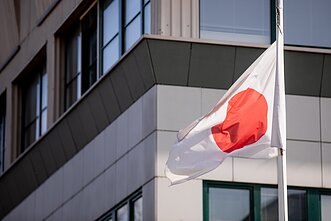
In future I can imagine the situation where China will be pushing Russia to support the People’s Republic of China on political issues like the territorial disputes with Japan, or South China Sea with the Philippines, Vietnam, Brunei and other countries or on the issue of Taiwan - maybe China will also be pushing Russia to help it militarily, because Russia still has some technologies in nuclear sphere that it hasn't shared with China but with growing dependency, it will have no other option.

Secondly, I think that the future where China and Russia are such great buddies, is much more unstable for the democratic part of the world. Those two countries are bringing an option, an alternative to the Western democratic world and they show to the countries in between that you don't necessarily have to be a democracy to get investment from us, you don't have to have transparency in your financial system to get funding and unlike the West we don't really care about your domestic issues. The only thing we care about is your loyalty towards us and that's it. And if you can portray this loyalty, we will have business as usual, we will provide you with the necessary resources that you want and in return, just be loyal to us.
<…> So it makes the end of history postponed, because we are not at the point where democracy has won as the only governance model across the world and the fight continues. But the problem here is that it's not like the Cold War, it's much more different, much more hybrid. During the Cold War, Soviet Union was not such an in inseparable part of the global economy as China is today and Soviet Union also was not so much integrated into international organizations as China is today, which makes it much more complicated, much more messy, chaotic and just not very easy or maybe even impossible to solve. So, for me the future will be more wake and much more complex, there will be many, many shades of gray in international relationship.
I think that the future where China and Russia are such great buddies, is much more unstable for the democratic part of the world.
Then to follow up – how do you think democratic countries could respond to this growing Russia and China’s influence in the future?
If I only knew, maybe I would have won the Nobel Peace Prize (laughs). No, I think that democratic world will have to learn how to coexist with China. I understand that we put China and Russia together in one basket because they are buddies, but Russia nearly doesn't have the resources that China has to really be a candidate that can become this global opposition to the current order. It's China, mainly China. And what democratic world can do is try to find a way to coexist with China, because fighting China is impossible. You cannot fight a country that makes 40% of the global economy and kind of 30% of UN budget. The country that has such a huge population and is the main trading partner for over 100 countries across the world. It's just impossible to fight with the fact that China is here, China is not going to disappear, and China is not going to become less ambitious about its role in global order.
But the only thing that the democratic world can do is actually to work first of all, on development of its own system, to not let things like we are seeing today in the US happen, because this is actually the problem of the democratic world - not to destroy your own instruments that you have while helping the other countries to get closer to becoming a part of democratic world. Just be better version of themselves - I'm sorry that I sound like a coach here, but I don't really have a recipe for how democratic world can win in this fight. Maybe it shouldn't. Maybe the problem here is that democracies were concentrated too much on fighting other countries, and when they were dealing with that, so many problems were ignored in their own systems, that brought to the current situation with the crisis in democracies. That's my opinion. Maybe democratic countries should not overestimate their ability to bring democracies to other countries, maybe they should let smaller countries, developing countries come to democratic solution by themselves and that would be the real democratic movement, not the one that was brought, taken under pressure.
I think that democratic world will have to learn how to coexist with China.