












Memory institutions in Lithuania are working on algorithms to save national treasures in case of an emergency. Museum directors are in no doubt that in the event of war, the enemy would loot and destroy national treasures, as history and the war in Ukraine have shown.
Insignia of the Lithuanian and Polish rulers discovered in early January is a testimony that Vilnius is a true European capital, says Rita Pauliukevičiūtė, director of Church Heritage Museum. In the event of war, the museum would have to ensure the protection of the treasures.
“These are probably now the priority treasures that need to be protected alongside everything else,” Pauliukevičiūtė says.
According to her, the Church Heritage Museum is constantly thinking about threats and how to preserve the treasures. Each museum has prepared lists of the valuables to be protected and actions to be taken, she says.
“The Lithuanian Culture Ministry is working hard on this issue, there are instructions, various possible ways to protect the valuables, and all of us museum professionals have them and know them. There are various meetings, testimonies of Ukrainian museum workers about the painful things they have experienced, and advice on how to avoid it,” the museum director shares.
Since Russia’s full-scale invasion of Ukraine, memory institutions – museums, archives, libraries – have started to consider much more seriously how to protect valuables.
Arūnas Gelūnas, director of the National Museum of Art, says it is very important to know what to save and who is responsible so that there is no confusion. Where the valuables would be stored afterwards is also important.
“The scenarios have been discussed and today we certainly feel much better prepared for, let’s say, possible surprises than we were two or three years ago,” Gelūnas says.

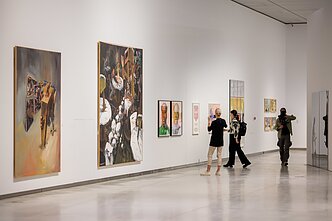
According to him, the National Museum of Art holds over 260,000 objects, so the first thing to be rescued would be the diamond fund, which contains about 3,000 objects, including paintings, sculptures, furniture, valuable graphics and other objects.
In his words, the preparations are being made “to avoid what happened in the 19th century or during the Soviet occupation, where a lot of treasures disappeared without a trace and there is simply no hope of recovering them”.
The National Museum of Lithuania also draws up annual lists of around 100,000 exhibits to be evacuated, says Žygintas Būčys, deputy director of the museum. In total, the museum holds around 1.5 million objects, including archaeological, numismatic, historical, ethnic cultural objects, as well as iconography.
“Maybe the museum itself would like to include more of these treasures, but there is a certain limit of how much we can take out on day X,” Būčys says.
It took six months to bring over 6,000 works of art to the MO Museum and put them in storage. Its head, Milda Ivanauskienė, says that today the preparations are in place, but the removal of the works in the event of a war still raises questions.
“We have a list of works that we would like to take out, but as a museum, we don’t have our own transport, we don’t have our own warehouses abroad. This means that even if you have suppliers, you are not guaranteed that they will be able to fulfil the order on that day, that minute,” she explains.
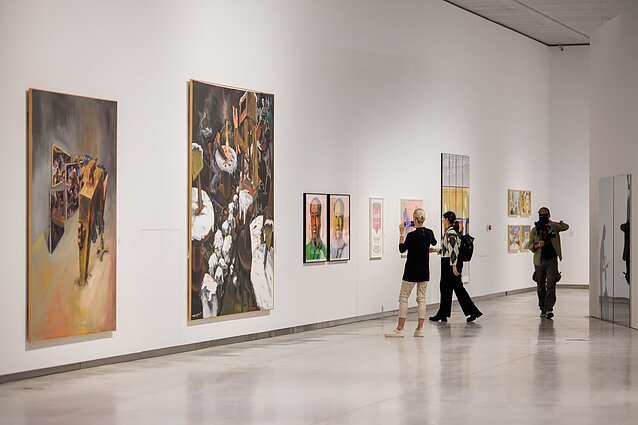
According to Gelūnas of the National Museum of Art, it is important to learn from Ukrainian colleagues who have experienced Russian brutality firsthand.
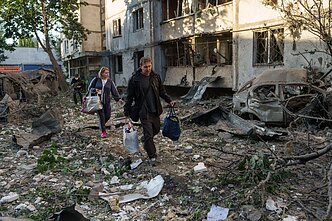
“The scale of the brutality, the devastation, the discovery of hiding places, the killing of the museum staff, the torture of the museum staff to get them to give up the hiding place. These are the most extreme brutal, incomprehensible, very uncivilised processes that have to be taken into account,” he says.
Some of the memory institutions also participated in exercises on how to behave in an emergency situation.

Newsletter
Every Friday morning.