











Lithuanian regions are facing a demographic crisis, with many areas facing death rates several times higher than birth rates. Some municipalities offer cash support for families but the effects are limited.
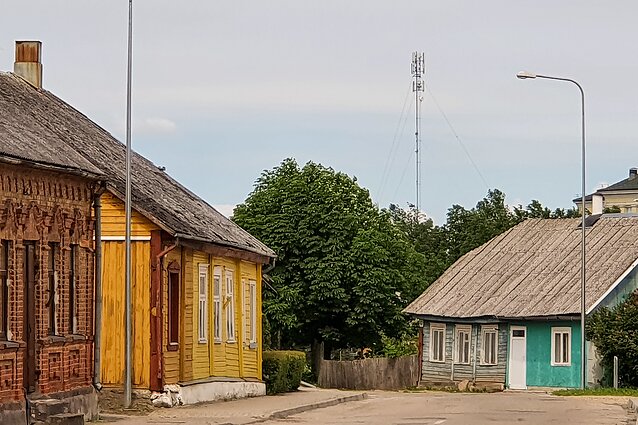
The village of Rozalimas, in the District of Pakruojis in northern Lithuania, has a population of just over 700. Only a few babies are born here each year.
“We were worried in September when the storks are flying away [for winter], they had not even come to us,” jokes Vytauta Kanišauskas, the elder of Rozalimas. “Roughly speaking, about ten babies were born over a decade [...] and about 30 people died.”
Seven people moved in, according to Kanišauskas, but depopulation is self-perpetuating: without children, the town has to close schools and kindergartens, which makes it even less attractive to potential newcomers. There are also precious few well-paying jobs.
The population of the Pakruojis District, just under 19,000, has shrunk by about one-third in the last 15 years. There are now almost twice as many seniors as children. This poses major challenges.
“They [the elders] want to go to a third-age university. They need social services, not just education. They want to live a decent life,” says Daiva Rutkevičienė, head of the Social Welfare Department in Pakruojis Municipality. “Today we have about 200 residents who receive assistance at home, and over 40 seniors in the district waiting in queues for spots in the senior home. The need is growing and the range of services is expanding.”
Some municipalities try to stimulate birth rates with cash payments on top of national programmes. Radviliškis gives 1,500 euros when a baby is born. But not everyone thinks it is effective. In the District of Kelmė, where the situation is extremely poor with about 100 births and 500 deaths a year, the mayor says it is not worth throwing money in hopes of getting people to have more children.
“It is human beings we are talking about, spiritual things. If we measure everything in terms of money, then I don’t know what we are raising,” says Kelmė Mayor Ildefonsas Petkevičius.

An absence of any kind of regional policy by Lithuania’s government is one reason why the demographic crisis is so dire, say researchers at the Institute of Regional Development. Focusing on developing their strongest economic sectors could be a way to approach the problem.
“Some regions are more industrial, others have more tourist attractions. I think that under this new regional planning, strategic planning, there is certainly a need for regions to highlight their strengths and strengthen certain areas. For example, if a region is already a tourism destination, it needs to strengthen its position in Lithuania,” says Diana Cibulskienė, professor at the Institute of Regional Development of Vilnius University’s Šiauliai Academy.
Other countries that have tried, or are still trying, to raise birth rates with payouts face similar problems. A region in Finland, for example, has been giving a mother who gave birth to a baby 1,000 euros a month for ten years, but the birth rate has fallen even further. Singapore continues to offer benefits for grandparents as well as parents, Hungary offers tax breaks, Japan funds a matchmaking platform and Tokyo offers parents a four-day workweek.

Newsletter
Every Friday morning.