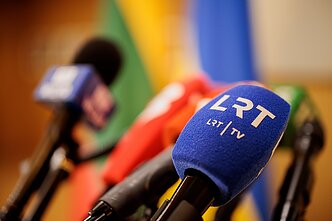












Following the initiation of the “political neutrality” audit of the LRT newsroom, the LRT Council says this is something that organisations with a high profile in society should strive for.
Concerns about the ongoing audit were voiced last week by both the Lithuanian Union of Journalists and the Association of Journalism Professionals.
The professional organisations questioned whether the audit would not violate the principles of freedom of journalism and stressed the importance of editorial independence.
Further reading
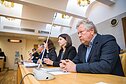
LRT journalists also requested a meeting with the LRT Council, the 12-member body that oversees the Lithuanian national public broadcaster, over the audit. The meeting took place last Thursday, with only three council members, all of whom opposed the initiation of the “political neutrality” audit, participating.
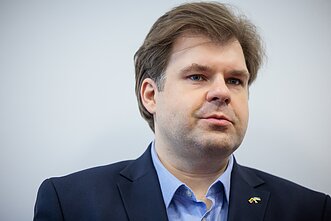
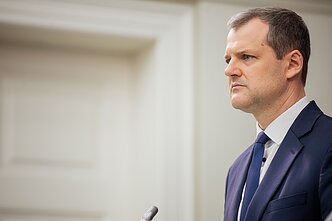
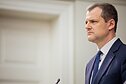
LRT Council Chairman Eugenijus Valatka said at the meeting that he did not support the proposal to carry out the audit because of “the lack of appropriate methodological tools to objectively assess the editorial content from the point of view of political neutrality”.
In his words, the arguments about the need for a political neutrality audit have been voiced for some time.
“In the opinion of some council members, there were three elections in Lithuania in 2024, so it makes sense to evaluate the experience to properly implement the principles of impartiality, accountability, transparency, efficiency, democracy, objectivity, and political neutrality of LRT as stipulated in the LRT Law,” Valatka said.
LRT journalists also asked which council members initiated and voted in favour of the audit but were told that the council meetings in question were not public, therefore, their minutes could not be shared.
According to Valatka, the LRT Council decided to carry out the “political neutrality” audit last December when it adopted the LRT audit plan for 2025.

The council chair also stressed that political neutrality at LRT should be the responsibility of the editorial board and self-regulatory bodies, such as the public broadcaster’s Ethics Commission or the Ethics Ombudsman.
LRT journalists later asked the council to hold another meeting on the “political neutrality” audit. This time, however, it is expected that the council members, who initiated the audit and supported it, would also participate in the discussion.
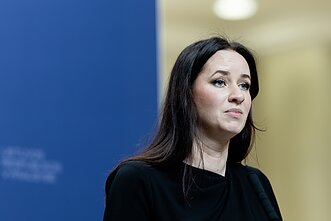
“We asked to put the issue on the next council meeting,” Aistė Valiauskaitė, the chair of the LRT Ethics Commission, told Elta. “We have also asked for the minutes of the meeting where it was decided to initiate the audit to be made public. We are still waiting for answers.”
Majority opinion
After the meeting, the LRT Council published a summary opinion of the majority of its members.
“Organisations with a high public profile should strive for political neutrality. In the case of LRT, this is directly enshrined in Article 3 of the LRT Law as one of the cornerstones of LRT’s activities,” it said.
The council again stressed that the meetings during which the audit of LRT’s “political neutrality” was proposed were not public.
“This is normal practice in the management of legal entities,” it said.
The annual LRT audit plan for 2025, which also includes the “political neutrality” audit, was approved by a majority vote last December, the council said.
"The council is a collegial body, decisions are taken by vote and are deemed to have been taken with the support of the majority,” the summary opinion reads.
The plan also includes other internal audits, which are the responsibility of the head of the LRT Internal Audit Service, who formulates the specific audit objectives, selects the appropriate methodologies to achieve the objectives, and, if necessary, can suggest and propose changes.
At the meeting with LRT journalists, the auditor said that the chosen methodology for the “political neutrality” audit focuses on operational processes rather than content.
The LRT Council is a supervisory body appointed by the president (four members), the parliament (two members by the ruling majority and two by the opposition), as well as the Research Council of Lithuania, the Lithuanian Council of Education, the Lithuanian Artists Association, and the Lithuanian Bishops Conference (one member each).

Newsletter
Every Friday morning.