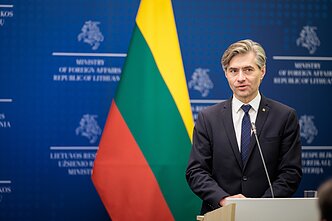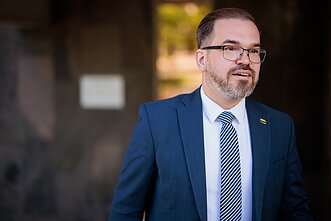
















The US is not turning away from its allies but is demanding that Europe do more for its security, Lithuanian Defence Minister Dovilė Šakalienė said following the comments of the new US secretary of defence.
On Wednesday, Pete Hegseth said that Washington will not deploy troops to Ukraine under any peace deal with Russia and that it is unrealistic for Kyiv to regain all its land or join NATO.
“America is not leaving – that was made absolutely clear, and it matters,” Šakalienė told LRT on Wednesday after a meeting of Kyiv’s supporters in Brussels.
“Europe must do more; Europe must recognise the threats. [Washington’s] call [on its allies] – voiced both publicly and behind closed doors – to talk with their societies to see whether they truly grasp the urgency of the situation, whether they understand the threat Russia poses and how close it really is, is an important message,” she said.
According to Šakalienė, Americans, despite being geographically farther from the conflict, “sometimes see the reality of the war in Ukraine more clearly than some members of our own society”.
“Everyone should open their eyes and realise just how quickly things could change if we’re not prepared,” she said.
Lithuania is among the countries that back the new US administration’s stance that not all NATO members are contributing equally to the alliance’s security, the minister stressed.

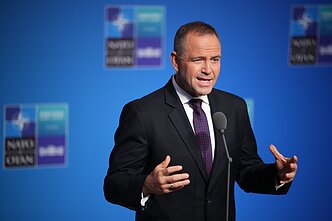
During his visit to Brussels on Wednesday, Hegseth outlined President Donald Trump’s red lines and demands and told Europe to increase both support for Ukraine and spending on its own defence.
The new US defence secretary said any peace process “must start by recognising that returning to Ukraine’s pre-2014 borders is an unrealistic objective”, although he assured allies that Washington, like Europe, wants “a sovereign and prosperous Ukraine”.
He also warned that “the United States does not believe that NATO membership for Ukraine is a realistic outcome of a negotiated settlement”.
Trump has previously said that NATO countries should raise their defence spending threshold to 5 percent of GDP, from the current 2 percent.

Newsletter
Every Friday morning.