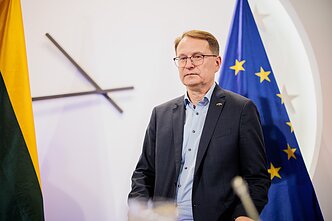






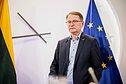



Remigijus Žemaitaitis, leader of the Nemunas Dawn party which is part of Lithuania’s ruling coalition, says raising 5–6 percent of GDP for defence is unrealistic and that the president should himself come up with funding sources.
“I do personally participate [in meetings on defence funding], and I have periodic meetings with the prime minister. We are really talking about where that money could come from. We are not talking about any 5–6 percent. We see what the army’s acquisition needs are,” the MP told the radio Žinių Radijas on Wednesday.
He insisted, reiterating his earlier position, that the figure of 5–6 percent GDP to be spent on defence was taken “off the cuff” and that the country’s economic growth would not allow it.
“We don’t have the economic growth that would allow us taking so much money from our GDP, 12.5 billion euros [over five years]. We can talk about an additional 700–800 million euros,” the MP said.
Further reading
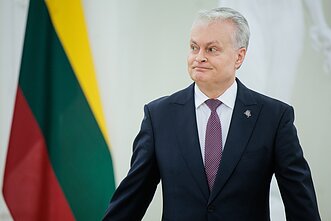
Last month, President Gitanas Nausėda, following a meeting of the State Defence Council, announced the plan to spend between 5 and 6 percent of the country’s GDP on defence over the coming five years.
However, it is not yet clear where the money would come from.
“The president has the right of initiative, the president also said that 5–6 percent is needed [...], he has to work too. It’s not that he can come and tell other to do it,” Žemaitaitis said.
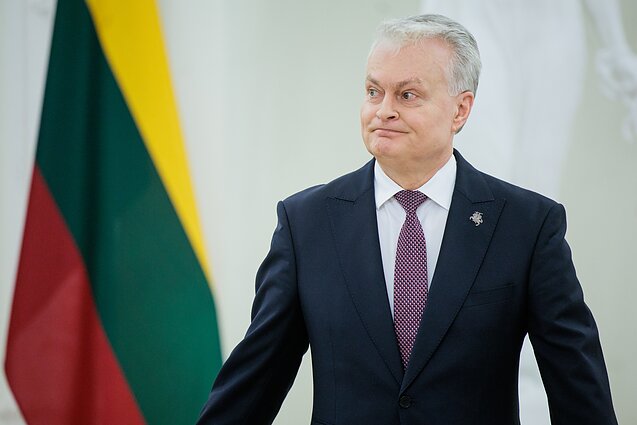
In March, when the parliament convenes for a plenary, he expects the president to bring “a bundle of bills for where to get funding for the army”.
“If the president says we need 5–6 percent, then his economists should sit down and do that thing, meaning, that they will have to bring a lot of bills and take responsibility at the same time. Do you think that Nemunas Dawn […] will take responsibility? Absolutely not,” the politician stressed.
Lithuania is seeking to raise more funds to havea national division within its armed forces and to be ready to host the planned German brigade by 2030. This will require around 12–14 billion euros over the next five years, accounting for 5–6 percent of the country’s GDP.
The specific sources of funding are not yet clear, but Lithuania’s leaders indicated that the bulk will be borrowed.
Žemaitaitis insists that neither the corporate tax nor the income tax can be changed in search for additional money.
In a recent interview, President Nausėda also floated the idea of raising more money by stimulating economic growth. That could be done, he suggested, by using people’s bank deposits for investment, by encouraging pension funds to invest in Lithuania, and by narrowing the VAT gap.
“People were shocked when President Nausėda said that people’s money held in banks could be used for this purpose,” Žemaitaitis commented. “The biggest mistake in the president’s communication was that he says such things without explaining how it will work.”