












The populist party Nemunas Dawn in Lithuania's ruling coalition has proposed disclosing more names of the country's citizens who collaborated with Soviet security. However, not everyone agrees – why?
Just days after Lithuania declared independence on March 11, 1990, the country announced on March 26 that it would grant a 75-year anonymity for those who would step forward and admit they had collaborated with the KGB. Granted, they would be barred from holding public office or going into politics, but they would live free from prosecution.
However, the topic never disappeared from public discourse and was resurrected again by the Nemunas Dawn party that entered the coalition government last year.
Although disclosing the names holds a public appeal, critics of the proposal say they had been granted anonymity to prevent blackmail from Russia, while many of those who worked with the KGB have since passed away or are now in their 80s.
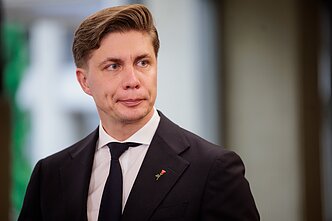
Yet, according to MP Aidas Gedvilas from the Nemunas Dawn party, the aim of disclosing more names is to reveal important figures who may be a threat to national security.
“After 35 years of independent Lithuania, it is time to name those Lithuanian ‘heroes’, as the Latvians did in 2016 and the Estonians in 1991. We should not stick our heads,” he said.
“If we were to disclose all the collaborators – both confessed and unconfessed – it would [only] include those who have influence on the state,” Gedvilas added. “We would not be concerned about some pensioner living in the countryside.”
However, MP Arvydas Anušauskas from the conservative Homeland Union (TS-LKD) said it was wrong to draw comparisons with the other Baltic states.
“Nothing was made public in Estonia in 1991 because they had no KGB archives. They did a similar confession process, and several thousand collaborators, full-time and part-time, came forward to confess. The situation is different for the Latvians who have [made public] the entire electronic database of all 8,000 agents,” said Anušauskas.
In Lithuania, those who had confessed were barred from pursuing a political career. If anyone with a KGB past did try to enter politics, they were immediately exposed, said Anušauskas.
Historian Algimantas Kasparavičius stresses that cooperation with the KGB was a conscious decision of the people involved and that their names should be made public.
“This is treason. I understand that time has passed, but there is no way to hide these people from history or from the public. Not to mention the third aspect – justice. Who can verify, without a court decision, that Jonas, Petras, Vytukas or Algirdas have not committed crimes against one or other Lithuanian citizen?” said the historian.
But KGB files were also no longer relevant, said MP Anušauskas. “Theoretically, the average age of those who confessed is over 80 years,” he added.
Breaking the promise of anonymity would raise questions about whether the state could be trusted, said Elena Masnevaitė, a lecturer at the Faculty of Law of Vilnius University.
“Would you trust a state that told people who were loyal to it [and confessed] that their names would be kept secret [but] then said it didn’t matter? This speaks about trust in the state itself,” said Masnevaitė.
Breaking the promise would destroy the relationship between the state and its citizens, according to Teresė Birutė Burauskaitė, a former head of Lithuania’s Genocide and Resistance Research Centre (LGGRTC).
“The state is then not governed by the rule of law,” she said. “They had repented, they had given valuable information to the [intelligence service] and not been allowed to go into [politics],” said Burauskaitė.

Newsletter
Every Friday morning.