


In order for the government to meet its ambitious military spending targets, Lithuania’s economy must grow by at least 3.5 percent, says an adviser to President Gitanas Nausėda.
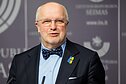
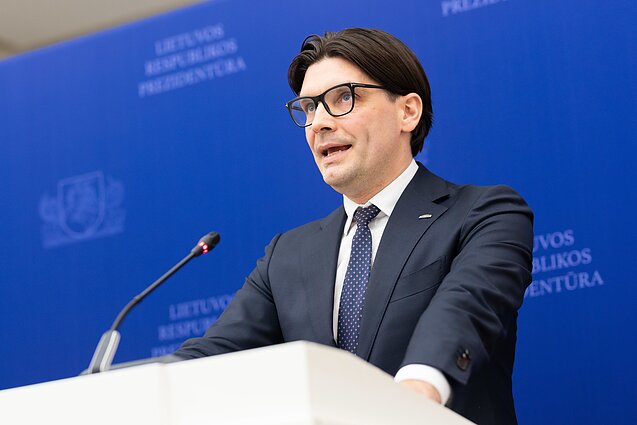
“In the president's view, Lithuania’s GDP growth should not be 2.5–3 percent, as it has been recently, but we should aim for at least 3.5–4 percent to achieve two objectives simultaneously: reducing inequality by raising people’s incomes at a pace faster than inflation, and generating additional budget revenue to form the national division,” Vaidas Augustinavičius, Nausėda’s chief economic and social policy advisor, said after the president’s meeting with business representatives on Wednesday.
Augustinavičius said there are no other ways to increase budget revenue except through higher growth.
“The main funding source for the division would be stimulating the economy,” the adviser said.
Lithuania’s political and military leaders recently agreed to raise military spending to between 5 and 6 percent of GDP for the period 2026–2030 in order to form a national division within the armed forces. At the same time, President Nausėda has ruled out raising taxes. Instead, he insisted, the additional military spending – up to 12 billion euros – will be covered through borrowing, cuts elsewhere, and EU support.
“Business representatives fully agree that the president’s proposals, which would substantially address the issue of access to credit in Lithuania, could significantly accelerate GDP growth,” Augustinavičius added.
According to the adviser, with “massive, economy-stimulating measures” in place, 30–40 percent of the additional 12 billion euros needed for defence could be raised through the budget, another 30–40 percent could be borrowed, and the remainder could be covered by reducing the black market and proposed higher contributions from the profits of the central Bank of Lithuania.
The adviser noted some positive developments regarding increased financing from the European Investment Bank (EIB) for military-purpose projects.
Economy Minister Lukas Savickas said expecting faster economic growth without additional investment would be “naïve”.

“For our part, we have proposed a truly ambitious plan to create the conditions for stimulating public investment and levelling the playing field for investors – not only foreign but also Lithuanian – in sectors that have so far demonstrated rapid growth,” he said.
The minister reiterated that the Economy and Innovation Ministry’s action plan for implementing the government’s programme could help generate at least 10 billion euros in investment into the country’s high added-value strategic sectors by 2030.

Newsletter
Every Friday morning.