







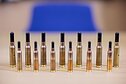




Lithuania’s politicians have begun discussions about withdrawing from a convention banning anti-personnel mines. Proponents argue they are necessary for effectively defending NATO’s border with Russia, although the implications of renouncing an international arms control treaty go beyond the purely military.
Lithuanian defence commentators often quote Finland as an example to emulate. With a 1,113-kilometre wall with Russia, the Finnish military pays particular attention to planning how to defend itself if Russia were to repeat something like the 1939 Winter War.
According to defence experts, with such a long border, mines are among the most effective defensive weapons. While the Finns have laid mines for heavy equipment, they cannot use mines for infantry, since they are prohibited by the Ottawa Convention.
At the moment, 163 states are parties to the 1997 treaty that bans anti-personnel landmines due to their harm to civilians.
An anti-personnel landmine is a form of mine designed for use against humans, as opposed to an anti-tank mine which targets vehicles.
“The starting point is that our greatest security threat is Russia, and this threat must be addressed one way or another. The world is very different now compared to when we joined the Ottawa Convention,” Finnish President Alexander Stubb said last November.
The discussion has started in Lithuania, too. This week, the parliamentary Committee on National Security and Defence (NSGK) considered the recommendation from the country’s military to withdraw from the Ottawa Treaty.
However, the decision has political implications, too. All the EU member states are parties to the convention and Foreign Minister Kęstutis Budrys says that whatever Lithuania decides to do, it should not do it alone.

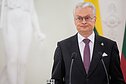
“The advice of the Ministry of Foreign Affairs is to do everything delicately, to discuss what the issue should be. We understand the sensitivity of the issue, and we understand the attention of our partners to our ongoing discussions. But we have to do everything in consultation with those countries that show the need to perhaps reduce certain restrictions,” Budrys told reporters after the NSGK meeting.
Former defence minister, conservative MP Laurynas Kasčiūnas is among the advocates to quit the ban on anti-personnel landmines.
“Physical barriers, hedgehogs, dragon’s teeth. These would be combined with what we have now – anti-vehicle and anti-tank mines. They work together as a system, but we cannot use anti-personnel mines. What does that mean? The Russians can come on foot and take out anti-tank and anti-tank mines,” Kasčiūnas, a member of the NSGK, argued.

MP Giedrimas Jeglinskas, chairman of the NSGK, believes there would be enough votes in the parliament to pull Lithuania out of the Ottawa convention, although there were dissenting voices in the committee meeting.
“We need 86 votes, I hope there will be as many. But again, it is the job for all of us: the military, the Defence Ministry, the Foreign Ministry, to come forward and to explain the situation, why this is important for our defence,” he said.
Neighbouring Latvia has previously discussed withdrawing from the Ottawa Convention, but decided against it, mainly due to opposition from its military leadership. NATO troops from Canada are stationed in Latvia and it is not clear how such a move would be received in Ottawa.
Members of Lithuania’s NSGK speculate, however, that if Finland, Estonia, Lithuania, and Poland were to renounce the ban on anti-personnel landmines, the Latvians would be forced to do the same, so as not to leave a gap in the defence line.
Last year, Lithuania decided to withdraw from another arms control treaty that bans he use of cluster munitions.

Newsletter
Every Friday morning.