














The Lithuanian partisans’ remains found in the town of Leipalingis have been kept unburied for six years. The burial has been stalled due to the lack of funds for the memorial.
The remains of more than 40 partisans are being kept in temporary coffins. Some of the cardboard coffins have already been damaged by excessive humidity when they were stored at the Tuskulėnai Memorial. They have now been moved to the premises of the Lithuanian Genocide and Resistance Research Centre (LGGRTC) in the former Lukiškės Prison.
All the remains were unearthed six years ago in Leipalingis. Half of the partisans’ remains have been identified, and others are still being investigated, but the remains are no longer needed for the examination.
“Common sense says the remains must not be kept for ten years and not returned to the ground,” says Rimantas Zagreckas, a representative of LGGRTC.

According to a project drawn up three years ago, all the remains should be buried in the columbarium at Leipalingis Cemetery. The Druskininkai Municipality is responsible for the burial, which is estimated to cost around 150,000 euros.
“It is impossible for the municipality alone to find such funds today,” says Druskininkai Mayor Ričardas Malinauskas.
The municipality turned to the Finance Ministry and the government last year. However, it has not received a reply yet.
Darius Jakavičius, the chair of the parliamentary Commission for the Cause of Freedom and the National Historical Memory, says he is surprised by the situation.
“We are still living in a kingdom of crooked mirrors. There has been no decision from the government and the remains are in a place where they shouldn’t be,” Jakavičius says.

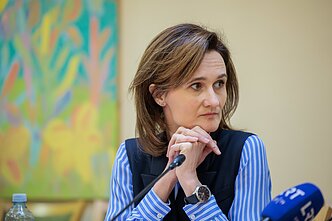
Paula Kuzmickienė, the former chair of the commission, says she was not aware of either the request or the problem.
“I had not received such a request, and I am sure we would have reacted in some way if we had,” notes Kuzmickienė, the current vice-chair of the parliamentary commission.
The new Finance Minister Rimantas Šadžius claims he is also unaware of the Druskininkai Municipality’s request, but promises to react if he receives one.
“I would look for opportunities to do so. The budget is approved, there are strict rules, but I would certainly do my best,” he says.
Meanwhile, the Druskininkai Municipality says it does not intend to make a new request.
"We did not write to this [government] because requests are not written according to how governments change. The ministry has always existed,” Druskininkai Mayor Malinauskas explains.
The former government points out that funding for the Lithuanian Genocide and Resistance Research Centre has doubled over the years to almost 5 million euros.
According to the centre, however, reburial of remains is not their responsibility but that of municipalities under the current law.

Among the remains waiting for reburial are those of a 17-year-old partisan liaison.
“He was hit with a rifle butt. There are still doubts as to how he died, whether he was buried alive,” says Kęstutis Kauzonas, the nephew of the fallen partisan.
According to him, he does not know when he will be able to bury the remains of his uncle.
“I think that this issue should have already been resolved, especially since there was an initiative to bury him alone, purely on the family’s initiative. However, it was recommended that such persons be buried at the state’s expense and with an element of respect,” Kauzonas shares.
In total, over 200 Lithuanian freedom fighters and their supporters may have perished in Leipalingis. The remains of at least 100 of them have not been found to this day.

Newsletter
Every Friday morning.