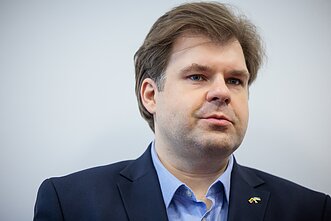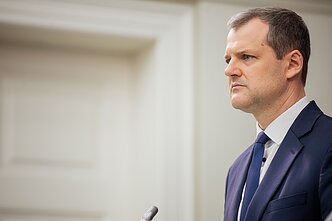










Social Democrat MP Dovilė Šakalienė says that Lithuania’s future government should ignore the EU’s fiscal rules and borrow in order to significantly hike the defence spending.
She said this after President Gitanas Nausėda argued that Lithuania should spend as much as it takes in order to form a military division by 2030, even if that means ignoring the EU’s cap on borrowing.
According to the president, this would require spending 5 percent of GDP or more on defence over the next six years.
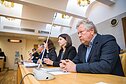
“As far as funding is concerned, there was a very simple answer – military advice comes first, accounting comes after that. In this case, if the commander of the armed forces says that we need to speak about 5 percent [of GDP for defence], it means that when we assemble [in the State Defence Council], I have no doubt that we will look for that money,” Šakalienė, who is tipped for the defence minister post in the next Social Democrat-led government, said at the LRT TV programme LRT Forum on Monday night.
The State Defence Council is a special body involving representatives from the president’s office, the government, and the armed forces that shape Lithuania’s defence policy.
Šakalienė said her party had been discussing for more than a year the possible sources of increased funding for national defence.

“A whole package of measures will be needed – from changes in our own tax system, to borrowing on the international market, on the domestic market, to working with our partners so that we can have some help in solving the problems of the whole North-Eastern flank through some EU instruments,” the politician said.
“We have a simple answer – yes, we will look for the money and we will find it,” she concluded when asked about the would-be government’s approach to defence spending.
The ruling coalition agreement signed on Monday by the Social Democrats and two junior partners – the Dawn of the Nemunas party and the Democratic Union “For Lithuania” –pledges to ensure “defence funding in line with military advice”.
A few weeks ago, after a meeting of the National Defence Council, officials announced that, with the current defence funding, the full capacity of the division could be reached in 2036-2040, instead of 2030 as previously planned.
President Nausėda said on Monday on TV3 that in order to bring forward the division’s establishment to 2030, Lithuania would need to spend between 10 billion and 14 billion euros on top of what is currently envisaged by the end of the decade.

That would mean annual military spending of 5 to 5.5 percent of GDP over the coming six years, he said.
The so-called Maastricht criteria for euro zone countries require public deficits not to exceed 3 percent of GDP and public debt to be kept under 60 percent of the economy.
Nausėda said he had no doubt that Lithuania would be able to persuade the European Commission to override these criteria in favour of more defence funding.
According to Kęstutis Budrys, the president’s senior adviser on national security, “there are no alternatives” to the plans to have a division in the military by 2030.
“As has already been said, we cannot afford to have these plans implemented only in 2040,” Budrys said on LRT Forum.

Currently, Lithuania spends around 2.5 billion euros on defence, or 3.2 percent of GDP.
Next year’s government spending bill, which still needs to be approved by the parliament, provides for a similar amount for defence, or 3 percent of projected GDP.

Newsletter
Every Friday morning.