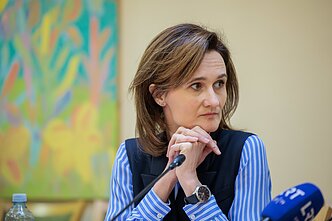
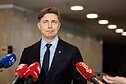



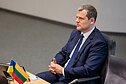


Lithuania’s Foreign Minister Gabrielius Landsbergis is calling for an investigation into Russia’s possible interference in a referendum in Moldova on joining the European Union.
The foreign minister also said he expected the referendum result to be favourable to Moldova’s “European direction”.
“Through certain people who are closer to Russia. Vote buying, interference in elections, disinformation campaign, these events must be investigated and it must be answered how it affected the election, how much people’s opinion was influenced in illegal ways during this election campaign,” Landsbergis told reporters on Monday.
Commenting on the referendum, Moldova’s pro-European President Maia Sandu said Sunday night that the country had witnessed “an unprecedented assault on our country’s freedom and democracy, both today and in recent months”, blaming “criminal groups, working together with foreign forces hostile to our national interests” – a veiled reference to Russia – for the outcome.
Partial voting results on Sunday showed a majority of Moldovans choosing “no” in a referendum on including the goal of joining the EU into the country’s constitution.
However, with more than 98 percent of the ballots counted, the “yes” vote was slightly ahead at 50.08 percent, while the “no” camp stood at 49.92 percent early Monday.
In the presidential election, Sandu gained almost 42 percent of the vote, according to the results, and so will face her closest competitor, Alexandr Stoianoglo, in a second round on November 3, as former prosecutor backed by the pro-Russian Socialists had picked up a higher-than-expected result of more than 26 percent in the race with 11 competitors in total.
Lithuania’s Landsbergis said he hoped that the result of the referendum would “change for the better” on Monday.
“Before we came here we saw that the website of the Central Electoral Commission is down, we can’t see the difference changing. It looks like it will improve a little bit, the question is how far the bar can be pushed,” the Lithuanian foreign minister noted.
“If the European direction is chosen, if it is a legitimate election, a referendum, then the direction is chosen, that’s it. We will continue to work with Moldova, we will stand together with them, as I said during my visit last week,” Landsbergis said.
The minister added that Lithuania’s reform experience is “very applicable” to Moldova because of the similar size of the countries and other aspects.

Newsletter
Every Friday morning.