










We are in the middle of the two rounds of Lithuania’s general elections: last Sunday’s vote results (that, provisionally, distributed 78 out of 141 seats in the Seimas) can give a general idea of what the future government might be, but it is yet to be confirmed or upended by run-offs in 63 single-member constituencies. Here are our main takeaways.
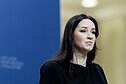
– The social democrats (LSDP) are clear winners of the party list vote, snapping 19 percent and 18 seats (and two more outright victories in single-member constituencies). The party’s leader has already indicated she is planning to lead the formation of the next ruling coalition.
– The potential junior partners for this “centre-left” coalition are the Democratic Union “For Lithuania” (it finished fourth with 9 percent of the vote) and the Farmers and Greens Union (LVŽS, with 7 percent).
– Now, there are several complications with this plan. First, as things stand now, their combined seat count is not enough for a majority. So unless the three parties do well in the run-offs (spectacularly well), they’ll need to look for one more coalition partner.
– Then there are uncertainties with the LVŽS. A ruling party two election cycles ago, this time it barely crossed the 7-percent threshold to get any seats. What’s more, its margin is less than 300 and it is still possible, in theory, that once all the mailed-in ballots are tallied, the party could be pushed below the threshold. (Update: on Saturday morning, the Central Electoral Commission announced that the mail-in ballots were counted and they did not change the results.)
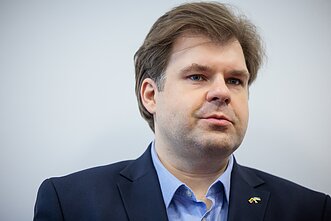
– Even if it’s not, getting the two junior coalition partners to work together can be a challenge – the Democrats “For Lithuania” is a new party founded by former prime minister Saulius Skvernelis that splintered from the LVŽS, leaving behind some resentment on both sides. Both Skvernelis and LVŽS leader Ramūnas Karbauskis have hinted they find the prospect of working together not to their liking.
– Instead, Skvernelis has indicated that he’d prefer to work in a coalition with the Liberal Movement, which is part of the current centre-right government. Its leader, Seimas Speaker Viktorija Čmilytė-Nielsen, has not ruled it out, but nor has she given any positive indication.
– On the centre-right side of the spectrum, the current ruling conservative Homeland Union (TS-LKD) party is a close second after the first round and only 1.4 point behind the social democrats. So, the conservatives have been adamant that they can still stay in power, even suggesting a “rainbow coalition” with the social democrats (the latter and most observers reject the idea as a campaign ploy).
– What really killed the prospects of keeping the current conservative-liberal government is that its third member, the Freedom Party, scraped barely 4.5 percent and did not win any seats. In 2020, it campaigned on promises to pass same-sex partnership law and decriminalise cannabis but failed on both counts, while its doctrinaire pro-market and anti-tax stances could not compensate for the lost voters.
– The elephant in the room is the Dawn of the Nemunas party, which finished third. While the social democratic leader has, after some public pressure, rejected a coalition with the party, its maverick leader Remigijus Žemaitaitis insists, with some validity, that no centre-left coalition is possible without him. Žemaitaitis has been demonised by the conservatives, who led an impeachment against him over anti-Israeli and antisemitic Facebook posts and even suggested that other parties should form a “cordon sanitaire” to exclude his party from power. Now, some observers suggest this demonisation is what prompted his relatively sudden rise.
– Finally, there is the president who has never vibed with the current government and does not hide his glee about it being voted out of power.
* Note on terminology: It is generally agreed that “left” and “right” in Lithuania (and in much of post-socialist Europe) do not so much refer to substantive policy positions as to parties’ relations among themselves. In Lithuania, “the right” is populated by the conservative TS-LKD and any party that would go into a conservative-led coalition; “the left” are all those who would not. Therefore, self-identifying “left” parties like the LVŽS are more socially conservative than the TS-LKD, while the Democratic Union leans liberal in economic policies.

Newsletter
Every Friday morning.