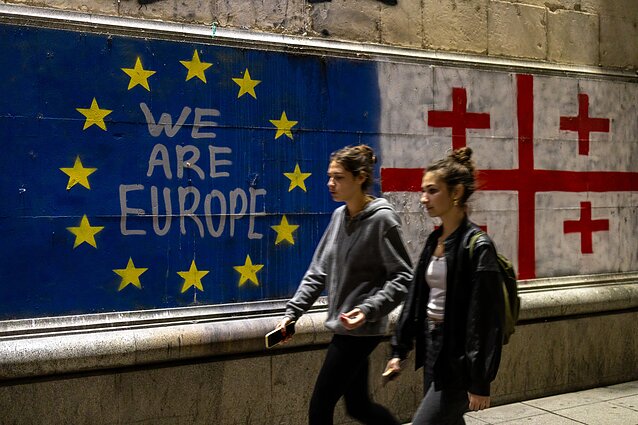















On October 26, people in Georgia will head to the polls to decide who will lead the country for the next four years. For young Georgians, voting this time around is more than just a civic duty. In their own words, this is an “existential” election that will determine their future.
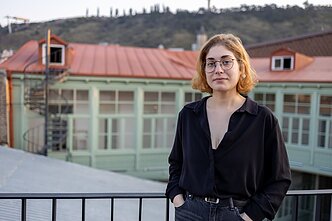
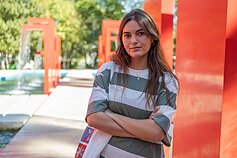
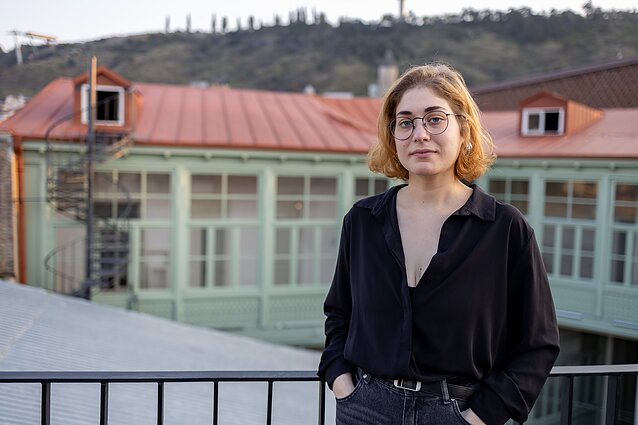
Ana Tavadze, 27, from Tbilisi, works for three NGOs. And while two of them normally work on human rights and equality issues, they have now fully turned their focus to elections.
“I would say that all the organisations since June, so since the foreign agents’ bill was finally passed, have switched to election work. [...] And the reason for that is that this regime that we have, which we call the Russian regime because it’s a very Russian-style governance, has put us in a situation where everything we do is already or will be even more censored, stopped, halted, challenged. So, it almost makes zero sense not to be focused on the elections because it’s where the faith of all the work that we do will be decided,” Ana told LRT.lt
Georgia’s Law on Transparency of Foreign Influence, often compared to a similar law in Russia, obliges the country’s NGOs that receive more than 20 percent of their income from foreign donors to register as foreign agents. It was adopted after the country’s parliament overrode a veto by President Salome Zurabishvili. Mass protests erupted in the country following the adoption of the law, while the European Union de facto suspended negotiations on Georgia’s accession to the bloc.
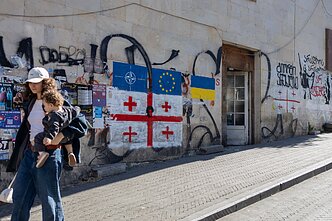
“This election has been framed as a referendum, and very much rightly so, because in this geopolitical reordering, Georgia has to decide on which side it wants to end up [...]: are we choosing Russia or are we choosing EU, are we choosing bad quality of life, or are we choosing good quality of life. It’s not just another political election, but it’s really something more existential,” said Ana.
Undoing progress
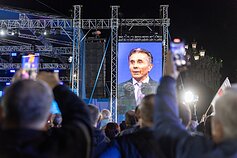
The Georgian Dream party, founded by the oligarch Bidzina Ivanishvili, who made his fortune in Russia, has ruled the country for 12 years. Democratically elected, the party has not only consolidated power but also adopted a series of controversial legislative changes during its tenure.
In addition to the foreign agents’ law, the party passed the so-called anti-LGBT propaganda law, boycotted by the opposition, which bans same-sex marriage, Pride events, media portrayals of LGBT people, etc. According to experts and human rights defenders, this has further delayed Georgia’s EU membership aspirations.
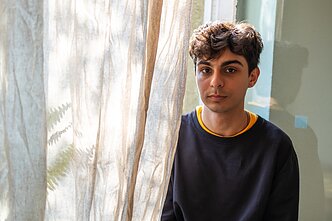
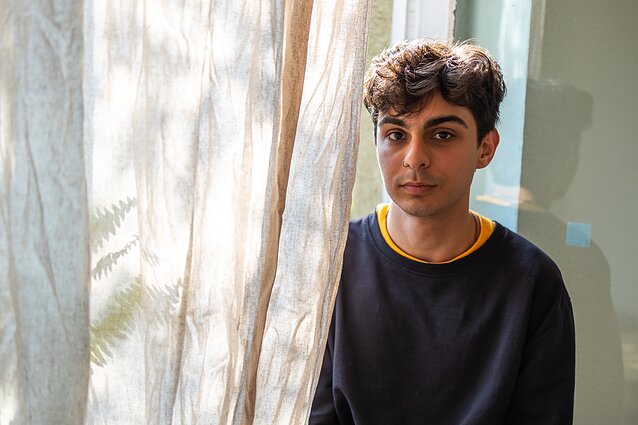
Giga Beruashvili, a 22-year-old freelance journalist from Tbilisi, says that the laws restricting human rights and freedom of expression affect the lives of countless young Georgians.
“The foreign agents’ law directly affects my field of work [...] because media, especially online media, requires some kind of support from non-governmental organisations and foreign, European grants. And they have always been transparent about it,” Giga explained.
“They’re attacking my profession, they’re also attacking my rights as a person and my friends’ rights. [...] If my friends are not as free in my country as I am, I won’t feel free because we’re not free unless we’re equal,” he added.
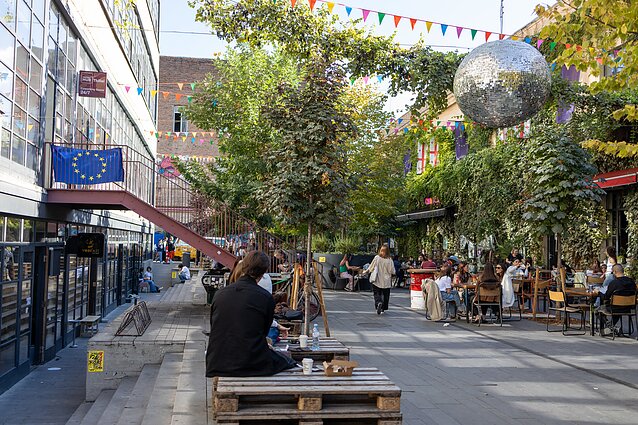
According to him, the current Georgian government is undoing the progress the country has made towards EU candidate status.
“Instead of addressing real problems, like femicide, which is at an all-time high in Georgia, they’re creating invisible issues and solving them when nobody asks for it,” Giga said.
In his words, protests have become a common tool for young Georgians to express their dissatisfaction with the government and show politicians what kind of country they want to live in.
“The new generation of people, and not only, are waking up and realising that freedom of speech can be obstructed by the government, but if you still speak up, they cannot do anything about it,” Giga explained. “That’s why I go to protests – to show people who are watching that what they’re doing is not something I want. And then they cannot say that we’re doing this because the people want it.”
“If push comes to shove, I can say that I tried my best to make my voice heard, and I was never in support of what was happening. And at least I tried to protect my future,” he continued.
Anxiety and hope
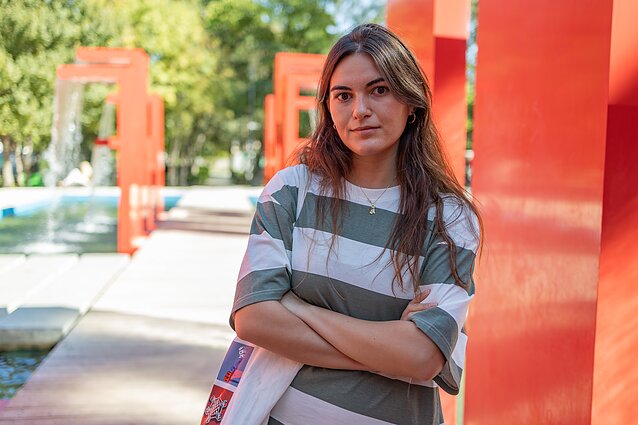
When talking to young people in the Georgian capital Tbilisi, it is hard to find those who did not participate in the mass protests against the foreign agents’ law and the current government in spring. One of them was 22-year-old Tina Nikoleishvili, who recently graduated with a bachelor’s degree in social sciences from the Free University of Tbilisi and now works as a junior researcher at the Gnomon Wise research institute.
“This is like an impulse for us. The spring protests were also an impulse. We were working in day hours, and the second job for us was to go and stand there because we simply couldn’t go home,” she recalled.
She believes that another wave of protests is likely after the parliament elections if people feel disappointed or are given reason to believe that the voting was not completely transparent.
This year, for the first time in the history of independent Georgia, voting in the parliamentary elections will be fully proportional and parties will have to receive 5 percent of the vote to be allocated seats. This has encouraged opposition parties to form coalition lists.
According to an Edison Research poll commissioned by the opposition-leaning Formula TV, Georgian Dream is expected to receive around 33 percent of the votes in the upcoming elections, which would not be enough to secure a majority. Meanwhile, the four largest opposition lists are predicted 55 percent of the vote combined. However, according to a Gorbi poll commissioned by the pro-government Imedi TV, the Georgian Dream is expected to receive around 60 percent of the vote.
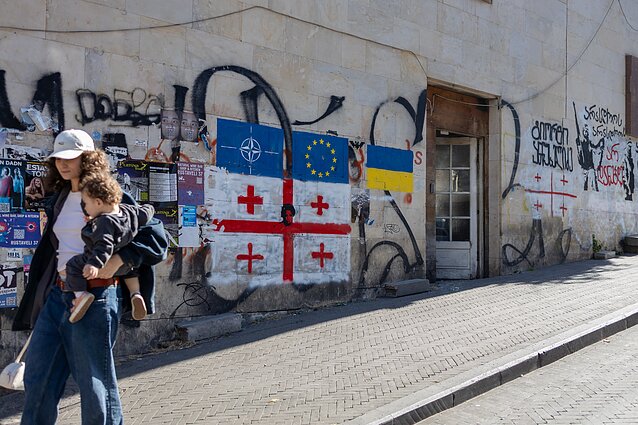
“It creates this unpredictability component that is anxiety-giving, especially about what the post-election situation will be and in which way they will try to manipulate the outcomes of the election. We don’t believe that there are high chances of peaceful transition of power,” said civic activist Ana Tavadze. “If you look at the polls that they use to manipulate the election results, they write themselves 60 percent, which is just completely unrealistic and delusional.”
However, she notes that young people’s involvement in the electoral process, which is higher than ever this year, is helping her stay hopeful.
“I have never seen young people so motivated to actually participate in the election procedures because the motivation for street protests for young people has always been there, being active on social media has always been there, but elections have always been a kind of an obstacle for them,” Ana said.
Shame Movement, a prominent civil movement in Georgia where Anna works, and many other organisations have been granted the status of “observation mission organisation” ahead of the elections, meaning that they are also training the election observers who will be working in polling stations across the country.
“I think the level of observation will also be unprecedented. Therefore, I think that it’s not going to be easy for them to rig the elections on election day and in the procedures. I’m hopeful and it really gives me confidence to see that so many people are going to be observing the elections and be involved in the processes,” Ana said.
Voting for change
The Georgian youth believe that the situation in their country has ripened for change. All those interviewed by LRT.lt say that they will vote for one of the opposition lists that signed the Georgian Charter initiated by President Zourabichvili. This is an agreement of opposition parties to form an interim government in the event of electoral success, repeal the corrosive laws adopted by the Georgian Dream, and organise new democratic parliamentary elections after one year.

“The best-case scenario would be the peaceful transition of power and recognising the will of Georgian people, which is a coalition government with the opposition leading. However, knowing Ivanishvili, understanding his personality, that he is an authoritarian leader, it’s really hard to predict how he will navigate through these processes,” said civic activist Ana.
According to her, none of the opposition parties fully represent her ideas and those of many young people, but “no party is as destructive as the ruling party”.
“I think that the way it’s framed in our minds, it’s that we’re not necessarily voting for a particular party, but we’re voting for change,” she said. “And the most important guiding point to this entire process is taking Georgia back to its European path because not only the EU but also the US and all of our Western partners have been extremely clear that under this government, Georgia’s path to European integration will not continue.”
According to Tina Nikoleishvili, many young and educated Georgians are thinking of leaving the country if the Georgian Dream stays in power and continues its policy of distancing the country from the West and moving closer to Russia. She also says she has thought about emigration, although she would like to stay in Georgia and use her skills working for her home country.
“We have to survive these elections, which are really existential. If Georgian Dream stays in power, if it forms the next government and has the majority in parliament, I don’t think that for a long time, there will be a coming back from that,” she said.
Giga Beruashvili also says he is thinking about living abroad, but he would like “it to be a choice, not a requirement or a sacrifice”. He hopes that after these elections, Georgia will return to its European path, where young people will have the space to express themselves and develop.
“I hate when people say that if we go into the European Union, we’re going to lose our identity. No, it’s going to help us embrace our identity and become a part of this multicultural family. No country in Europe has lost its identity, but countries that are with Russia have lost their identity,” he said.
“The only real threat, the only country that has ever tried to tell us that we have to compromise our ideals, our values, our culture, and our history is to the North, not the West,” Giga added.

Newsletter
Every Friday morning.