











A wargaming study published on Thursday revealed that Lithuania could hold out against Russia in a military conflict for ten days until NATO reinforcements arrived. However, the country would first need to invest at least 10 billion euros over the next four years.
“NATO’s air power will come quickly, followed by sea power, and large and heavily armed land forces will take longer,” said Philip Breedlove, a retired four-star US general and a former commander of NATO forces in Europe.
He took part in the simulation commissioned by Stiprūs Kartu, a defence-focused Lithuanian NGO, and undertaken by the Washington-based Centre for the Study of New Generation Warfare, using software generated by Lynx Systems in the United States.
The exercise was presented at the Lietuvos Verslo Forumas (Lithuanian Business Forum). at the time when a group of businesses and NGOs are calling on the government to raise the country’s defence spending to 4 percent of GDP.
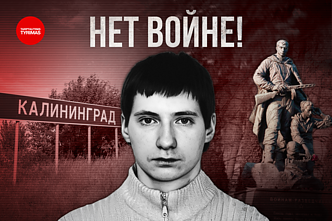
The simulation found that a potential Russian-Belarusian offensive in 2027 could take place along several axes. They also identified that the defence weak point was the so-called Suwalki Gap, the small stretch of land linking the Baltic states with Poland. It is flanked on one side by Russia’s exclave of Kaliningrad and Belarus on the other. NATO and regional military planners fear this would be a potential flashpoint in a military confrontation.
But the Russian planners also “want us to think that we need forces there,” believes Phil Petersen, founder of the New Generation Warfare Centre.
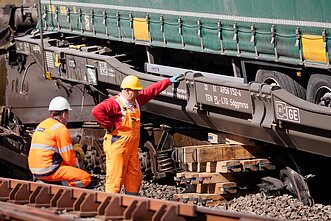
Meanwhile, Latvia’s Daugavpils in the country’s east is both a railway hub and the most convenient route to Kaliningrad for the Russians. Therefore, the first Russian target would be the Latgale region in Latvia.
In the most pessimistic scenario, it would take ten days for Russia to take Daugavpils and besiege Vilnius.
“We saw that we would run out of Javelins and HIMARS missiles after three days of fighting,” said Gintaras Ažubalis, a retired colonel of the Lithuanian Armed Forces who took part in the exercise.

Meanwhile, the most favourable scenario saw Russia held back near Vilnius. The capacity to strike deep inside Russia made the biggest difference in the scenario’s positive outcome.
To achieve that, experts saw the need to invest in attack helicopters and long-range missiles.
“Some 70 percent of casualties are due to artillery shelling,” said Petersen. “If you don't neutralise this artillery, you will have a lot of casualties.”
The wargaming showed Lithuania needed an extra €10 billion over four years, which would equal almost 5 percent of GDP instead of the current 3 percent spent on defence.
“That would mean almost doubling the spending, tensions [in the society] would certainly be high,” commented Marius Dubnikovas, an economist. “Perhaps part of that money would have to be borrowed.”

However, some have criticised the exercise. Jonas Ohman, head of the Blue/Yellow NGO that has been helping Ukrainian troops since 2014, noted the drills did not incorporate lessons from the war.
“Maybe the Russians will not come with tanks, maybe they will come with hundreds of drones. The enemy may be different from what we imagine now,” he said.

Newsletter
Every Friday morning.